

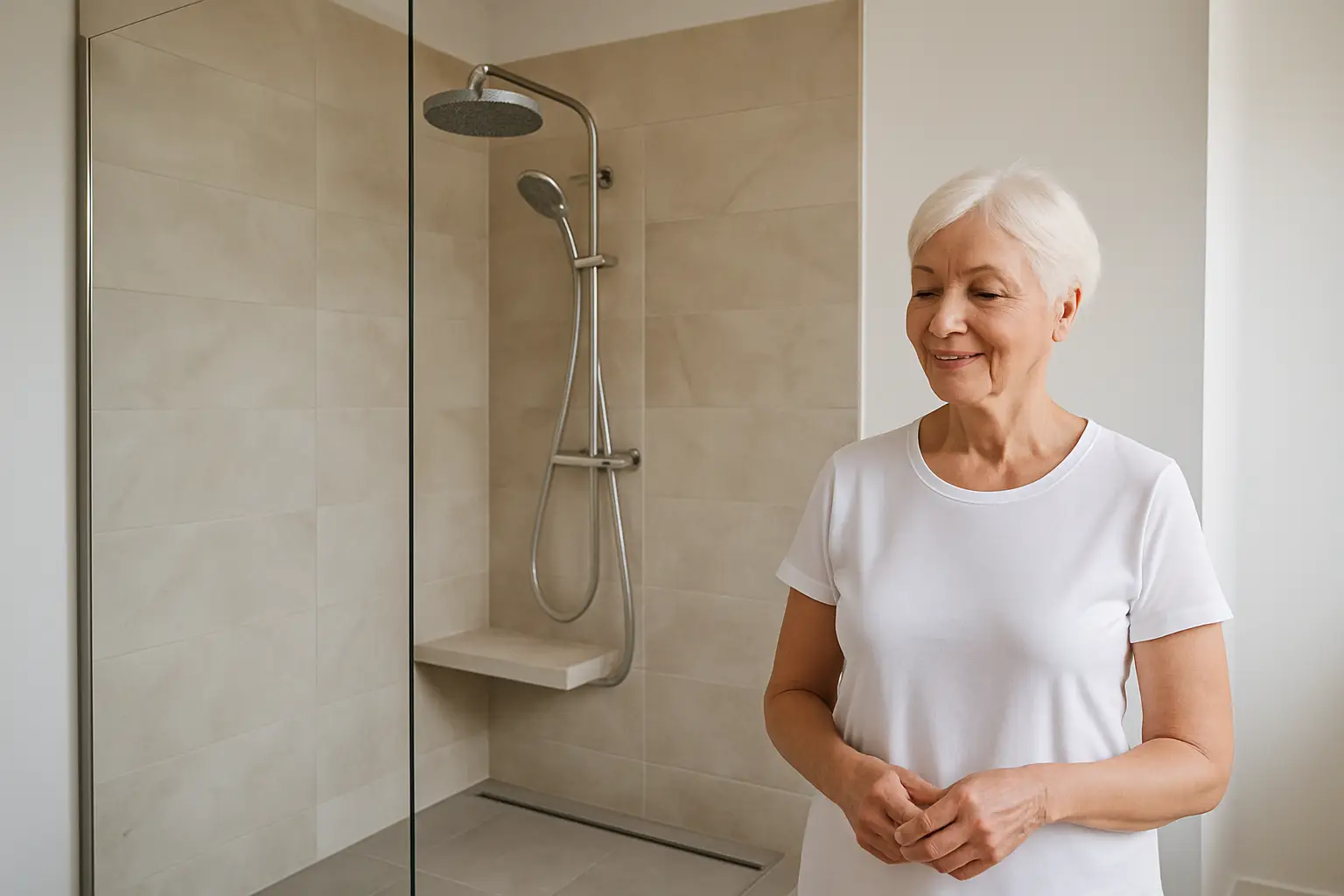
A walk-in shower looks simple on Pinterest. In a real Meridian or Boise bathroom, it has to do more than look good – it has to drain correctly, feel warm on winter mornings, and stay easy to clean when life gets busy. The best walk in shower remodel ideas are the ones that hold up five and ten years from now, not just on reveal day.
Below are design directions we see homeowners ask for again and again, plus the practical trade-offs that determine whether the finished shower feels premium or just “new.”
Walk in shower remodel ideas that hold up in real life
1) Go curbless only if the floor can support it
A true zero-threshold shower is a favorite for accessibility and a clean, modern look. It also asks more of the build: the subfloor has to be stiff, the slope has to be right, and the waterproofing has to be flawless because water is no longer contained by a curb.
In some homes, we can recess the shower area so the bathroom floor stays level. In others, the safest path is a low-profile curb that still feels sleek but provides an extra layer of water control. The “best” choice depends on framing, the direction the joists run, and where the drain can land without compromising structure.
2) Choose a layout that fits how you actually shower
The walk-in category includes several layouts, and the right one is usually decided by door location, window placement, and how tight the overall footprint is.
A single open entry can look minimal, but it needs enough depth so spray does not reach the vanity or toilet. An L-shaped entry is a great compromise – it blocks splash while keeping the open feel. For smaller bathrooms, a glass panel with a hinged or sliding door sometimes performs better than forcing an “open concept” that leaves you wiping up water every day.
3) Put the drain where it makes the slope simple
Drain placement is both a design decision and a performance decision. A centered drain often works well with smaller tile because the slope can come in from multiple directions. A linear drain can look high-end and can reduce the number of slope planes, but it has to be installed precisely and planned early.
If you want large-format floor tile, talk about the drain and slope first. Large tile is less forgiving, and the wrong combination can lead to lippage, puddling, or a floor that never feels quite “right” underfoot.
4) Pick tile based on traction and maintenance, not just color
Tile is where craftsmanship shows. It is also where homeowners feel daily maintenance.
For shower floors, smaller tile (like 2-inch mosaic) usually gives better traction because of more grout lines, and it conforms to slope cleanly. For walls, larger formats can look clean and modern with fewer grout lines, but they demand flatter framing and careful setting so everything reads straight.
If you love the look of white tile, plan the grout color intentionally. Bright white grout can be beautiful and also more demanding. A soft gray grout often keeps the look crisp while hiding normal day-to-day life.
5) Build niches and benches like they’re part of the wall
A niche that is too small, poorly placed, or hard to reach becomes an annoyance fast. A niche that is properly sized and aligned with the tile layout looks custom – and it keeps bottles off the floor.
Placement matters. If more than one person uses the shower, split storage so everyone has a spot. Benches are another popular request, especially for comfort and accessibility, but they must be sloped, waterproofed, and integrated so they do not become a water trap.
6) Use glass that fits your cleaning tolerance
Frameless glass is a classic “luxury bathroom” signal. It also shows water spots more than many people expect.
If you want the cleanest look, go for minimal hardware and quality glass thickness. If you want easier daily living, consider a coating that helps reduce spotting and plan for a squeegee spot that is convenient. You can also mix a fixed glass panel with a small door rather than fully open entry, which often reduces spray and keeps the rest of the bathroom drier.
7) Get the waterproofing system right before you choose finishes
This is not the fun part of design, but it is the part that protects everything you pay for. A walk-in shower is a wet environment every day, so the system matters: the shower pan, the wall membrane, corners, seams, and penetrations around valves and shower heads.
A shower can look perfect and still fail if the waterproofing is not installed correctly. That is why we treat prep as a craftsmanship item, not a hidden step. The best tile in the world cannot compensate for shortcuts under it.
8) Warm it up with lighting and a better shower experience
Walk-in showers can feel bright and spa-like, or they can feel cold and shadowy. Lighting solves a lot.
Recessed lights are common, but a dedicated wet-rated light over the shower makes the space feel intentional. If you are already opening walls, consider whether the fan is properly sized and vented as well. Good ventilation protects grout, paint, and framing, and it keeps mirrors clearer.
For the shower itself, homeowners are loving a balanced setup: a main shower head, plus a handheld on a slide bar for rinsing and cleaning. If you want body sprays or multiple outlets, make sure your water heater capacity and plumbing layout can support it without disappointing pressure.
9) Don’t ignore the transition outside the shower
The shower is the star, but the floor right outside it is where bathrooms look “finished” or “patched together.” If you are changing the shower footprint, think through how the new tile meets existing flooring, how the baseboards will terminate, and whether the toilet and vanity location still makes sense.
Many of the best walk in shower remodel ideas work because the whole bathroom is designed as one space. Even a partial remodel benefits from a plan for trim lines, caulk joints, and where the eye lands when you walk in.
10) Consider wall panels when you want less grout
Tile is timeless, but it is not the only option. Solid-surface panels or large-format slab-style looks can reduce grout lines dramatically, which some homeowners prefer for speed of cleaning.
The trade-off is that panels can be less forgiving to install in out-of-plumb spaces, and the “cheap panel” versions can date quickly. If you go this route, focus on quality materials and tight detailing at corners and edges so it still reads as a premium remodel.
11) Design for aging-in-place without making it look clinical
A walk-in shower is one of the best upgrades you can make for long-term comfort. You can build in accessibility in a way that still looks high-end.
A wider entry, a bench that looks like part of the design, blocking behind the walls for future grab bars, and a handheld shower head are smart moves. The goal is to make the shower safer and easier over time, without turning the bathroom into something that feels temporary or medical.
What typically drives cost and timeline in a walk-in shower remodel
Most homeowners assume tile choice is the main price variable. It matters, but a few other factors often carry more weight.
Changing plumbing locations adds labor, and it can trigger additional scope once walls are open. Curbless work can add framing and waterproofing complexity. Glass is another big swing factor depending on size, thickness, and hardware. Finally, the condition of the existing shower matters – hidden water damage or an out-of-level floor can change the plan once demolition starts.
Timeline depends on how much is being changed and how many trades are involved. A well-sequenced project feels calm and predictable. A poorly sequenced one feels like constant disruption. That is why homeowners often prefer a contractor who can manage permits, inspections, and trade coordination instead of piecing it together.
If you want local guidance on design choices, sequencing, and code-compliant installation, My Contractor LLC serves the Meridian, Boise, and Nampa area with craftsmanship-first bathroom remodeling and tile work, backed by licensed general contracting oversight.
A few decisions that prevent regret later
If you are still early in planning, focus on the decisions that are hardest to change later. Confirm the shower size and entry style before ordering glass. Decide on drain placement before tile layout. Choose floor tile with traction in mind. And think about cleaning and ventilation as part of “design,” not as an afterthought.
A walk-in shower should feel like it belongs in your home and your routine – not like a photo you are trying to recreate. Make choices that fit your space, your budget, and the way you actually live, and the finished bathroom will keep paying you back every morning.