

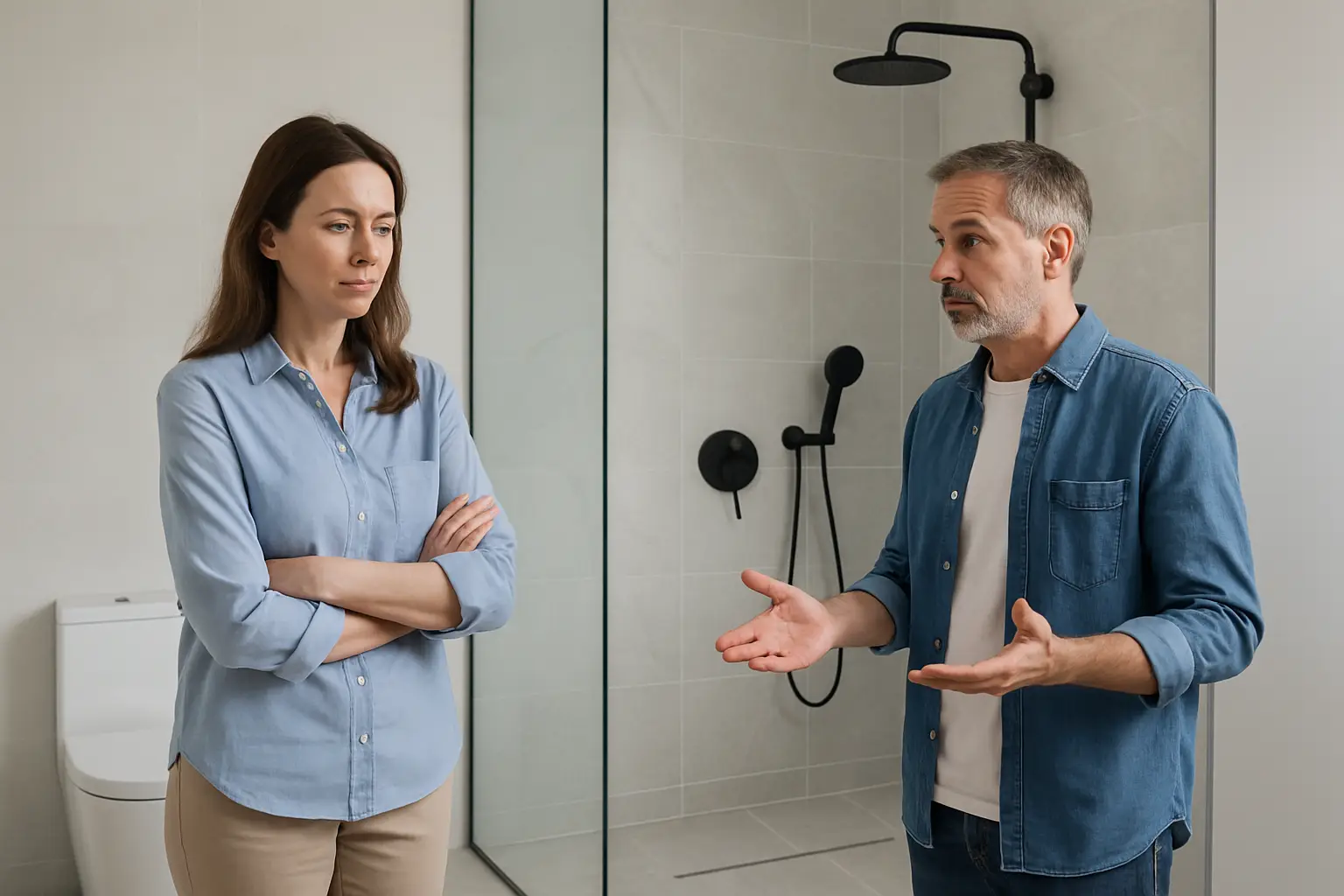
You notice a curbless shower the moment you walk into the bathroom – not because it’s flashy, but because the room feels bigger, cleaner, and easier to move through. Then the practical questions show up fast: Will the bathroom floor get soaked? Does it require special plumbing? Is it going to be a maintenance nightmare?
If you’re remodeling in the Meridian-Boise-Nampa corridor, curbless showers can be an excellent upgrade, but they’re not “better” by default. The details – slope, drain location, waterproofing, and how the bathroom is framed – decide whether you’ll love it for years or regret it after the first winter.
Curbless shower pros and cons (the real trade-offs)
A curbless shower is exactly what it sounds like: no step-over curb at the entry. The shower floor is flush with the bathroom floor (or very close), and the water is managed by a sloped surface and a properly designed drainage and waterproofing system.
The upside is obvious: it looks high-end and feels modern. The downside is less visible: the margin for error is smaller, and the build has to be planned from framing through final tile. This is not a place where “close enough” works.
The biggest pros of a curbless shower
It makes the bathroom feel larger and more custom
Removing the curb visually connects the whole floor, especially when the same tile continues into the shower. In standard bathrooms common in many Boise-area homes, this can make a tight footprint feel more open without moving a wall.
It also reads as intentional design. Curbless showers are one of those upgrades buyers notice immediately because they’re common in higher-end remodels and new builds.
Accessibility is a real, everyday benefit
A curb is a tripping hazard, especially when you’re stepping in with wet feet. Going curbless reduces that risk and makes the shower easier to use for kids, older adults, and anyone recovering from surgery or dealing with mobility limits.
Even if you don’t need accessibility today, many homeowners choose curbless because it supports aging-in-place without making the bathroom look “medical.”
Easier cleaning – fewer corners and seams
A curb creates extra grout lines and edges where soap scum and minerals collect. Curbless designs often pair well with larger-format tile, a single-plane shower entry, and simpler glass layouts, which can mean less scrubbing.
That said, “easier” depends on the tile choice. Tiny mosaics can look great on a sloped floor, but they bring more grout to maintain.
Design flexibility with drains and glass
Curbless showers open the door to linear drains, frameless glass, and wider entries. Homeowners often like the ability to create a clean walk-in feel or even a fully open shower if the layout supports it.
When it’s designed correctly, the shower can feel like part of the architecture of the room, not a boxed-in fixture.
The biggest cons (and what causes most regrets)
Water control is less forgiving
A curb is a physical barrier. Remove it, and the shower has to rely on slope, drain performance, and thoughtful layout. If the slope is too subtle, the drain is poorly placed, or the shower head sprays toward the entry, water can escape.
This is where “it depends” really matters. A curbless shower can stay perfectly dry outside the wet area – but only when the pan is built correctly and the design anticipates real-world use (kids splashing, someone aiming the handheld outward, or high water volume from multiple shower heads).
The waterproofing details matter more than the tile
Tile and grout are not waterproof. They’re the finish layer. In a curbless shower, the waterproofing system and the transition from shower area to bathroom floor are critical because there’s no curb to contain a failure.
The risk isn’t just a wet bath mat. Poor waterproofing can lead to damaged subfloor, rot, and mold behind walls. Those repairs get expensive because the fix is demolition, not caulk.
It can cost more than a standard curb shower
Curbless showers often require more labor and planning. Depending on the home’s structure, you may need to modify the floor framing or build up areas to create proper slope without leaving the bathroom floor awkwardly higher.
There can also be added costs for upgraded drains (especially linear drains), additional waterproofing steps, and extra time spent on precise tile layout.
Not every home is an easy fit
On a slab foundation, the plumbing and drain height can be limiting. On wood framing, you may have more flexibility, but you still have to respect joists, subfloor thickness, and how the shower ties into the rest of the bathroom.
The point isn’t that it can’t be done. It’s that the “best” shower for your bathroom might be a low-profile curb, a ramped entry, or a hybrid approach if the structure would require excessive modification.
What determines whether a curbless shower works
Slope and drain placement
A curbless shower needs a consistent slope that moves water efficiently to the drain. In practical terms, this affects comfort underfoot, how well water clears after a shower, and whether the bathroom floor stays dry.
Drain placement matters too. Center drains can work well, but many curbless designs benefit from a linear drain placed at the shower opening or along the back wall, depending on the layout. The goal is simple: water should have an easy path to the drain without fighting the tile geometry.
Shower size and spray direction
A very small curbless shower is harder to keep contained. If the shower head is close to the entry, water will find its way out, even with a good slope.
Good design can solve a lot: placing the shower head on a side wall, using a fixed panel of glass (instead of leaving the entry fully open), or widening the shower so the wet zone stays where it belongs.
Floor structure and the “flush” promise
Some homeowners expect a perfectly flush, zero-transition entry. That’s possible in many remodels, but not all, and forcing it can create bigger problems.
Sometimes the best outcome is a nearly flush entry with a subtle pitch or a small, intentional transition that still reads as curbless but allows proper drainage and waterproofing. A well-built shower that functions beats a trendy detail that causes issues.
Tile selection and traction
Curbless floors need slip resistance, especially because water may reach areas outside the shower more often than in a curb setup.
Smaller tiles can conform to the slope more easily, which is why mosaics are common on shower floors. Larger tiles can be used, but they require careful planning to avoid lippage and to keep the slope smooth. If you want the clean look of large-format tile, this is where craftsmanship really shows.
Common curbless shower mistakes (that look fine on day one)
The problems we see most often don’t show up immediately. They show up after repeated use.
One is a “flat” shower floor that holds water in corners, leading to constant dampness and faster grout discoloration. Another is a drain that can’t keep up with the shower’s flow rate, especially when homeowners upgrade to multiple spray functions. A third is a weak waterproofing transition at the entry, where water slowly works its way into the bathroom floor assembly.
Glass choices matter too. Fully open entries look great in photos, but in real bathrooms, they can mean more water outside the shower unless the space is large and the spray is controlled.
When a curbless shower is a smart yes
If you want a more open bathroom, plan to stay in the home long-term, or you’re remodeling with accessibility in mind, curbless can be an excellent investment. It’s also a strong choice when the bathroom layout can support a larger shower footprint, when the drain can be placed strategically, and when you’re willing to prioritize proper waterproofing and slope over chasing a specific look.
In many Idaho homes, we find curbless showers work especially well in primary suites where there’s room to build a comfortable wet zone and the design can include a fixed glass panel for water control.
When you may want an alternative
If the bathroom is tight, the structure makes the drain height difficult, or the budget is already stretched by other priorities (like moving plumbing lines or upgrading flooring throughout), a curbless shower may not be the best place to spend.
A low-profile curb can deliver a modern look with easier water containment. Another option is a “European-style” entry where the curb is minimal but present, paired with a frameless glass enclosure to keep the open feel.
Planning it right (without overcomplicating it)
A curbless shower remodel goes best when decisions are made in the right order: layout first, then drain and plumbing realities, then waterproofing approach, then tile and glass. When homeowners pick tile and fixtures first, they sometimes back into a layout that fights drainage or forces awkward transitions.
If you want a curbless shower and you want it done once, done right, work with a contractor who manages the whole sequence – framing, plumbing coordination, waterproofing, tile, and inspection requirements. That’s the difference between a shower that looks good and a shower that performs.
For homeowners in Meridian, Boise, Nampa, and nearby communities, My Contractor LLC builds curbless showers with craftsmanship-first execution and full project oversight, including permits and inspections when required.
A helpful closing thought: choose the shower you’ll enjoy on a rushed Monday morning, not the one that only looks perfect in a staged photo – good design should make life easier, and good construction should make it worry-free.