

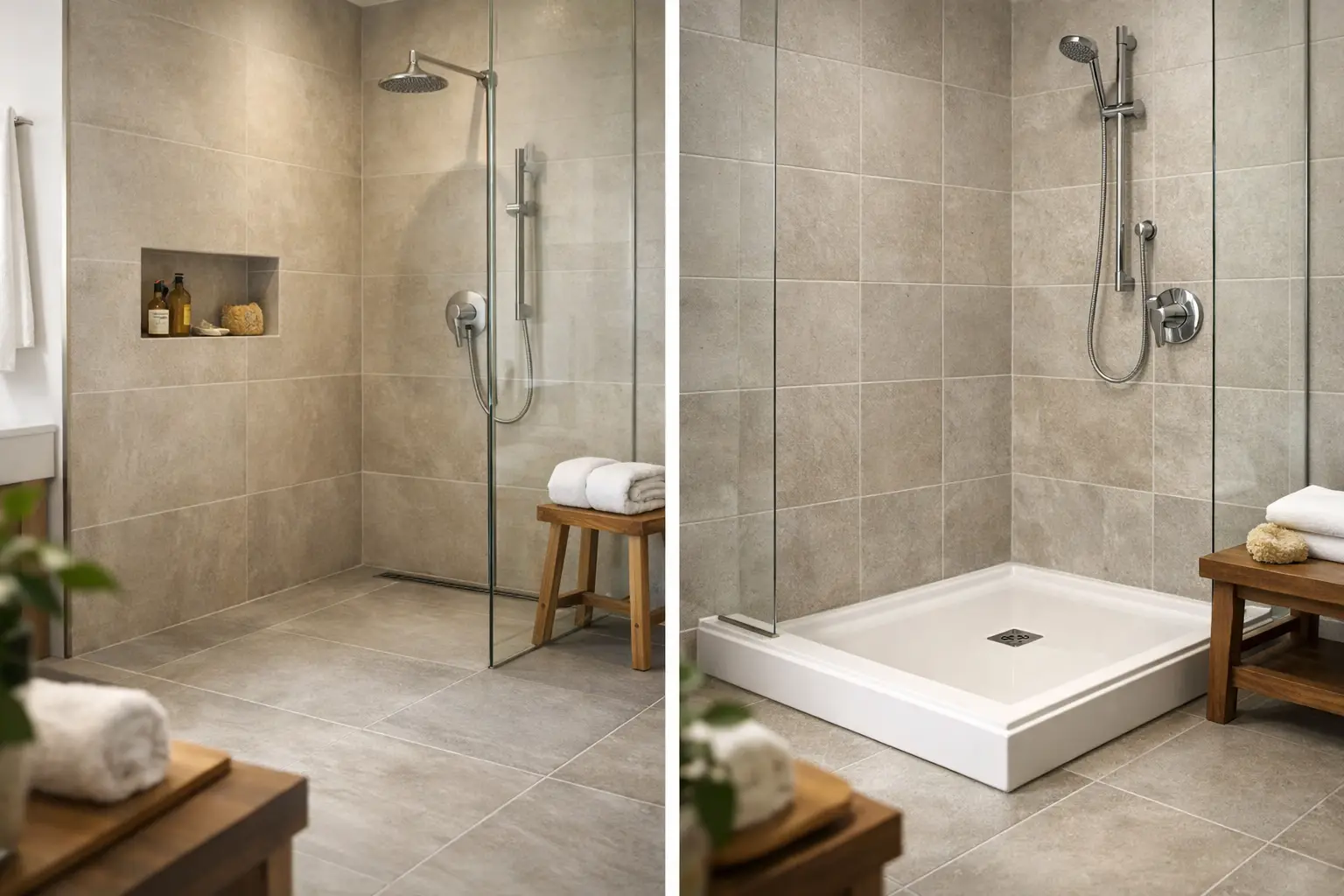
If you are weighing a curbless shower vs shower pan, the right answer usually comes down to one thing – how you want the bathroom to work every single day. Both options can look great. Both can be built to last. But they solve different problems, and the wrong choice can leave you with a shower that feels harder to clean, less comfortable to use, or more expensive to build than expected.
For homeowners in Meridian, Boise, Nampa, and nearby areas, this decision often comes up during a full bathroom remodel. You may want a more modern look, easier access, better resale appeal, or a practical way to update an aging shower without rebuilding the whole room. The best fit depends on your layout, budget, subfloor conditions, and how much customization you want.
Curbless shower vs shower pan: the core difference
A shower pan is a formed shower base, typically made from acrylic, fiberglass, solid surface, or a custom mud-and-tile assembly with a visible threshold. It creates a defined shower area and directs water to the drain inside that contained footprint.
A curbless shower removes that raised edge at the entry. The bathroom floor transitions directly into the shower, with the slope built into the shower area so water still drains properly. That cleaner entry is what gives curbless showers their open, high-end look.
On paper, the difference sounds simple. In practice, it affects framing, waterproofing, tile layout, cleaning routines, accessibility, and project cost. That is why this is less of a style choice and more of a construction decision with design consequences.
Why homeowners choose a curbless shower
A curbless shower is usually chosen for access, appearance, or both. If someone in the home wants easier entry without stepping over a threshold, curbless is a strong option. That can matter for aging in place, temporary mobility issues, or just everyday convenience.
Visually, curbless showers make a bathroom feel larger. The floor can run continuously into the shower, which creates a cleaner line and a more custom finish. In a well-designed primary bath, that detail often changes the whole feel of the room.
There is also a resale angle. Buyers notice a well-built curbless shower because it looks intentional and current. It reads as a premium upgrade when the tile work, glass, drainage, and waterproofing are done right.
That said, curbless is not automatically the better choice. It asks more from the structure beneath the tile, and it leaves less room for installation shortcuts.
Why a shower pan still makes sense
A shower pan is often the smarter fit when you want a faster, more controlled installation or when the bathroom layout does not support a recessed floor. It gives the shower a clear boundary, which helps keep water contained. For many households, that alone is a major advantage.
Shower pans also work well in secondary bathrooms, rental properties, or remodels where budget discipline matters. A quality pan can look clean and polished, especially when paired with solid wall tile and good glass work. It may not have the same open look as curbless, but it is often easier to install and easier to predict from a cost standpoint.
This matters in real remodel planning. Not every homeowner wants to rework joists, move plumbing, or rebuild subfloor elevations just to eliminate a threshold.
Cost differences are usually about labor, not just materials
When clients compare pricing, they sometimes assume curbless showers cost more because of expensive finishes. The bigger factor is usually labor and prep.
A curbless shower often requires recessing the floor or adjusting framing so the shower can slope correctly without creating a bump at the entry. Waterproofing has to be precise, and tile layout becomes more critical because the transitions are more exposed. Drain placement also matters more, especially with large-format tile.
A standard shower pan installation can be more straightforward. If the existing plumbing location works and the surrounding framing is in good condition, the project may move faster and with fewer structural changes.
The final price gap depends on the house. In some remodels, the difference is manageable. In others, especially older homes or second-floor bathrooms, creating a true curbless entry can add meaningful labor. That is where an experienced contractor earns their keep – by identifying those conditions before demolition gets too far.
Drainage and waterproofing decide whether the shower lasts
This is the part homeowners do not always see, but it is the part that matters most. A beautiful shower that drains poorly or leaks into surrounding areas is not a premium feature. It is a costly repair waiting to happen.
With a shower pan, drainage is simpler because the base is already shaped to direct water. With a curbless shower, the slope has to be built accurately and consistently across the right area. Too little slope, and water lingers. Too much, and the floor can feel awkward underfoot.
Waterproofing is also less forgiving in a curbless design because the shower area blends into the main bathroom floor. That means the waterproofed zone often extends farther, and transitions at walls, corners, and glass locations have to be handled with real care.
For that reason, curbless showers are not a good place to cut corners. Precision tile work and correct waterproofing methods are what make the design perform, not just what make it look finished.
Curbless shower vs shower pan for cleaning and maintenance
Many homeowners assume curbless means easier cleaning because there is no curb to wipe down. Sometimes that is true. The open entry can reduce grime buildup around the threshold, and fewer visual breaks can make the shower feel cleaner overall.
But maintenance also depends on materials and layout. A tiled curbless shower with multiple grout lines will not necessarily be lower maintenance than a solid shower pan with simple wall tile. Glass placement matters too. An open walk-in design may allow more water to reach the main bathroom floor, which means more routine wiping outside the shower area.
A shower pan can be very practical to maintain, especially if the base has a smooth, easy-clean surface. The trade-off is aesthetic. It may not deliver the same custom look, and lower-end pans can feel more builder-grade if the rest of the room is upscale.
Accessibility is a real advantage, but only if the design supports it
Curbless showers are often recommended for accessibility, and for good reason. Removing the threshold reduces a common tripping point and can make entry easier for people using walkers, wheelchairs, or simply wanting a more comfortable step-in experience.
Still, accessibility is not just about removing the curb. The shower needs enough space to maneuver, the slope has to be safe, the flooring should offer traction, and the drain placement should keep water under control. Benches, grab bars, and handheld shower fixtures may also matter depending on who will use the space.
A shower pan can still be accessible if chosen carefully. Some low-threshold pans offer easier entry than traditional high-curb units. If a fully curbless build is not practical, that can be a strong middle-ground option.
Which one looks better?
If the goal is a modern, custom, high-end bathroom, curbless usually wins on appearance. It creates visual continuity and gives tile work room to stand out. In smaller bathrooms, it can also make the room feel less chopped up.
That does not mean shower pans look bad. A well-selected pan can look sharp, especially in a remodel where the design priorities are durability, speed, and value. There are solid surface and custom-ready options that feel more refined than the old one-piece units many people picture.
The better question is not which looks better in a magazine. It is which one fits the bathroom you actually have and the way you plan to use it.
When each option is usually the right call
Curbless is often the right call when you are doing a full remodel, want a custom tile shower, care about accessibility, and are willing to invest in the structural and waterproofing work needed to do it right.
A shower pan is often the better choice when you want reliability, clear water containment, a more controlled budget, or a simpler installation path. It also makes sense when the existing floor structure does not lend itself easily to a recessed shower area.
That is why a site-specific plan matters. At My Contractor LLC, this is the kind of decision we help homeowners work through early, before product selections and tile choices lock the project into the wrong direction.
A good bathroom remodel is not about picking the trendier option. It is about choosing the shower system that fits the home, protects the structure, and still feels right five years from now. If you are torn between curbless and a shower pan, trust the answer that balances craftsmanship, daily function, and the realities of the space you have.