

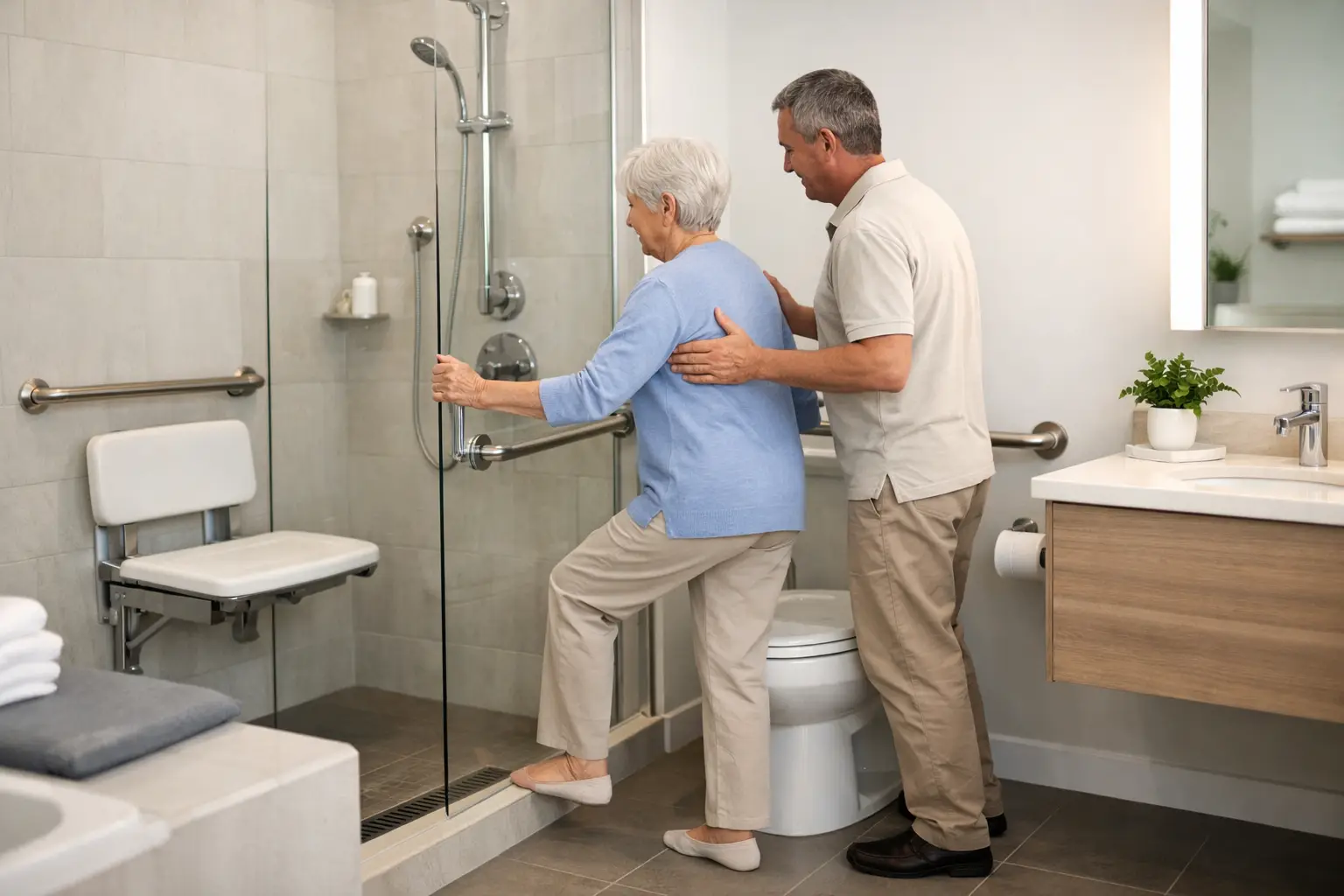
A good bathroom remodel for aging in place example starts with a real problem, not a showroom photo. A homeowner may love their house, their neighborhood, and their routine, but the bathroom begins working against them. The tub wall gets harder to step over. The floor feels slick after a shower. The vanity corners feel tighter every year. Aging in place remodeling is about removing those daily friction points before they become injuries.
In practical terms, that means building a bathroom that supports independence without making the space feel clinical. The best results do not look like a hospital retrofit. They look clean, intentional, and well built, with every detail serving a purpose. For homeowners in Meridian, Boise, Nampa, and nearby communities, that balance matters. You want a space that protects long-term comfort and still adds value to the home.
A bathroom remodel for aging in place example
Picture a dated hall bathroom built in the early 1990s. It has a standard tub-shower combo, a single vanity with limited knee clearance, glossy tile flooring, poor lighting, and a narrow path between fixtures. The homeowner is in their early 60s and planning ahead after helping an older parent recover from a fall. They do not need full accessibility today, but they want the bathroom to be safer, easier to use, and ready for the next 10 to 20 years.
The remodel begins with the tub removal. In its place goes a low-threshold walk-in shower with a wide opening and a built-in bench. This is one of the biggest functional upgrades because it removes the high step that often becomes the first serious barrier in a bathroom. Large-format tile on the walls reduces grout lines and keeps maintenance simpler, while a slip-resistant tile underfoot improves traction without sacrificing appearance.
A handheld shower on an adjustable slide bar gives the homeowner flexibility. It works for seated showering, easier rinsing, and future mobility needs. Grab bars are installed in key locations – at the shower entry, near the bench, and beside the toilet – but chosen in finishes that match the plumbing trim so they look like part of the design rather than an afterthought.
The vanity is replaced with one that offers better clearance and easier drawer access. Depending on the homeowner, this might mean a comfort-height vanity that reduces bending or an open section that can accommodate seated use later. Faucets with lever handles are a better choice than knobs for hands with reduced grip strength. The toilet is upgraded to comfort height as well, which sounds like a small change until you use it every day.
Lighting gets a full rethink. Many older bathrooms rely on one overhead fixture that creates shadows right where people need visibility most. In this example, layered lighting improves safety and comfort: brighter vanity lighting for grooming, better overhead illumination, and a quiet exhaust fan with integrated light. If the budget allows, motion-activated lighting for nighttime use adds another layer of convenience.
The doorway may also be widened if the existing framing allows it. Not every aging in place project requires this step, but it can be a smart move when planning ahead. A few extra inches can make the room easier to navigate now and far more adaptable later.
Why this example works
The strength of this bathroom remodel for aging in place example is that it solves present and future needs at the same time. That is where many remodels miss the mark. Some focus only on immediate style upgrades and ignore mobility. Others lean so heavily into accessibility products that the bathroom loses the warmth and finish quality homeowners want.
A well-executed aging in place remodel treats safety as part of craftsmanship. The tile layout matters because uneven surfaces can create tripping hazards. Fixture placement matters because a grab bar installed in the wrong spot is not much help when someone needs support. Drain slope matters because standing water increases slip risk. This is why precise installation and thoughtful planning matter more than buying the most expensive materials.
There is also a strong value argument here. A bathroom that works better for older adults often works better for everyone. Walk-in showers are easier for kids, guests, and anyone recovering from surgery or injury. Better lighting improves the room for all ages. Wider clearances simply make the space feel more comfortable. Aging in place design, when done right, is not niche. It is durable, practical remodeling.
The design choices that matter most
The biggest decisions usually come down to layout, surface selection, and fixture usability. Layout comes first because no finish can compensate for a bathroom that is awkward to move through. If the room is small, the contractor may need to rework plumbing locations, adjust vanity depth, or swap a swinging door for a pocket or outswing door. Those are not flashy changes, but they can dramatically improve function.
Surface selection deserves more attention than homeowners often expect. Highly polished floors may look sharp in a sample, but they are not the right fit for a bathroom designed around long-term safety. Texture matters. Ease of cleaning matters. Visual contrast matters too, especially for aging eyes. When the floor, walls, and shower edge all blend together, depth can be harder to judge.
Fixture usability is another area where details count. Lever handles, pressure-balanced valves, and easy-glide shower doors or doorless entries make daily use easier. A recessed niche placed at the right height is more practical than a wire rack hung as an afterthought. Even mirror placement can affect comfort if a homeowner wants to use the vanity while seated.
Where trade-offs come into play
Not every home needs the same solution, and not every project needs to be taken to a fully accessible standard on day one. Some homeowners are planning proactively and want subtle upgrades that preserve resale flexibility. Others are remodeling after a medical event and need immediate function above all else. The right answer depends on health, budget, timeline, and how long the homeowner plans to stay in the home.
For example, a zero-entry shower is an excellent long-term feature, but it may require more intensive floor work than a low-threshold shower. In some homes, especially on slab foundations or in tight second-floor layouts, that can affect cost and construction scope. The same goes for widening doorways or relocating plumbing. These upgrades can be worth it, but they should be evaluated case by case.
Budget is another real consideration. If a homeowner cannot do a full bathroom overhaul now, a phased plan can still make sense. Start with the shower conversion, non-slip flooring, and support blocking in the walls for future grab bars. That approach protects the most important functions first while preparing the room for later improvements.
How to plan an aging in place bathroom the right way
The best starting point is not choosing tile. It is defining how the bathroom needs to work. Can the homeowner enter and exit the shower confidently? Is there enough room to turn, sit, or reach essentials comfortably? Are there any current pain points with bending, stepping, gripping, or balance? Those answers shape the remodel more than style boards ever will.
From there, the planning should include realistic construction guidance. That means understanding what is possible within the existing footprint, what requires permits, and what should be upgraded behind the walls while the room is open. This is where working with a licensed contractor matters. A bathroom remodel touches waterproofing, electrical, ventilation, plumbing, tile installation, and code compliance. If one part is done poorly, the whole room pays for it later.
A craftsmanship-led contractor will also help homeowners avoid common mistakes, like placing grab bars where studs happen to be instead of where support is needed, choosing beautiful but slippery flooring, or overlooking storage that keeps the room clutter free. With aging in place work, the small decisions carry more weight because they affect safety every single day.
For local homeowners, this kind of project is not just about remodeling a bathroom. It is about protecting the ability to stay in a home with confidence. My Contractor LLC approaches those details with the same precision, permit oversight, and finish quality that matter in any premium renovation, because function should never come at the expense of craftsmanship.
A bathroom should support your life without asking you to think twice every time you use it, and that is exactly what a well-planned aging in place remodel is built to do.