

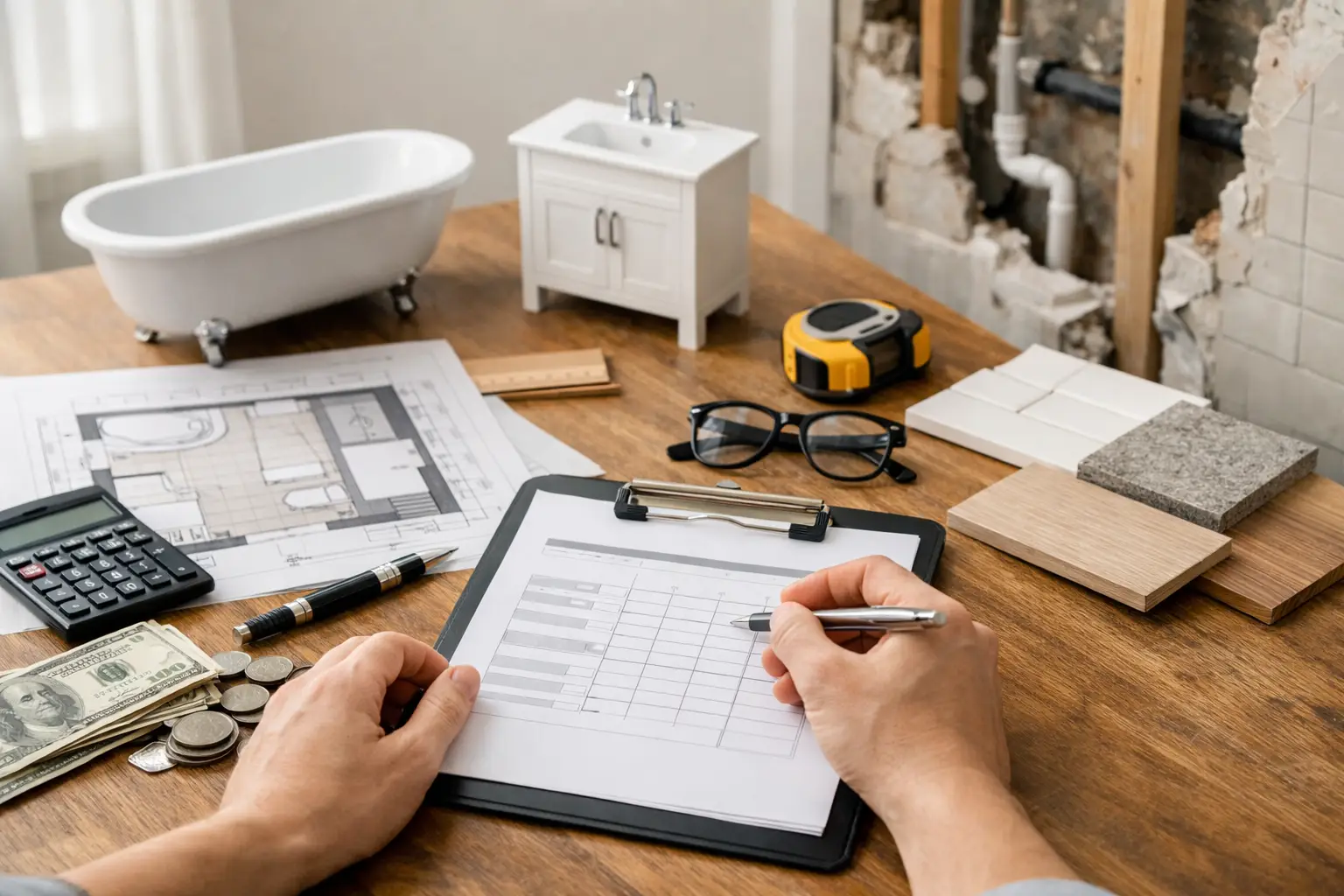
A bathroom remodel usually feels simple until the numbers start stacking up. Tile, plumbing fixtures, waterproofing, demolition, labor, permits, and finish details can turn a rough guess into a budget problem fast. That is exactly why a bathroom renovation budget planning worksheet matters – it gives you a clear way to map the real cost of the project before work begins.
For most homeowners, the budget issue is not one oversized line item. It is the accumulation of small decisions. A nicer tile pattern here, a better vanity top there, upgraded lighting, a frameless shower glass package, a plumbing adjustment behind the wall. None of those choices are wrong. But if they are not tracked carefully, they can push a project past the comfort zone long before the room is finished.
What a bathroom renovation budget planning worksheet should do
A good worksheet is not just a price list. It is a planning tool that helps you connect scope, materials, labor, and timing. It should show you where the money is going and help you decide what deserves investment.
That means your worksheet should separate the project into practical categories. Demolition is different from waterproofing. Tile labor is different from tile material. Fixtures are different from finish accessories. When those pieces are blended together, it becomes harder to compare options or understand why one quote is higher than another.
A worksheet also helps you see where the project has risk. If your bathroom is older, plumbing updates may be more likely. If the layout is changing, electrical and framing costs can move up. If you are choosing premium tile or custom shower work, labor may increase because the installation requires more precision. A clean worksheet makes those trade-offs visible.
Start with scope before pricing
Before you assign dollar amounts, define exactly what is being renovated. Are you replacing finishes in the same layout, or are you moving plumbing and opening walls? Are you updating a guest bath, a primary bathroom, or a compact powder room? Scope drives budget more than almost anything else.
A cosmetic remodel may focus on vanity replacement, flooring, paint, fixtures, and lighting. A full renovation often includes demolition to the studs, waterproofing, tub-to-shower conversion, tile surrounds, ventilation updates, and code-related corrections. Those are very different jobs, and your worksheet should reflect that difference from the start.
This is also the point where homeowners should be honest about priorities. If the goal is long-term durability, spend more attention on the parts behind the tile, under the floor, and inside the walls. If the goal is visual impact, more of the budget may go toward finish materials. Usually, the best remodel balances both, but the worksheet should show where your priorities sit.
Core categories to include in your worksheet
Design and planning
Even a straightforward bathroom remodel benefits from early planning costs. This can include measurements, layout decisions, product selection, and consulting support. If permits or inspection coordination are needed, account for that here or in a separate compliance section.
Skipping planning often creates expensive changes later. A worksheet should make room for decisions before the build starts, not during it.
Demolition and prep
This category covers tear-out, debris removal, surface prep, and jobsite protection. It is easy to underestimate because homeowners tend to focus on what is going in, not what must come out first.
Prep work is also where quality contractors protect surrounding areas, control dust, and create a cleaner path for the rest of the remodel. That may not be the most visible part of the project, but it affects the experience and the final result.
Plumbing and electrical
If fixtures stay in the same place, costs may stay more controlled. Once a toilet, shower valve, or vanity plumbing moves, labor and material costs often rise. The same goes for electrical. New lighting, exhaust fans, outlets, heated floors, and code updates can shift the budget quickly.
This is a category where older homes deserve extra caution. Sometimes the worksheet needs an allowance rather than a fixed number until walls are opened.
Waterproofing and substrate work
This is one of the most important sections in the entire bathroom renovation budget planning worksheet. Waterproofing systems, backer materials, shower pan preparation, and floor leveling are not glamorous, but they protect the remodel from failure.
Homeowners sometimes compare bids based on visible finishes alone and miss the difference in what is happening underneath. A lower price can reflect less thorough prep. That is not a savings if moisture problems show up later.
Tile and flooring
Tile budgets have two parts: material cost and installation cost. The material may vary widely depending on size, texture, and source. Installation cost depends on layout complexity, pattern, cuts, waterproof areas, trim details, and the condition of the surfaces.
A basic straight-set tile install will budget differently than a shower with niches, accent bands, large-format wall tile, and a custom floor pattern. Your worksheet should not treat all tile work as one generic number.
Fixtures and finish materials
This includes vanities, countertops, sinks, faucets, shower trim, toilets, mirrors, lighting, hardware, and glass. It is often where taste and budget collide.
There is no single right place to spend. Some homeowners want a standout vanity. Others care more about a premium shower system or durable flooring. The worksheet gives each finish its own line so you can adjust without losing control of the total.
Labor, permits, and contingency
Labor should be separated clearly rather than buried across categories if possible. That helps you understand the difference between a material-heavy project and a craftsmanship-heavy one. Permit and inspection costs should also be visible, especially when plumbing, electrical, or structural work is involved.
Then add contingency. For many bathroom remodels, a reserve of 10 to 20 percent is reasonable depending on age of the home, complexity, and how much is being opened up. The more unknowns behind walls and under floors, the more important this line becomes.
How to use the worksheet without fooling yourself
The biggest budgeting mistake is building a worksheet around best-case assumptions. If every line item reflects the lowest possible price, the worksheet may look encouraging but fail in real-world conditions.
A more reliable approach is to use realistic ranges. Set a target amount, then a likely amount, then a not-to-exceed ceiling where possible. That gives you room to make decisions without feeling blindsided. It also helps when you are comparing products. A vanity might fit the design, but if it forces countertop upgrades, plumbing changes, and longer lead times, it carries a bigger budget impact than the sticker price suggests.
Another smart move is to split selections into must-haves and nice-to-haves. That way, if the worksheet starts stretching, you know what can be adjusted without compromising the function of the room.
Why detailed estimates matter more than cheap allowances
Some budgets look attractive because they rely on vague allowances. That can keep the first number low, but it often moves pressure downstream when actual selections are made. If the allowance for tile, lighting, or plumbing trim is too small for the quality level you expect, the budget gap appears later.
Detailed estimating is more honest. It takes longer up front, but it protects the homeowner from false confidence. In a bathroom remodel, precise planning usually leads to better scheduling, fewer change orders, and cleaner execution.
That is especially true when the contractor manages the project from planning through permits, inspections, installation, and finish work. A full-scope approach helps align the worksheet with what the project will actually require, not just what sounds affordable on paper.
A practical mindset for Idaho homeowners
In the Meridian, Boise, and Nampa area, homeowners often want bathrooms that feel current, durable, and easy to maintain for years. That usually means balancing finish upgrades with strong installation standards. Heated flooring might be worth it for one household. For another, better shower waterproofing, improved ventilation, and tile craftsmanship deserve the bigger investment.
The right worksheet supports those choices. It should help you avoid overbuilding in one area while underfunding something essential. It should also make it easier to ask better questions when reviewing a quote. If a contractor is precise about scope, labor, sequencing, and compliance, that is usually a good sign that the project will be handled with the same level of care.
At My Contractor LLC, that planning mindset is part of doing the job right. A well-built bathroom starts long before the first tile is set.
If you are building your own worksheet, keep it honest, detailed, and flexible enough for real decisions. A bathroom remodel runs smoother when the budget reflects the project you actually want, not the one you hope will somehow cost less.