

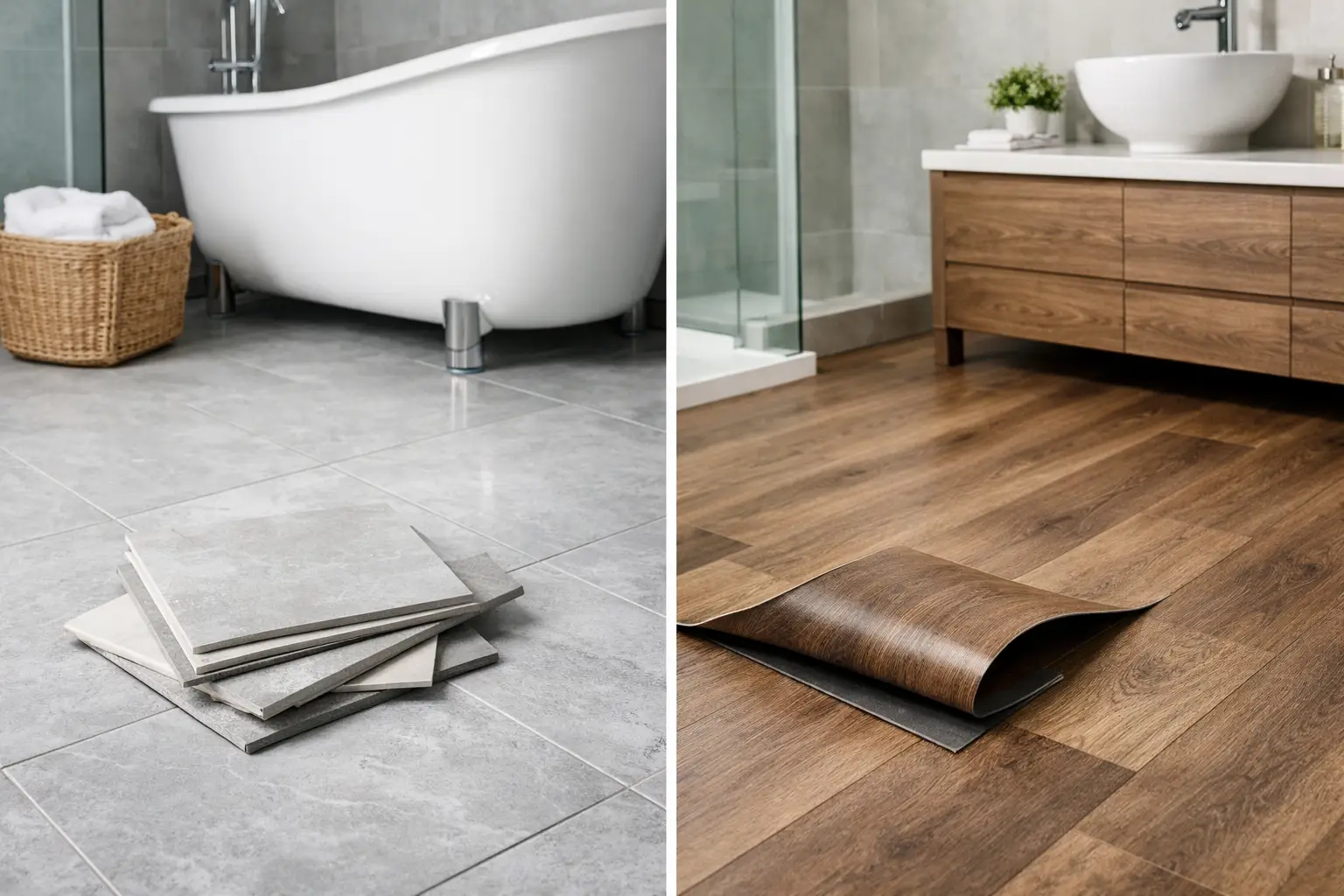
A bathroom floor has to handle more abuse than people expect. Wet feet, steam, hair products, cleaning chemicals, and constant temperature changes all show up in one small space. That is why the tile vs vinyl plank flooring bathrooms question is not really about trends. It is about how you want the room to perform every day, and how long you want that finish to hold up.
Both materials can work well in a bathroom. Both can also be the wrong choice if the installation is rushed or the product is poorly matched to the space. For homeowners in Meridian, Boise, Nampa, and nearby communities, the better option usually comes down to three things: how much water the room sees, the look you want, and whether you are planning for a fast refresh or a long-term remodel.
Tile vs vinyl plank flooring bathrooms: what changes the decision?
On the surface, the comparison seems simple. Tile has the reputation for durability and luxury. Vinyl plank is known for comfort, lower cost, and easier installation. But bathrooms are not surface-level rooms. Small details matter here.
A full primary bath with a busy morning routine has different demands than a powder room off the hallway. A guest bath that gets occasional use does not need the same wear resistance as a family bathroom used by kids every day. The subfloor condition matters too. So does the age of the home, the transition to nearby rooms, and whether the project includes a shower upgrade, vanity replacement, or full layout change.
That is why flooring should not be chosen in isolation. It should fit the entire renovation plan.
Why tile remains the premium standard
Tile continues to be the go-to choice for homeowners who want a bathroom built for long-term performance. When installed correctly, tile handles water well, holds up to heavy use, and gives the space a finished, high-end feel that is hard to match.
Porcelain tile is especially strong for bathrooms because it is dense, less porous than many ceramic options, and available in a wide range of colors, patterns, and sizes. It can create a clean, classic floor or a more custom design with larger-format pieces, textured finishes, or detailed layout work.
Tile also gives you more confidence around moisture. The material itself is water-resistant, and when paired with proper underlayment, waterproofing details, and careful grout work, it becomes part of a bathroom floor system designed to last. That matters in rooms where spills and humidity are not occasional problems. They are part of normal use.
There are trade-offs. Tile is harder underfoot, colder in winter, and usually more expensive to install. It also demands a flatter, more stable substrate. If the subfloor has movement or damage, those issues need to be corrected first. Otherwise, even a beautiful tile installation can fail early.
That is one reason craftsmanship matters so much with tile. The product is excellent, but only when the prep work and installation are handled with precision.
Where vinyl plank makes sense in a bathroom
Luxury vinyl plank has improved significantly over the years. It is no longer just a budget-driven substitute. In the right bathroom, it can be a smart, attractive flooring option with practical advantages.
Vinyl plank is softer and warmer underfoot than tile. For many homeowners, that comfort is noticeable right away. It is also generally faster to install, and in many cases the overall project cost is lower. If you are updating a secondary bathroom, a rental property, or a space where you want a fresh look without the cost of a full tile floor, vinyl can be a strong candidate.
Water resistance is where homeowners need to be careful. Many vinyl plank products are marketed as waterproof, but that does not mean the entire floor assembly is immune to moisture problems. Water can still work its way into seams, around the perimeter, or below the flooring if installation details are not handled properly. In a bathroom with frequent standing water or poor ventilation, that risk matters.
Vinyl also has limitations in how premium it feels compared with tile. Some products look convincing from a distance. Fewer hold up as well under close inspection, especially in a bathroom remodel where the shower, vanity, and trim are all getting upgraded. If the goal is a more polished, lasting finish, tile often carries the room better.
Cost matters, but so does lifespan
If you compare only the upfront price, vinyl plank usually comes out ahead. Material costs are often lower, labor can be simpler, and the installation timeline may be shorter. That makes vinyl appealing when budget is a primary factor.
But bathroom flooring should be judged over time, not just at the first invoice. Tile generally lasts longer and tends to age better, especially in bathrooms that see daily use. A well-installed tile floor can continue performing for decades. Vinyl plank can offer solid service life, but it is more dependent on product quality, moisture exposure, and wear conditions.
The better value depends on your goals. If you are updating a bathroom to improve function and appearance for the next five to ten years, vinyl might be enough. If you are investing in a remodel that you want to feel finished, durable, and aligned with the long-term value of the home, tile often justifies the higher initial cost.
Comfort, maintenance, and day-to-day living
This is where the decision becomes personal.
Tile feels firmer and cooler. Some homeowners love that clean, solid feel. Others find it less comfortable during early mornings, especially in colder months. Radiant heat can improve that experience, but it adds scope and cost to the remodel.
Vinyl plank feels warmer and has more give underfoot. In a household with kids or older adults, that softer feel can be a real benefit. It also tends to be quieter.
On maintenance, both are manageable, but they behave differently. Tile is easy to clean, though grout lines may need more attention over time depending on the product and sealing method. Vinyl has fewer joint lines and is generally simple to wipe down, but it can be more vulnerable to surface gouging, edge damage, or failure if moisture gets underneath.
Neither option should be selected on marketing claims alone. The layout of the room, the presence of a tub or walk-in shower, and the condition of the subfloor all affect how well that flooring will perform in real life.
Tile vs vinyl plank flooring bathrooms: which one is better for resale?
In most higher-value bathroom remodels, tile has the stronger resale appeal. Buyers tend to associate tile with quality, durability, and a more finished renovation. It photographs well, pairs naturally with tiled showers, and supports the impression that the bathroom was upgraded with care.
That does not mean vinyl plank hurts resale in every case. In a clean, well-designed bathroom with the right product selection, it can still look attractive and functional. But if you are remodeling with future marketability in mind, tile usually sends the stronger signal.
This is especially true when the rest of the home is being updated to a higher standard. A bathroom with custom shower work, quality fixtures, and detailed trim can feel mismatched if the floor reads as a lower-tier finish.
When tile is the better choice
Tile is usually the right move when the bathroom is part of a full renovation, when the space gets heavy daily use, or when the goal is a more custom and lasting result. It is also the better fit when you want stronger moisture performance and a finish that aligns with premium shower and vanity upgrades.
For primary bathrooms and hall baths used by families, tile often wins because it is built for the long haul. It asks for more upfront, but it pays that back in durability and appearance.
When vinyl plank is the better choice
Vinyl plank makes more sense when budget is tighter, comfort is a priority, or the bathroom is a lower-moisture space such as a guest bath or powder room. It can also work well when the project is more of a targeted refresh than a full custom remodel.
The key is choosing a quality product and making sure the floor is installed with the same attention to detail you would expect from any finish in a wet area. Even a more affordable material needs proper prep, clean transitions, and careful perimeter sealing to perform well.
The installation matters as much as the material
Homeowners often spend weeks choosing between flooring types and only a few minutes thinking about what sits underneath. That is backwards.
Subfloor issues, improper leveling, weak waterproofing details, and rushed installation cause more bathroom floor problems than the material itself. A great tile product installed poorly will not last. The same goes for vinyl plank. Bathrooms need careful planning, especially when the flooring connects to shower work, toilet flange height, vanity footprint, and door clearances.
That is why many homeowners prefer working with a contractor who can look at the entire bathroom, not just the floor. On a well-managed remodel, material selection, prep work, permits, and finish installation all support the same result: a bathroom that looks right and performs the way it should.
For homeowners who want that kind of start-to-finish guidance, My Contractor LLC helps clients across the Treasure Valley make material decisions based on real use, not showroom guesses.
If you are stuck between tile and vinyl plank, the best answer is usually the one that fits the bathroom you actually have, the finish level you want, and the lifespan you expect. A good bathroom floor should feel right on day one, but it should also still make sense years from now.