

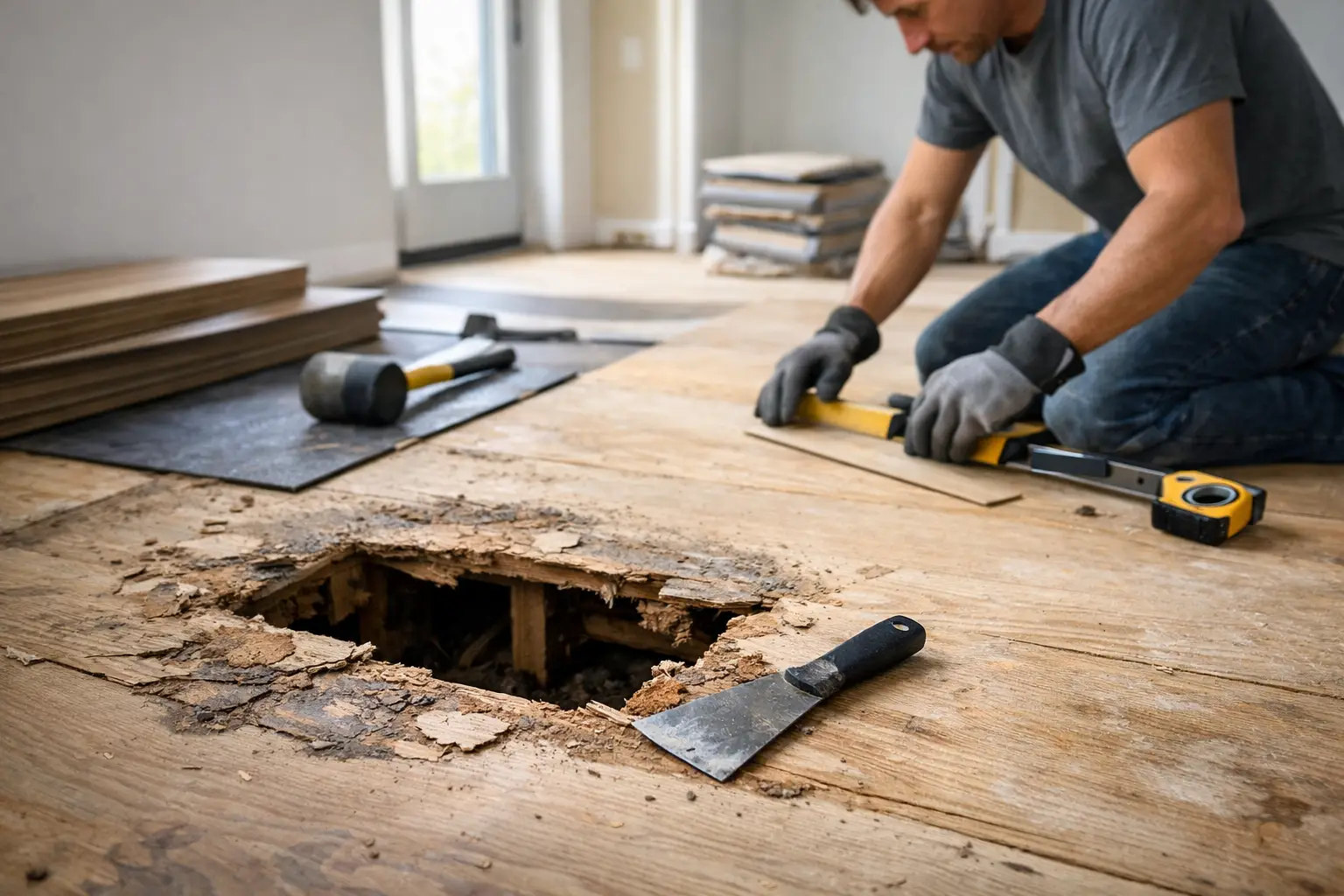
A beautiful new floor can fail for a very plain reason – what is underneath it was never fixed.
Homeowners often focus on the visible finish: the tile pattern, the wood tone, the luxury vinyl color. But if the subfloor is soft, uneven, water-damaged, or loose, those finish materials are being installed on a weak foundation. That usually leads to cracked grout, hollow spots, squeaks, lifted planks, or movement that shows up far too soon after the project is done.
That is why subfloor repair before flooring is not an extra. It is part of doing the job right.
Why subfloor repair before flooring matters
The subfloor carries the load of everything above it – your finished flooring, your furniture, and the daily traffic that comes with real life. When it is solid, flat, dry, and properly fastened, your finished floor performs the way it should. When it is not, even premium flooring materials can look and feel cheap in a short amount of time.
This matters even more in bathrooms, kitchens, entryways, and laundry areas where moisture is common. A tile floor may look ready for a refresh, but hidden damage underneath can be the real issue. In older homes around Meridian, Boise, and Nampa, we also see subfloors that have been patched multiple times, cut during plumbing updates, or left uneven after earlier remodel work.
The trade-off is simple. Addressing subfloor problems upfront can add time and cost to a project. Skipping them usually adds more time and more cost later, often after the new floor has already been installed.
What a damaged subfloor looks like
Some warning signs are obvious. Others stay hidden until demolition starts.
If your floor feels spongy underfoot, squeaks when you walk across it, dips in certain areas, or has cracked tile and grout that keeps coming back, the subfloor may be part of the problem. You might also notice transitions between rooms that feel uneven, flooring that separates at seams, or a musty smell near bathrooms and exterior doors.
Water damage is one of the biggest red flags. Around tubs, showers, toilets, dishwashers, and refrigerators, moisture can slowly break down plywood or OSB over time. The surface may look intact from above while the material underneath has softened, swelled, or started to delaminate.
There are also structural causes. Sometimes the issue is not the panel itself but the framing below it. A subfloor can flex because joists are undersized, notched incorrectly, or weakened by age and previous repairs. That is why a proper evaluation matters. Replacing one sheet of material will not solve a movement problem if the support below is still compromised.
Not every subfloor problem needs full replacement
This is where experience matters.
Some floors need complete tear-out in affected areas. Others need selective replacement, re-fastening, leveling, or reinforcement. A good contractor does not assume every squeak means a full rebuild, but also does not cover obvious damage with underlayment and hope for the best.
For example, minor squeaks may be solved by securing loose panels to the framing. Small low spots may be corrected with floor leveling products if the substrate is otherwise sound and dry. Localized water damage near a toilet flange may only require cutting out and replacing a defined section. But widespread swelling, mold, repeated water intrusion, or structural sagging calls for a more thorough repair plan.
The right fix depends on three things: how far the damage extends, what finish flooring is being installed, and whether moisture or framing problems are still active.
How the flooring type changes the repair standard
Different flooring materials forgive different amounts of imperfection.
Tile is one of the least forgiving. It needs a stable, properly prepared surface with minimal deflection. If the subfloor flexes, the tile assembly can crack. In many cases, the repair process also includes the right underlayment or backer system above the subfloor, not just patching the wood below.
Hardwood also demands a flat, dry, secure base. Excess movement can cause noise, gaps, or uneven wear. Luxury vinyl plank is more flexible in some situations, but that does not mean it can hide a bad substrate. Low spots, ridges, soft areas, and moisture issues can still telegraph through or shorten the life of the product.
Laminate and sheet vinyl each have their own requirements as well. Manufacturer instructions matter here, and they matter for warranty protection. One of the most common mistakes in flooring projects is assuming the finish material will somehow compensate for a substrate that was never properly prepared.
What happens during subfloor repair before flooring
A professional process usually starts after the existing floor covering is removed. That is when the true condition becomes visible.
First comes inspection. The goal is to identify soft spots, water damage, loose fasteners, uneven transitions, and any signs that the framing below needs attention. Moisture readings may be necessary, especially in bathrooms, kitchens, and slab-adjacent areas. If there has been a plumbing leak, the source has to be corrected before repair work starts.
Next comes demolition of failed materials. Damaged sections are cut back to sound material, ideally landing on framing so replacement panels can be properly supported. If the issue extends under cabinets, tubs, or walls, the repair strategy may need to change based on access and scope.
Then the structure gets corrected. That may include sistering joists, adding blocking, improving fastening, or adjusting uneven areas. After that, new subfloor material is installed with the correct thickness, grade, spacing, and fastening pattern for the application.
The final prep depends on the flooring going back in. For tile, that may mean adding a cement backer board or uncoupling membrane. For other finishes, it may mean sanding high spots, applying floor patch, or using underlayment approved by the flooring manufacturer.
Moisture is the issue that should never be rushed
A subfloor that got wet once is not always a problem. A subfloor that is still getting wet is.
That distinction matters. If the damage came from an old leak that has been fully repaired, the path forward may be straightforward. If moisture is still entering from a plumbing issue, poor shower waterproofing, exterior door exposure, crawl space humidity, or slab-related conditions, installing new flooring before solving the source is asking for repeat damage.
Bathrooms are a common example. Homeowners sometimes want to replace tile after noticing loose grout or stained flooring around a toilet. But if the wax ring has been leaking or the shower pan has failed, the floor system needs more than cosmetic work. The visible problem is only part of the story.
This is one reason many clients prefer a contractor who can manage both the finish work and the broader repair scope. When one team understands demolition, structure, waterproofing, flooring, and code-related steps, there is less guesswork and fewer gaps between trades.
When homeowners should expect permits or inspections
Not every subfloor repair requires a permit. Cosmetic floor replacement usually does not. But once structural framing, plumbing corrections, or larger remodel work enters the picture, permit requirements can change.
That depends on local scope and what is being altered. If a bathroom remodel includes repairing water-damaged framing, moving plumbing, or rebuilding part of the floor system, code compliance becomes part of the job. This is where proper project management protects the homeowner. The goal is not just to make the floor look better, but to make sure the repair is sound, compliant, and built to last.
Why this part of the project deserves real attention
Subfloor work is not the part homeowners post photos of, but it is often the part that determines whether the finished space feels solid and high-end or disappointing.
Good flooring should feel stable under every step. Tile should not crack because a corner was cut below it. Vinyl should not show the shape of a bad patch six months later. Hardwood should not shift because the base was uneven from day one. Precision matters below the surface just as much as it does in the visible finish.
That is the standard we believe in at My Contractor LLC. If the foundation under the floor needs attention, the right move is to address it now, not after the new material is already down.
If you are planning new flooring and something feels off underfoot, trust that instinct. The best-looking floor in the room starts with the part no one sees.