

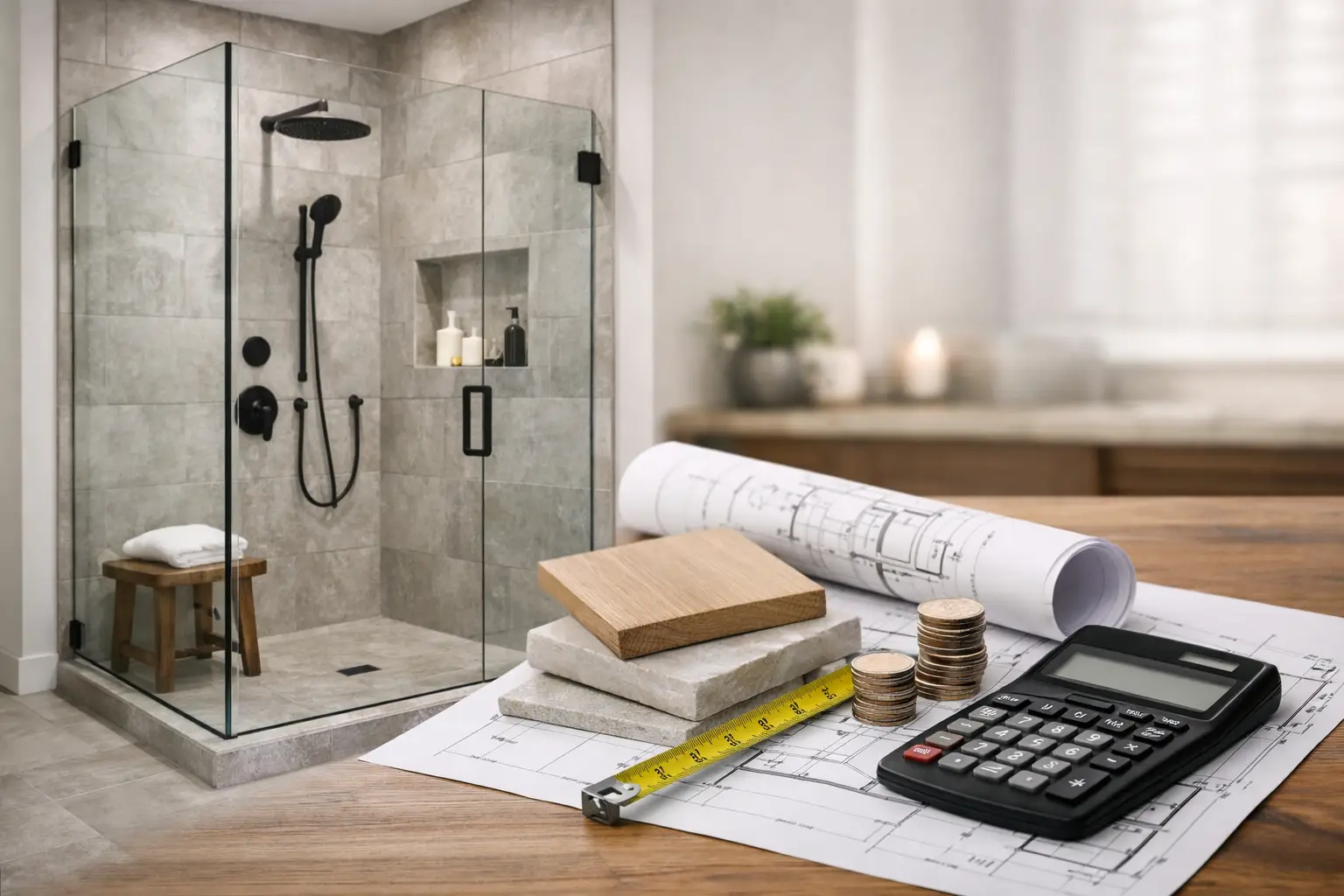
A walk in shower remodel cost breakdown matters most when the numbers stop being abstract and start affecting real choices – tile size, glass style, plumbing changes, and how long your bathroom stays out of service. For homeowners in Meridian, Boise, Nampa, and nearby areas, the difference between a straightforward update and a full custom rebuild can be several thousand dollars. The good news is that shower pricing becomes much easier to understand when you separate the work into the parts that actually drive cost.
What a walk in shower remodel cost breakdown really includes
Most homeowners first think about tile and glass, because those are the visible finish materials. In practice, those are only part of the budget. A professionally built walk-in shower usually includes demolition, disposal, framing or substrate repair, waterproofing, plumbing work, pan construction, tile installation, glass, fixtures, trim, and final inspection.
That is why two showers that look similar in photos can have very different final prices. One may reuse the existing drain location and need only minor wall prep. Another may require subfloor repair, valve replacement, a custom mud pan, and full-height large-format tile. The finished look can be close, but the labor, risk, and craftsmanship involved are not the same.
For a basic-to-midrange project, many homeowners will see a walk-in shower remodel land somewhere in the mid four figures to low five figures. Custom work, premium tile, intricate layouts, and structural or plumbing changes can push well beyond that. The range is wide because every shower has a hidden layer of work behind the surface.
Demolition and prep work set the tone for the whole job
Demolition is usually the first cost category, and it is more important than it sounds. Removing an old fiberglass insert is different from tearing out a failed tile shower with water damage behind the walls. Once the old materials come out, the contractor can see whether studs are sound, whether the subfloor is solid, and whether the framing is square enough for a clean installation.
On simpler jobs, demolition and disposal may stay relatively modest. If moisture damage is present, prep costs rise fast because the shower has to be rebuilt on a reliable base. This is not an area where cutting corners pays off. A beautiful tile shower installed over weak framing or compromised backing rarely stays beautiful for long.
Preparation may also include leveling walls, reinforcing framing for future glass, or correcting floor slope. These details do not show up in listing photos, but they matter to durability and daily use.
Waterproofing and shower pan construction are core costs
If there is one part of the remodel that deserves careful attention, it is waterproofing. This is the system that protects the house, not just the shower surface. Depending on the build, waterproofing may involve a sheet membrane system, liquid-applied membrane, foam shower system, or a traditional pan and mortar bed assembly.
The material cost here is not usually the biggest line item. Labor and installation method are what drive the number. A properly waterproofed shower takes precision, especially at corners, seams, niches, benches, curbs, and drain transitions. If the project includes a curbless entry, the planning becomes even more exact because slope and water containment have to be right without relying on a raised threshold.
Homeowners sometimes compare quotes and assume this category should be similar across the board. It often is not. A lower price can reflect less prep, cheaper materials, or a shortcut in the waterproofing approach. That may reduce the bid, but it increases the risk.
Tile is where material choices and labor separate quickly
Tile is usually the most visible variable in a walk in shower remodel cost breakdown. The material itself can range from budget ceramic to premium porcelain to natural stone. But labor often moves the number more than the tile price does.
A simple subway tile pattern installs faster than a detailed herringbone layout. Large-format tiles can create a clean, modern look, but they demand flatter surfaces and tighter planning. Mosaic tile is often used on shower floors because it follows slope well, yet it also increases installation time because there are more pieces and more grout joints.
Then there are finish details. Accent bands, niches, benches, full-height tile, wrapped corners, and specialty trim all add labor. None of those choices are wrong. They simply change the budget. Homeowners who want a refined, custom result should expect craftsmanship to be reflected in the price.
Plumbing changes can move the budget more than expected
If your existing plumbing layout stays the same, costs are usually easier to control. Once you move the drain, relocate the valve, add body sprays, switch to a rain head, or convert a tub area into a larger shower footprint, the price rises.
Plumbing changes often involve more than connecting new fixtures. They can require opening adjacent walls, adjusting venting, upgrading old supply lines, and coordinating inspections. In older homes, this is one of the biggest wild cards because existing conditions are not always visible until work begins.
Fixture selection also matters. A standard pressure-balance valve and quality trim set cost much less than a thermostatic system with multiple outlets. Homeowners often focus on the decorative trim, but the rough-in valve and overall plumbing configuration are what shape the budget.
Glass, doors, and enclosure style affect both look and cost
Walk-in showers can be built with a fixed panel, a frameless door and panel system, partial enclosures, or more open wet-room-inspired layouts. Glass pricing depends on size, thickness, hardware finish, and whether the installation is standard or highly customized.
Frameless glass is popular for good reason. It looks clean, opens up the room, and highlights tile work. It is also a premium component. Custom measurements, tempered glass fabrication, and precise installation all add to the final cost.
If the shower design includes unusual angles, extra tall panels, or return glass sections, the number rises again. This is another area where exactness matters. Poor measurements or weak backing behind the walls can create delays and additional expense.
Labor, permits, and project management are part of the value
Homeowners sometimes compare only visible materials and miss how much skilled labor affects the result. A walk-in shower is one of the most detail-sensitive spaces in the house. Layout, slope, waterproofing, plumbing coordination, tile cuts, fixture placement, and finish alignment all need to work together.
That is why labor is not just a line item. It is the difference between a shower that looks acceptable on day one and one that still performs years later. Licensed contractors also account for scheduling, code compliance, permits when required, inspections, and coordination between trades.
In Idaho, permit requirements can vary depending on the scope, especially if plumbing or structural work is involved. Homeowners who hire a full-service contractor are often paying not just for installation, but for fewer surprises and less burden during the project. That support matters when the bathroom is a daily-use space and the timeline needs to stay organized.
Typical cost tiers for a walk-in shower remodel
A practical way to think about pricing is by project tier rather than by a single average number. An entry-level walk-in shower remodel usually keeps the same footprint, avoids major plumbing changes, and uses straightforward tile and fixture selections. That kind of job may fall around $6,000 to $10,000, depending on materials and site conditions.
A midrange remodel often includes upgraded tile, better fixtures, custom niches, improved waterproofing systems, and some moderate plumbing or framing adjustments. Many homeowners land around $10,000 to $18,000 in this range.
A high-end or fully custom shower can exceed $18,000 and climb significantly from there. That is common when you add frameless glass, curbless entry, luxury plumbing fixtures, heated flooring transitions, complex tile layouts, natural stone, or substantial repair work behind the walls.
These are not one-size-fits-all numbers. They are useful planning ranges. The actual quote depends on your home, your design priorities, and whether the project is a focused shower remodel or part of a larger bathroom renovation.
How to keep costs controlled without lowering quality
The smartest way to manage shower cost is to be selective about where customization matters most. Keeping the plumbing layout in place usually saves money. Choosing a clean tile pattern instead of a labor-heavy design can protect the budget while still looking high-end. Limiting specialty cuts and using a standard glass configuration often helps too.
What usually does not make sense is saving money on waterproofing, substrate prep, or installation quality. Those are the parts that protect the home and determine longevity. A shower is not the place for cosmetic shortcuts disguised as savings.
If you are planning a remodel, a detailed quote should clearly separate the major categories so you can see where the money is going and where trade-offs are possible. That kind of transparency helps homeowners make confident choices. It is also how a craftsmanship-first contractor earns trust.
For homeowners who want a shower that looks sharp, performs reliably, and adds lasting value, the best budget is the one built around the real work involved. If you want expert guidance on scope, finish options, permits, and execution, My Contractor LLC at https://Mycontractorllc.co can help you plan the project with clarity before the first tile is ever set.