

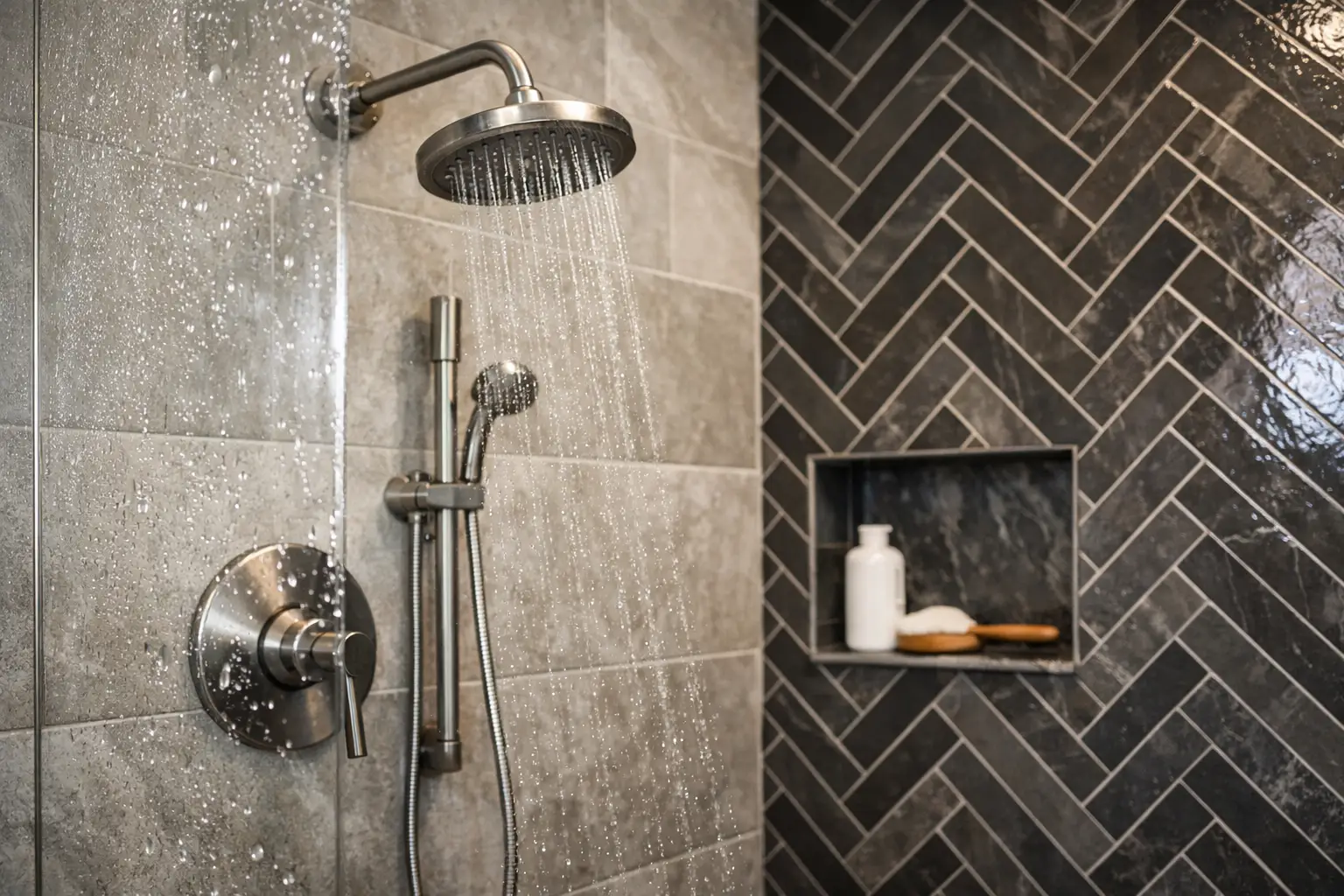
Hard water leaves a calling card fast. A brand-new shower can start showing white haze, chalky spots, and dingy grout long before the rest of the bathroom shows any age. If you live in the Meridian, Boise, or Nampa area, you already know this is not a small maintenance issue. It affects how your shower looks, how often you clean it, and how well your tile holds up over time.
Choosing the best shower tile for hard water is less about finding one magic material and more about picking a surface that resists buildup, cleans up well, and still fits the look you want. That means tile, grout, finish, and installation details all matter.
What hard water does to shower tile
Hard water contains higher levels of minerals like calcium and magnesium. When water dries on your shower walls, those minerals stay behind. Over time, that buildup can leave cloudy film on the tile surface and heavier deposits around corners, niches, fixtures, and grout lines.
Some tile handles that better than others. Smooth, less porous surfaces usually clean easier and show less damage. More textured or absorbent materials can trap residue, which makes the shower look older and more worn even if the tile itself is still structurally sound.
This is why homeowners often ask for something low maintenance but still high end. That is a smart place to start, especially in a primary bath that gets daily use.
The best shower tile for hard water is usually porcelain
If the goal is durability, easier cleaning, and long-term appearance, porcelain is usually the best shower tile for hard water. It is dense, low-porosity, and widely available in styles that range from clean modern slabs to stone-look finishes.
Porcelain gives you a lot of flexibility without asking for the same level of upkeep as natural stone. Mineral deposits tend to sit on the surface instead of soaking in, which makes regular cleaning more effective. When installed correctly with quality grout and proper waterproofing behind it, porcelain performs very well in busy bathrooms.
It also works for different design priorities. If you want a bright, polished look, there are porcelain options that mimic marble. If you prefer a warmer, more natural style, there are matte stone-look and concrete-look porcelains that hold up just as well.
The main trade-off is finish. Highly polished porcelain can show water spots more readily, while heavily textured porcelain can hold onto soap and mineral residue in its low areas. In many cases, a satin or matte finish hits the best balance between appearance and maintenance.
Ceramic tile can work, but it is not always the top choice
Ceramic tile is another strong option for shower walls, and it can be more budget-friendly than porcelain. It is generally easy to clean and comes in many sizes, colors, and patterns.
That said, porcelain is typically denser and more water-resistant than standard ceramic. For a guest bath or lighter-use shower, ceramic may be perfectly reasonable. For a primary shower that sees constant use and regular hard water exposure, porcelain usually gives better long-term performance.
This is one of those areas where it depends on how the shower will be used. If you are remodeling a hall bath for occasional use, ceramic may check every box. If you want a shower built to stay sharp with less fuss year after year, porcelain is often worth the upgrade.
Natural stone looks beautiful, but it asks more of you
Travertine, marble, and other natural stones can create a premium look that is hard to match. They add depth, variation, and a custom feel that many homeowners love.
But hard water is not especially forgiving to stone. Mineral deposits can dull the surface, and some cleaners that people reach for to remove hard water stains can damage the stone itself. Many natural stones also need sealing and ongoing maintenance to protect their appearance.
That does not mean stone is a bad choice. It means it is a commitment. If you want the look of natural stone without the same maintenance burden, a stone-look porcelain is often the better fit. You still get the elevated design, but cleaning is more straightforward and the surface is less sensitive.
For homeowners who want a bathroom that feels luxurious and performs well in real life, this is often the practical compromise.
Glass tile is attractive, but use it selectively
Glass tile resists water absorption well, and it can brighten a shower nicely. Hard water deposits usually sit on the surface rather than penetrating it, which sounds ideal.
The catch is visibility. Glass tends to show spots, film, and streaks more clearly than many other materials, especially in darker colors or glossy finishes. It can still be a great accent in a niche or feature band, but using it across the entire shower may create more cleaning work than some homeowners expect.
If low maintenance is a priority, glass is often best in smaller doses.
The finish matters almost as much as the material
When homeowners focus only on the tile type, they can miss a big part of the equation. Finish changes how hard water buildup appears and how easy it is to remove.
Glossy tile is easier to wipe down, but it often highlights every dried droplet. Very textured tile hides some spotting at first, but it can hold residue in the surface and become harder to clean thoroughly. A soft matte or satin finish is often the sweet spot for shower walls.
For shower floors, slip resistance matters more, so the recommendation shifts. You need enough texture for safety, but not so much that the floor becomes a magnet for soap scum and mineral deposits. Smaller-format porcelain mosaics can work well here because the grout joints add traction, even if the tile face itself is not overly rough.
Grout plays a bigger role than most people expect
If you have ever looked at a shower and thought the tile still looked fine but the whole space felt tired, grout was probably part of the problem. Hard water buildup loves grout lines, especially if the grout is porous or poorly sealed.
This is where grout selection can make a real difference. Epoxy grout or high-performance grout systems usually resist staining and moisture better than traditional grout. They also tend to stand up better to repeated cleaning.
Color matters too. Very light grout can show mineral staining, while very dark grout may show soap residue and haze. Mid-tone grout often ages more gracefully in hard water conditions.
Tile size also affects maintenance. Large-format wall tile means fewer grout joints, which usually means less surface area for buildup. That is one reason larger shower wall tiles have become such a popular choice in bathroom remodels.
Smart design choices make maintenance easier
The best shower tile for hard water performs even better when the shower is designed well from the start. A good tile choice cannot fully make up for poor layout details.
Flat ledges, deep texture changes, and awkward inside corners tend to collect residue. Niches, benches, and decorative trim should be planned carefully so they look custom without becoming cleaning traps. Proper slope matters too, especially on horizontal surfaces where water can sit.
This is where craftsmanship shows. A clean tile layout, tight alignment, and well-finished edges do more than improve appearance. They help the shower stay easier to maintain over time.
What we usually recommend for Idaho homeowners
For most homeowners dealing with hard water, the best overall setup is porcelain wall tile in a satin or matte finish, paired with quality grout and a layout that minimizes unnecessary joints and dust-catching details. On the shower floor, slip-resistant porcelain mosaic is often the right answer.
That combination tends to deliver the best mix of appearance, durability, and realistic maintenance. It gives you a shower that still feels high end, but not one that demands constant scrubbing to look clean.
If you want a marble look, choose marble-look porcelain. If you want warmth, choose stone-look porcelain. If you want a bold feature, use glass or decorative tile sparingly where it adds style without taking over the whole maintenance picture.
At My Contractor LLC, this is the kind of guidance we give homeowners before tile ever gets ordered. The goal is not just to create a beautiful shower on installation day. It is to build one that still looks right after months and years of daily use.
A great bathroom remodel should make your life easier, not hand you a new cleaning problem disguised as a design upgrade. When you choose tile with hard water in mind, you protect both the look of the space and the value of the work put into it.