

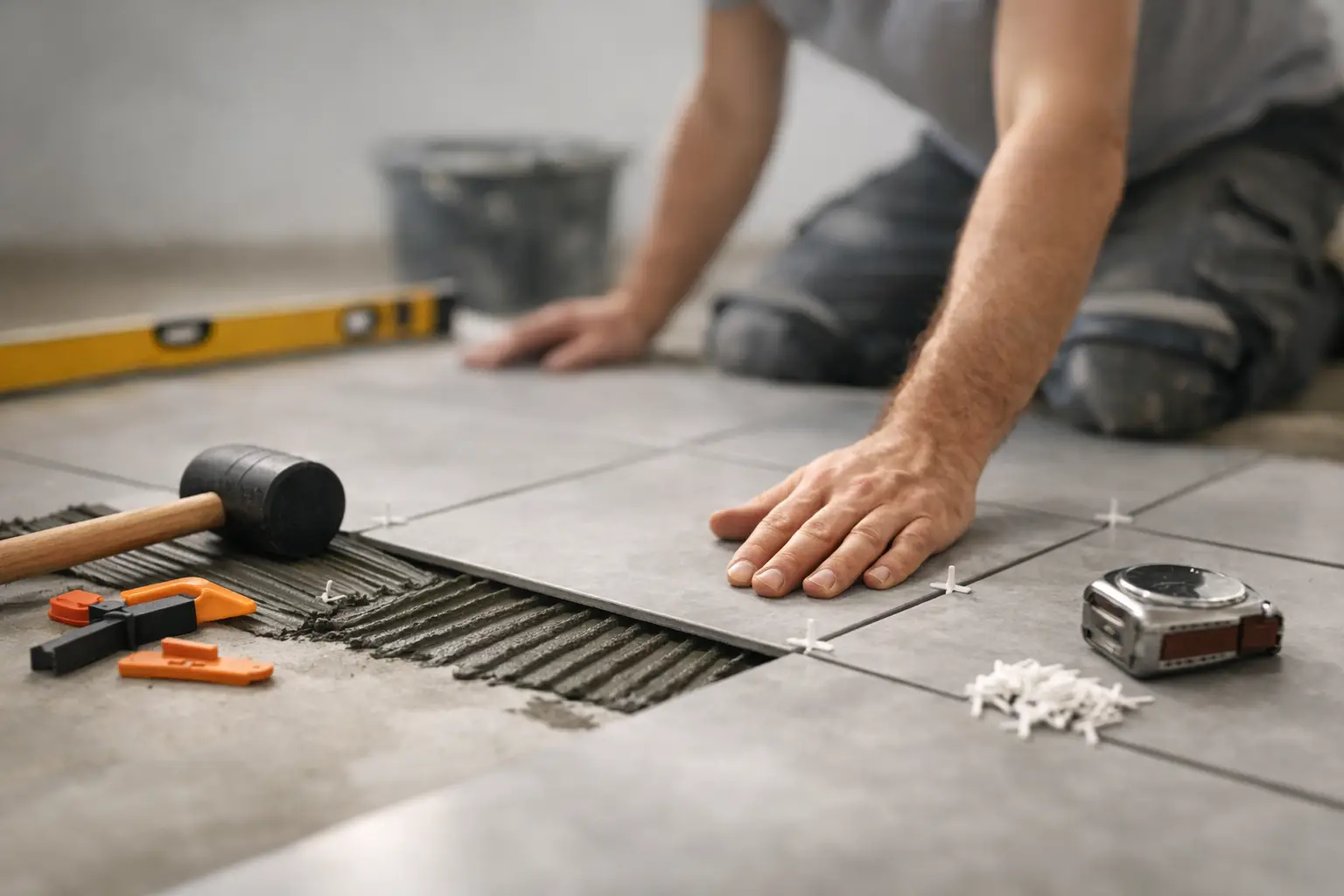
If you are planning new tile, the first scheduling question is usually the same: how long does tile installation take? The honest answer is that most projects take longer than people expect, not because the work is slow, but because good tile work depends on preparation, layout, curing time, and detail. A fast install that skips those steps rarely looks good for long.
For most homeowners, a simple backsplash may take a day or two, a standard floor may take two to four days, and a shower or full bathroom tile job can take several days to more than a week. The range matters because tile is not a single-step service. It is a sequence, and every phase affects the final result.
How long does tile installation take for common projects?
The size of the space matters, but size is only part of the story. A small shower with multiple niches, a bench, and patterned tile can take longer than a larger open floor with straight-set porcelain. Complexity drives labor just as much as square footage.
A kitchen backsplash is often the quickest type of project. If the wall is flat, the tile is straightforward, and there are no major surprises behind outlet covers or trim, installation may be completed in one day, with grouting and final finishing wrapping up the next day.
A standard tile floor in a bathroom, laundry room, or entry usually takes two to four days. That window often includes demolition if old flooring needs to come out, subfloor prep, layout, setting the tile, grout, and cleanup. If leveling is needed, add time.
A shower is where timelines stretch. Shower walls, pans, waterproofing, curb construction, niches, corners, and fixture cutouts all demand precision. A properly built tiled shower often takes five to eight working days, and larger custom showers can take longer.
A full bathroom remodel with tile in multiple areas may take one to two weeks just for the tile portion, depending on sequencing with plumbing, electrical, drywall, painting, glass, and inspections. This is one reason experienced project management matters. Tile does not happen in isolation.
What actually takes time in a tile job
Homeowners sometimes picture tile installation as spreading mortar and placing tile. In reality, that visible part is only one piece of the schedule.
Demolition and surface prep
If existing flooring, shower surrounds, or backer materials need to be removed, the crew has to demo carefully, haul away debris, and inspect what is underneath. Rotten subfloors, cracked slabs, loose underlayment, and out-of-plumb walls are common discoveries in older homes. Fixing those conditions adds time, but it protects the finished product.
Prep is where quality starts. Floors may need leveling. Walls may need flattening. Showers need proper backer board or approved waterproofing systems. If the surface is not right, the tile will not be right.
Layout and cuts
Before full installation begins, the layout has to be planned. That includes centering lines, checking how cuts land at edges, balancing pattern placement, and avoiding awkward slivers in visible areas. Around corners, plumbing fixtures, niches, transitions, and cabinets, cutting takes time.
This is one of the biggest differences between bargain work and craftsmanship-led work. A rushed layout shows up forever.
Setting and curing
Once tile is set, it needs time to cure before grouting or taking foot traffic. Different mortars and site conditions affect that schedule. Temperature, humidity, tile type, and substrate all play a role.
Large-format tile can slow the pace because lippage control matters. Natural stone can require additional care. Glass tile often needs specific setting materials and methods. Each material changes the timeline.
Grout, sealant, and final detail work
Grouting is not just a quick finish step. Joints need to be filled consistently, haze has to be cleaned properly, movement joints need the correct sealant, and edges and transitions have to be completed neatly. If sealing is required, that may add another visit or another block of time.
The biggest factors that affect how long tile installation takes
If you are trying to pin down how long does tile installation take in your home, these are the variables that matter most.
Tile size and pattern
Straight-set 12×24 porcelain goes in much faster than a herringbone mosaic. Small tile means more pieces, more joints, and more labor. Decorative borders, inlays, and mixed materials increase time as well.
Condition of the substrate
A flat, solid surface keeps a job moving. Uneven floors, water damage, old adhesive residue, and framing issues can all slow the schedule. These are not optional fixes if you want a durable result.
Project type
Floors are usually faster than showers. Backsplashes are usually faster than floors. Wet areas require waterproofing and stricter sequencing. Stairs, curbless showers, and feature walls take even more planning and execution.
Material availability
Delays do not always happen on-site. Missing trim pieces, backordered tile, broken boxes, or specialty drain components can pause a project. Ordering everything early helps, but lead times are still real.
Occupied home conditions
Working in a lived-in home often means protecting finished surfaces, managing dust, coordinating access, and keeping pathways usable. That is part of professional service, but it can affect speed compared to working in an empty space.
A realistic timeline for a bathroom tile project
Because bathrooms are one of the most common remodeling projects in the Meridian, Boise, and Nampa area, it helps to look at a realistic example.
Day one may involve demolition and disposal. Day two might be subfloor repairs or wall prep. Waterproofing in a shower can take another day, depending on the system used and cure time required. Then comes tile layout and setting over several days, followed by grout, sealant, and final detailing.
That means a bathroom tile project that looks simple on paper can still stretch across a week or more. If plumbing changes, permit steps, glass measuring, or inspection timing are involved, the broader remodel schedule extends beyond the tile portion itself.
This is exactly why experienced coordination matters. At My Contractor LLC, the goal is not just to install tile, but to manage the job in the right order so quality and schedule stay aligned.
Can tile installation be done faster?
Sometimes, yes. But faster only works when the scope is genuinely simple and the surfaces are ready. A straightforward backsplash with readily available materials can move quickly. A clean, level floor in a small room can too.
Where homeowners get into trouble is pushing speed on a project that needs precision. Skipping prep, reducing cure times, or forcing sequencing to save a day can lead to cracked grout, hollow spots, waterproofing failures, or uneven lines. Those repairs cost more time and money than doing the work right the first time.
A better question than how fast can this be done is how efficiently can it be done without compromising the finish. That is the standard worth holding.
How to keep your tile project on schedule
The best way to avoid delays is to make decisions early. Choose the tile, grout color, trim profile, fixtures, and layout direction before work begins. Confirm product quantities and check lead times. If your project includes plumbing or electrical changes, make sure that work is coordinated before tile crews arrive.
It also helps to expect a few unknowns, especially in remodels. Once old materials come out, hidden issues sometimes appear. A contractor who communicates clearly about those conditions can keep a surprise from turning into a major disruption.
Clean planning matters just as much as skilled installation. When homeowners have one team guiding the process from prep to final detail, the project tends to move more smoothly and with fewer costly pauses.
So, how long does tile installation take?
For a small, uncomplicated project, a couple of days may be enough. For a standard floor, expect several days. For a shower or bathroom renovation, expect closer to a week or more depending on prep, waterproofing, design complexity, and coordination with other trades.
That answer may not be as quick as some people hope, but it reflects the reality of tile done with care. Precision takes time. Proper prep takes time. Clean lines, balanced layout, durable bonding, and long-term performance all take time.
If you are planning a tile project, the smartest timeline is not the shortest one on paper. It is the one that gives the work enough room to be done right, so you can enjoy the result every day after the dust is gone.