

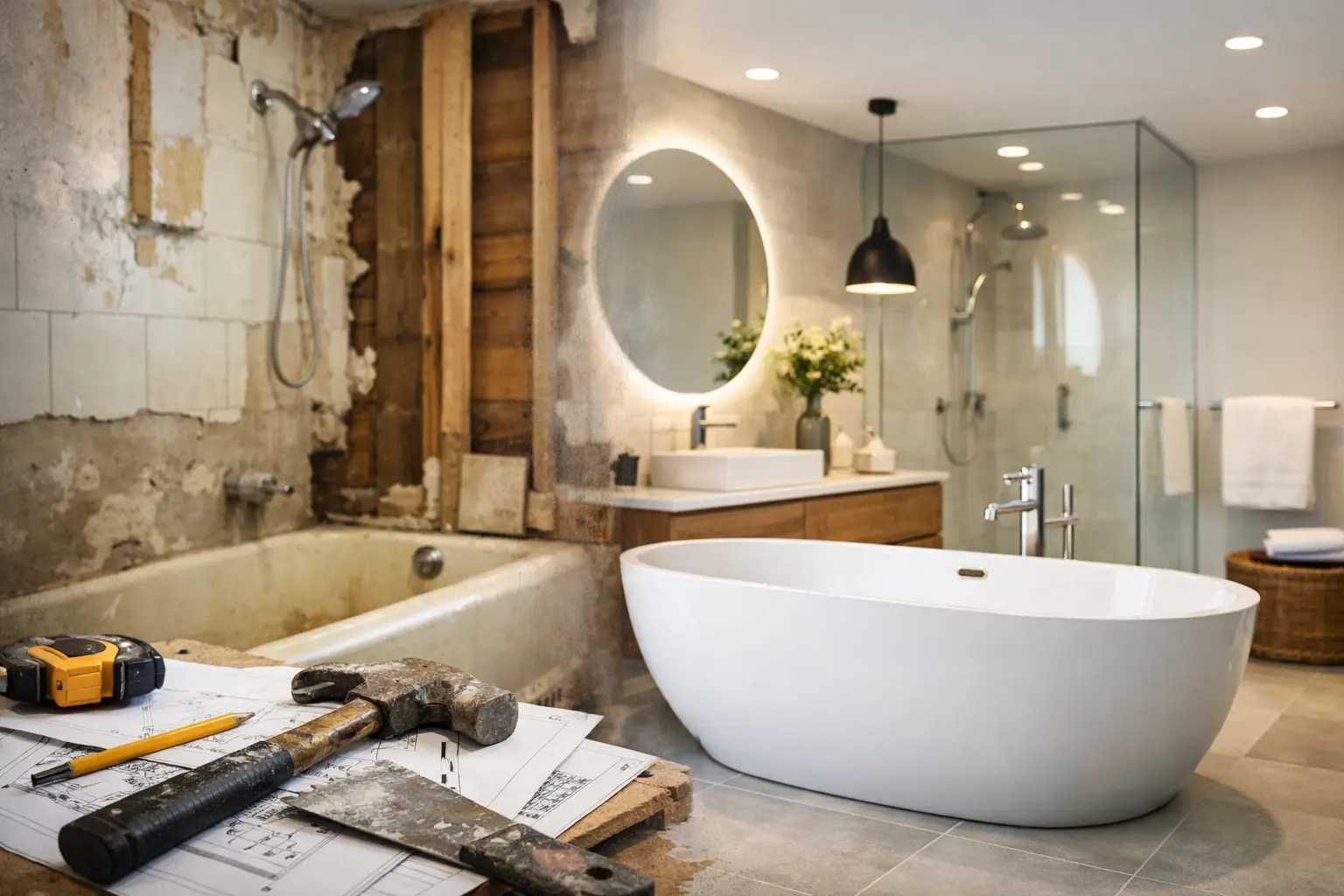
A bathroom renovation usually starts with one daily frustration you are tired of working around – a shower that feels cramped, tile that never looks clean, a vanity with no storage, or finishes that make the whole room feel dated. The challenge is not deciding whether the space needs work. The challenge is making sure the finished bathroom looks right, performs well, and holds up for years.
That is where careful planning matters. A good remodel is not just about replacing old materials with new ones. It is about improving how the room functions, choosing finishes that can handle real use, and building everything with the precision a wet space demands.
What a bathroom renovation should really fix
The best bathroom renovation solves more than surface-level problems. New tile and fixtures can absolutely change the look of the room, but appearance alone is not enough. If the layout is awkward, ventilation is poor, or the shower was not built with the right waterproofing system, the room can still underperform no matter how nice it looks on day one.
For most homeowners, the real goals are comfort, durability, easier cleaning, and better use of space. In a primary bathroom, that might mean replacing a tight fiberglass insert with a custom tiled shower, adding better lighting, or upgrading to a vanity that finally gives you organized storage. In a hall bathroom, it may be more about making the room durable enough for daily family use while keeping the design clean and timeless.
This is also where trade-offs come into play. A larger shower may mean giving up some linen storage. A floating vanity can create a modern look, but depending on the home and user needs, a furniture-style vanity with more drawers may be the better long-term choice. The right answer depends on how the bathroom is used every day, not just what looks good in a photo.
Bathroom renovation costs depend on scope, not just finishes
One of the biggest misconceptions about bathroom remodeling is that price is driven mostly by tile, fixtures, or vanity selection. Those items matter, but scope has just as much impact. Keeping the layout in place is often more cost-effective because plumbing and electrical locations stay largely the same. Once walls move or fixtures shift, labor, coordination, and inspection requirements can increase quickly.
Older homes can also reveal hidden conditions once demolition begins. Water damage behind a shower wall, an uneven subfloor, outdated plumbing, or improper previous work can all affect the final cost and timeline. That does not mean a project is off track. It means the renovation is doing what it should do – exposing problems before they become bigger and more expensive.
Homeowners usually benefit most when the budget is built around priorities rather than guesswork. If custom tile work is the feature you care about most, it may make sense to simplify other finish selections. If accessibility and low maintenance are the main goals, investing in a curbless shower, grab bar backing, quality lighting, and easy-clean surfaces may matter more than chasing every trend.
The layout matters more than many people expect
A bathroom can be beautifully finished and still feel inconvenient. That is why layout should be addressed early. Clearance around the toilet, the door swing, vanity depth, shower entry, and mirror placement all affect how the space works in real life.
Sometimes a better layout requires major changes. More often, it is about refining what is already there. A wider shower opening, a niche placed at the right height, a vanity that fits the room properly, or improved lighting at the mirror can make the bathroom feel significantly more comfortable without completely reworking the footprint.
For homeowners in Meridian, Boise, Nampa, and nearby communities, practical design tends to outperform flashy design over time. Clean lines, durable surfaces, and a layout that supports your routine usually deliver more satisfaction than a remodel built around one dramatic feature that does not age well.
Tile and waterproofing are where craftsmanship shows
If there is one area where quality workmanship becomes obvious, it is tile. Good tile work looks sharp, but more importantly, it starts with the parts you do not see. The substrate has to be sound. The shower has to be waterproofed correctly. The floor has to be properly prepared. Lines, spacing, cuts, slope, and edge details all need attention if the finished space is going to feel high-end.
This is one reason bathroom renovation projects require a different level of care than many dry-area remodels. Water finds weak points. A rushed install, poor transitions, or inconsistent slope in a shower can create long-term issues that are expensive to correct later.
The same goes for material selection. Large-format tile can create a clean, modern look with fewer grout lines, but it may not be ideal for every room or every floor condition. Mosaic tile can provide better slip resistance in shower pans, though it introduces more grout joints. Natural stone has character, but it usually requires more maintenance than porcelain. There is no one-size-fits-all answer. The right choice depends on the look you want, the maintenance level you can live with, and how the bathroom gets used.
Permits, inspections, and sequencing are part of a done-right remodel
A bathroom renovation involves more moving parts than many homeowners expect. Demolition, framing, plumbing, electrical, drywall, waterproofing, tile, flooring, painting, glass, and finish installation all have to happen in the right order. If one step is rushed or skipped, the rest of the project can suffer.
Permits and inspections matter too, especially when plumbing, electrical, or structural elements are involved. They are not just boxes to check. They help confirm that the work meets code and that critical systems behind the walls are handled properly. For homeowners, having a contractor manage that process removes a major source of stress and helps avoid costly mistakes.
This is where working with a licensed general contractor makes a real difference. My Contractor LLC approaches bathroom remodeling the way it should be handled – with full-scope oversight, attention to detail, and accountability from planning through final punch list. That means less guesswork for the homeowner and a cleaner path from demo to finished space.
How to plan a bathroom renovation with fewer surprises
A smoother project usually starts with honest decisions early. Before selecting finishes, it helps to define what is not working now. Is the issue storage, aging materials, shower size, lighting, resale value, or all of the above? Once those priorities are clear, design and budgeting become more focused.
It is also smart to separate must-haves from nice-to-haves. Heated floors may be worth it in one home and unnecessary in another. A double vanity sounds appealing, but if it compromises storage or crowding, a larger single vanity may function better. Open shelving photographs well, yet many homeowners eventually prefer closed storage that keeps daily clutter out of sight.
Timeline expectations should be realistic as well. Custom materials, permit timing, inspection schedules, and change requests can all affect progress. A contractor who communicates clearly about sequencing, lead times, and site conditions gives homeowners a much stronger experience than one who only talks about the final reveal.
Choosing finishes that still look good years later
Trends are not automatically bad. The issue is whether they fit the home and whether they will still feel right after the newness wears off. Bathrooms usually deliver the best long-term value when permanent elements stay relatively timeless and personality comes through in easier-to-update pieces like mirrors, hardware, lighting, and paint color.
That often means using tile and flooring as the foundation rather than the experiment. Neutral porcelain, well-chosen grout color, quality fixtures, and a vanity style that fits the architecture of the home tend to age better than heavily themed choices. This does not mean the room has to feel plain. It means the design should have staying power.
A smart renovation also takes maintenance seriously. Matte black fixtures can look great, but they may show water spots differently than brushed finishes. Light grout can brighten a room, but it may require more upkeep in high-use areas. Frameless glass can make a bathroom feel open, though some homeowners prefer semi-frameless options that balance appearance and budget. These are not right-or-wrong decisions. They are practical decisions.
Why the right contractor changes the whole experience
Most homeowners are not looking for the cheapest bathroom renovation. They are looking for confidence. They want to know the work will be done correctly, the schedule will be respected, the home will be treated with care, and the finished product will justify the investment.
That confidence comes from process as much as talent. Clear estimating, thoughtful planning, precise installation, and consistent communication are what turn a stressful remodel into a well-managed one. In a bathroom, details matter because every detail stays visible. Crooked lines, uneven cuts, poor transitions, and rushed finish work are hard to ignore in a compact space.
When the project is managed with craftsmanship and discipline, the result feels different. The tile layout makes sense. The shower drains properly. The lighting works. Storage is where you need it. The room feels cleaner, brighter, and easier to live with from the first morning you use it.
A well-executed bathroom renovation is not just an upgrade to a room. It is an upgrade to your routine, your comfort, and the way your home supports daily life. If you plan it carefully and build it right, you will notice the value every single day.