

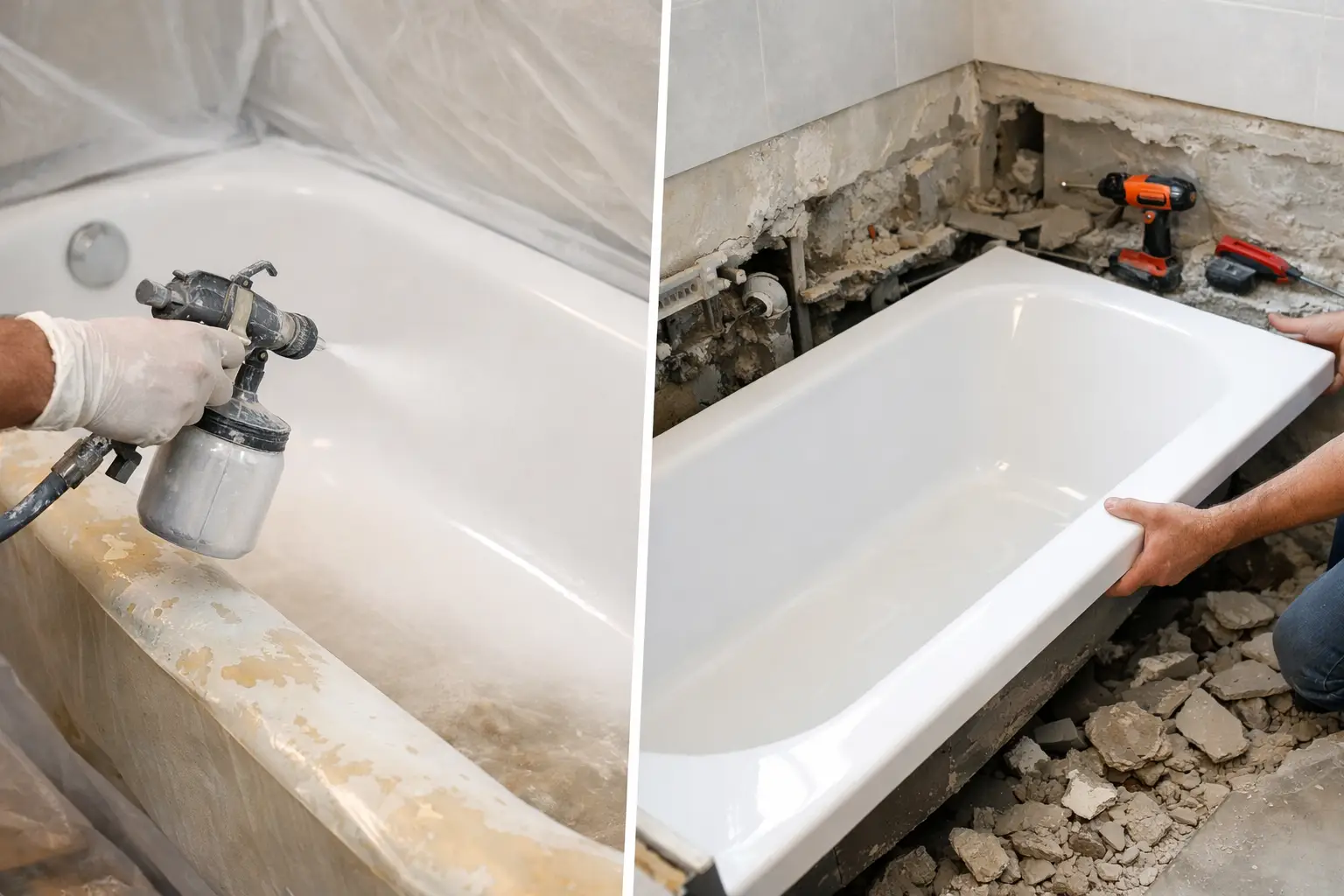
A worn bathtub can make an otherwise clean bathroom feel permanently dated. Yellowing, chips, stubborn staining, and a dull finish all raise the same question: is refinishing bathtub versus full replacement the smarter investment? The right answer depends less on how the tub looks today and more on what is happening underneath, how long you plan to stay in the home, and what you want the finished bathroom to deliver.
For many Meridian, Boise, and Nampa homeowners, a bathtub is not an isolated decision. It often affects wall tile, plumbing locations, waterproofing, flooring, accessibility, and the overall value of a bathroom renovation. A quick cosmetic fix can be worthwhile, but it should not hide a larger problem that will cost more to correct later.
Refinishing Bathtub Versus Full Replacement: The Core Difference
Bathtub refinishing, also called reglazing or resurfacing, renews the visible surface of an existing tub. A specialist repairs minor chips and scratches, prepares the surface, and applies a new coating. The original tub stays in place, along with the surrounding walls and plumbing.
Full replacement removes the existing tub and installs a new one. Depending on the layout and condition of the bathroom, this can be a focused fixture swap or part of a larger remodel involving new tile, a shower conversion, updated plumbing, and improved waterproofing.
Refinishing addresses appearance. Replacement can address appearance, function, structural condition, and design limitations. That distinction matters when deciding where to invest your remodeling budget.
When Bathtub Refinishing Makes Sense
Refinishing is often a practical choice when the bathtub is structurally sound and its main issue is cosmetic. A solid cast-iron or steel tub with light surface wear can be an excellent candidate. These older tubs are often durable, and preserving them may be more sensible than removing a heavy fixture simply because its finish has lost its shine.
It can also be a good fit for a rental property, a home being prepared for sale, or a bathroom that is otherwise in good condition. If the tile surround is intact, the plumbing works properly, and the homeowner wants a cleaner appearance without opening walls, refinishing can create a noticeable improvement with less disruption.
The timeline is another advantage. Refinishing usually takes far less time than replacement and does not require demolition of surrounding finishes. That can be especially helpful in a home with one full bathroom or a busy family schedule.
Still, refinishing has limits. The new coating is a finish, not a new tub. It needs proper cleaning and care, and its lifespan varies based on preparation quality, daily use, and maintenance. Abrasive cleaners, bath mats with suction cups, and impact damage can shorten the life of a refinished surface.
Signs Full Replacement Is the Better Investment
Replacement becomes the stronger choice when the tub has problems beyond surface-level wear. Cracks, flexing, rust around drains, recurring leaks, and significant staining can point to issues refinishing will not solve. If the tub is acrylic or fiberglass and feels soft underfoot, the concern may be inadequate support beneath it. Applying a new finish will not correct movement in the fixture.
Water damage is another major factor. A failing tub flange, cracked tile, missing grout, or deteriorated caulk can allow water to reach the wall framing or subfloor. In those situations, keeping the existing tub in place may leave the true problem hidden. Opening the area, correcting damaged materials, and rebuilding the surround with proper waterproofing protects the home far better than a cosmetic refresh.
Replacement is also worth considering when the current tub no longer fits the way you live. A shallow, narrow tub may be frustrating for a growing family. A high tub wall can create an accessibility concern. Some homeowners would rather replace an unused tub with a spacious walk-in shower, built-in bench, niche storage, and slip-resistant tile. Those changes improve daily use in ways refinishing cannot.
The surrounding tile often decides the project scope
Removing a bathtub typically means disturbing the wall surround. If the tub is enclosed by old tile, fiberglass panels, or a dated alcove, replacement may naturally lead into a more complete renovation. This raises the initial investment, but it also creates an opportunity to correct waterproofing, update plumbing valves, improve lighting, and build a bathroom with a coordinated finish.
That is where professional project planning matters. A well-managed bathroom remodel sequences demolition, plumbing, electrical work, waterproofing, tile installation, inspections, and finish details so no one has to undo completed work. The goal is not just a beautiful new tub or shower. It is a bathroom built to perform behind the walls as well as it looks on the surface.
Comparing Cost, Lifespan, and Disruption
Refinishing is generally the lower-cost option because it avoids demolition, replacement materials, and rebuilding the surrounding area. It can make sense when the tub is in good shape and the homeowner needs a shorter-term solution.
Replacement costs more because it includes more work. The fixture itself is only one part of the budget. Labor to remove the old tub, potential plumbing adjustments, wall repair, waterproofing, tile, fixtures, and permits can all affect the final scope. If hidden water damage is discovered, repairs must be handled correctly before new finishes go in.
The higher cost does not automatically mean replacement is the better value. A well-executed refinish can be the right call for a sound tub in a bathroom that is not otherwise due for renovation. But if you expect to remodel the bathroom within a few years, refinishing first may mean paying twice for work that will soon be removed.
Lifespan should be viewed the same way. A quality replacement tub and properly waterproofed surround can serve a household for decades. A refinished coating can last for years with careful use, but it is not designed to provide the same long-term durability as a new fixture and complete installation.
Questions to Ask Before Choosing
Start with the condition of the tub, not just its color. Does it have cracks, rust, or areas that flex? Has the bathroom had leaks, loose tile, mildew odors, or damaged flooring? Are you planning to sell soon, or is this a bathroom you want to enjoy for the next 10 to 20 years?
Then consider the room around the tub. If the vanity, flooring, tile, lighting, and plumbing fixtures are all dated, a partial fix may make the tub look newer while making the rest of the bathroom stand out even more. On the other hand, if the room is already in good shape and the tub is the only eyesore, refinishing may be a focused and sensible improvement.
Finally, think about function. A bathtub should support your household, whether that means bathing small children, relaxing at the end of the day, creating a safer entry point, or maximizing space with a walk-in shower. The best decision is the one that improves how the bathroom works, not merely how it photographs.
Avoid the Most Expensive Shortcut
The costliest bathroom choices are often the ones that cover up water problems or force a second renovation too soon. DIY coating kits and quick patch jobs can be tempting, but poor adhesion, uneven surfaces, and skipped preparation can leave a tub looking worse within a short period. Likewise, replacing a tub without addressing weak waterproofing or aging plumbing can create avoidable risk behind brand-new finishes.
A professional assessment can clarify whether a tub is genuinely worth saving. At My Contractor LLC, we help homeowners look at the full condition of the bathroom, including finish work, tile, plumbing coordination, and the details that protect the space over time. Clear planning upfront makes it easier to choose a scope that fits both the home and the budget.
A bathtub does not need to be replaced simply because it is old, and it should not be refinished simply because it is cheaper. Choose the option that gives you confidence every time water hits the floor, the walls, and the tub surround.