

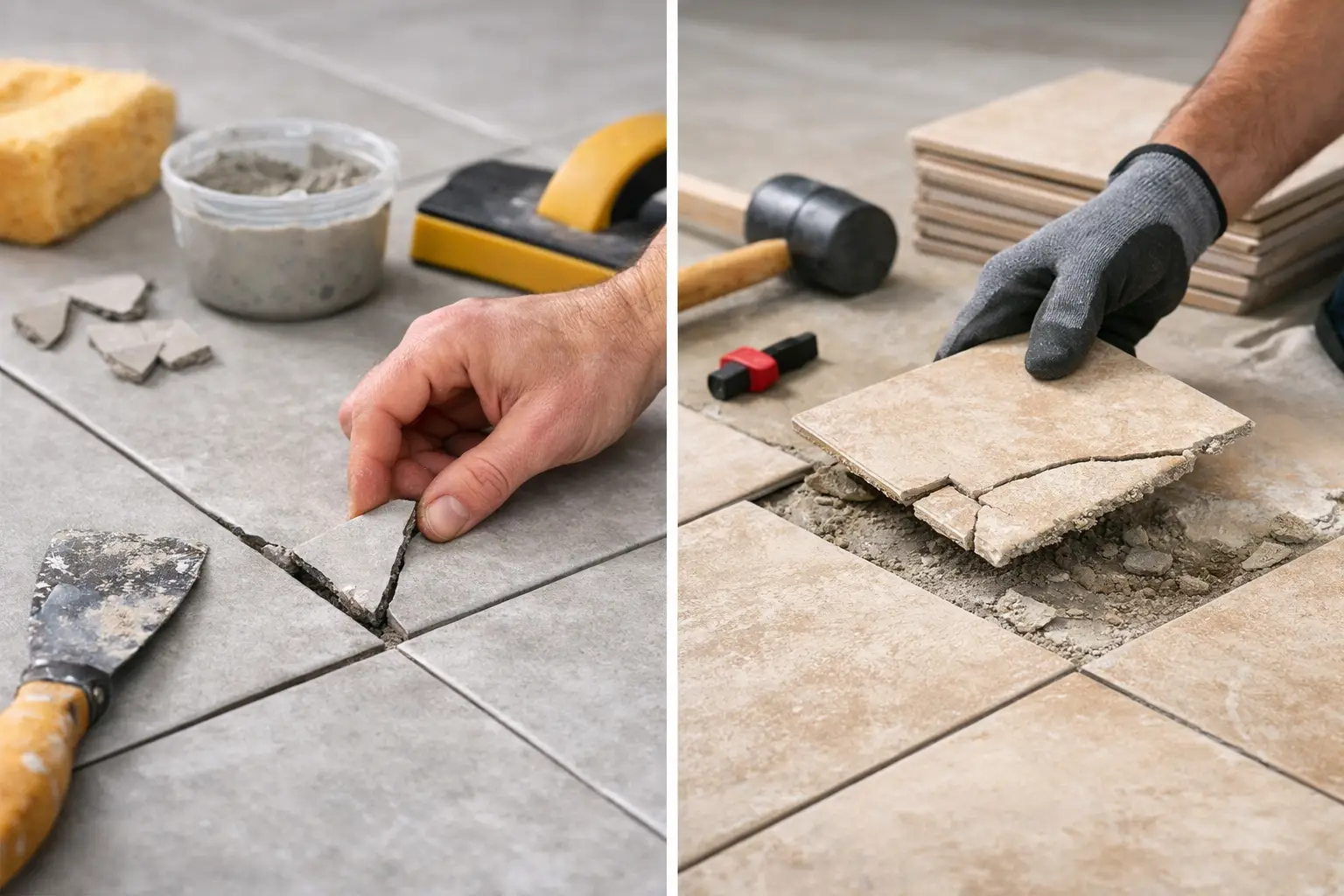
A single cracked floor tile can be an easy repair. A single cracked shower tile can be the first visible sign of water moving where it should not. That distinction is why tile repair versus replacement deserves more thought than simply choosing the least expensive option. The right decision protects your home, preserves the finish you love, and avoids spending money twice.
For homeowners in Meridian, Boise, Nampa, and nearby communities, the answer usually comes down to the condition beneath the tile. Tile is the durable finish you see, but its long-term performance depends on the substrate, grout, waterproofing, and installation details behind it.
When Tile Repair Is the Smart Choice
A targeted repair makes sense when the issue is isolated and the surrounding installation remains stable. One or two chipped tiles from a dropped pan, a small area of damaged grout, or a loose transition at the edge of a floor may not require a full replacement.
The best repair candidates have a clear cause and a contained footprint. For example, if a heavy object cracks one porcelain tile in an otherwise solid kitchen floor, a contractor can often remove that tile, prepare the setting bed, and install a close match without disturbing the rest of the room. The same is true for localized grout cracking caused by minor movement at a doorway or where two surfaces meet.
Repair is also practical when replacement tile is available. Homeowners who kept a few tiles from the original installation have a real advantage. Even tiles from the same product line can vary by dye lot, finish, and size, so spare material often creates a far cleaner result than trying to match an older tile years later.
Signs the Rest of the Installation Is Sound
A professional assessment should look beyond the visible damage. Repair is more likely to hold up when nearby tiles feel firmly bonded, grout joints are intact, and there is no evidence of moisture or movement below the surface.
On a floor, that means no broad areas of hollow-sounding tile, loose tiles, soft subflooring, or recurring cracks following the same line. In a shower, it means no persistent musty odor, staining on adjacent walls or ceilings, swollen baseboards, or failing caulk at corners and fixtures. A repair should address the reason the failure occurred, not simply cover its evidence.
When Tile Replacement Protects the Bigger Investment
Replacement becomes the better value when the problem is widespread, moisture-related, or tied to a failed installation system. It costs more upfront, but it can prevent ongoing repairs and far more expensive damage to framing, subfloors, and adjacent finishes.
Several cracked tiles across one area often point to movement in the floor beneath them. Tiles that rock underfoot or sound hollow across a large section may indicate poor mortar coverage, improper substrate preparation, or bond failure. Replacing only the visibly damaged pieces in those conditions can leave the underlying problem untouched.
A shower requires even more caution. Tile and grout are not the waterproof layer of a shower assembly. They are finish materials. The waterproofing system behind them must direct water safely to the drain and protect the walls and floor structure. If water has gotten behind the tile, if the shower pan is failing, or if moisture damage is present outside the shower, a patch is rarely the dependable answer.
Common Reasons Full Replacement Makes Sense
Full replacement is often the responsible recommendation when:
- Cracks or loose tiles appear in multiple areas rather than one isolated spot.
- Matching tile is unavailable, and a repair would look noticeably different from the existing finish.
- The tile was installed over a damaged, uneven, or unsuitable substrate.
- A shower shows signs of waterproofing failure, leaks, mold, or water damage beyond the tiled surface.
- The room is already dated enough that a repair would delay a remodel you plan to complete soon.
Replacement also gives you the opportunity to correct details that may have been overlooked in an older installation. Proper substrate preparation, movement joints, waterproofing, drain integration, and tile layout all affect how the finished work performs over time. In bathrooms especially, those details are not extras. They are the foundation of a durable, high-end result.
Tile Repair Versus Replacement: The Cost Question
The lowest immediate price is not always the lowest overall cost. A simple repair may be the clear winner when it restores an otherwise healthy surface. But a series of small repairs to a failing floor or shower can quickly exceed the cost of doing the work correctly once.
Repair pricing depends on access, tile type, grout condition, and the risk of disturbing nearby material. Removing one tile without chipping its neighbors takes care and the right tools. Large-format tile, natural stone, glass tile, and intricate patterns can make a small repair more labor-intensive than homeowners expect.
Replacement costs reflect demolition, disposal, substrate work, waterproofing where needed, new tile, installation, grout, and finishing details. If the room is a bathroom, replacement may also involve fixture removal, plumbing coordination, ventilation improvements, and permit or inspection requirements depending on the scope. A full-service contractor can help sequence those decisions so the project stays organized instead of becoming a collection of disconnected fixes.
The practical question is this: will the repair solve the cause of the damage, or only improve the appearance for a short time? If the answer is uncertain, an inspection is worth far more than guessing.
Matching Tile Is More Difficult Than It Looks
Many homeowners assume a broken tile can be replaced with an identical one from a local store. Sometimes it can. Often, it cannot. Manufacturers discontinue collections, change dimensions, and produce new dye lots with small but visible differences in color and pattern.
Even a close match can stand out after years of sunlight, cleaning, and normal wear have changed the appearance of the original tile. Natural stone adds another variable because every piece has its own variation. A skilled installer can sometimes use a near-match strategically, such as in a less visible area or as part of an intentional border or accent. That approach works only when it looks planned, not patched.
If matching is impossible, replacement may be the better aesthetic choice. This is particularly true in a primary bathroom, entryway, or kitchen where tile is a major part of the room’s design. A clean, cohesive installation supports both daily enjoyment and property value.
What a Proper Evaluation Should Include
Before deciding, have the affected area examined with the entire assembly in mind. The evaluation should consider the age of the installation, the type of tile, the location of the damage, surrounding grout and caulk, signs of moisture, and the condition of the surface below.
For a floor, that may include checking for deflection, unevenness, loose areas, and transition issues. For a shower, the assessment should include the drain area, corners, curb, wall penetrations, and any evidence of water outside the enclosure. The goal is not to turn every damaged tile into a remodel. It is to make a recommendation that will still make sense after the work is complete.
At My Contractor LLC, craftsmanship begins with that kind of honest diagnosis. A precise repair is valuable when it is the right solution. When replacement is necessary, detailed planning and proper installation help ensure the new tile performs as beautifully as it looks.
Make the Decision Before Damage Spreads
Do not ignore a crack simply because the room still looks acceptable. Take note of when it appeared, whether it is growing, and whether nearby grout is separating or tiles are loosening. In a shower, act quickly if you see staining, persistent dampness, or water outside the enclosure.
A well-executed repair can preserve a good installation for years. A well-planned replacement can turn a recurring problem into a finished space you can trust every day. The best next step is a clear, on-site assessment that respects your budget while protecting the work behind the tile.