

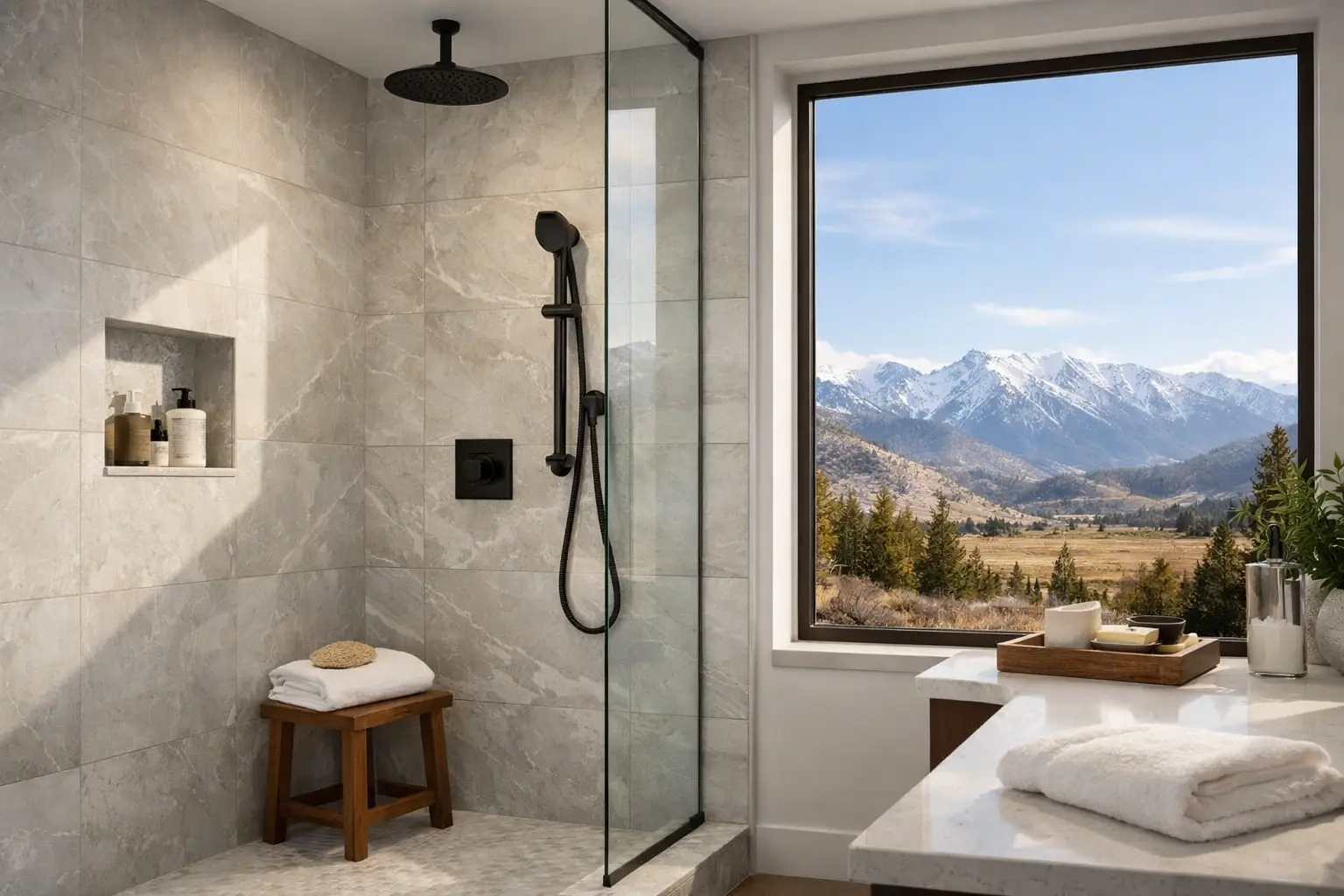
A shower can look finished on installation day and still reveal problems months later: a slick floor, stained grout, cracked corners, or water finding a path behind the walls. This porcelain shower tile review looks at what homeowners in Meridian, Boise, Nampa, and nearby communities can realistically expect from porcelain, including the details that determine whether the finished shower performs as well as it looks.
Porcelain is one of the strongest choices for a shower renovation, but it is not a shortcut to a durable bathroom. The tile, grout, waterproofing system, drain assembly, substrate, and installation all have to work together. When they do, porcelain offers a clean, long-lasting surface that suits everything from a simple hall-bath update to a luxury walk-in shower.
Porcelain Shower Tile Review: The Short Answer
Porcelain tile earns its reputation in wet areas because it is dense, durable, and highly resistant to water absorption. It stands up well to daily moisture, shampoo residue, cleaning products, and the normal wear that comes with a busy family bathroom. It is also available in a wide range of looks, from quiet matte neutrals to convincing stone, marble, and wood-inspired finishes.
For most shower walls, porcelain is an easy recommendation. For shower floors, the recommendation is still strong, but product selection matters more. A beautiful large-format tile with a polished finish may be right for walls and a poor choice under bare, wet feet. The best shower-floor choice usually balances appearance, traction, drainage, and ease of cleaning.
The main trade-off is installation precision. Porcelain is hard, which is excellent for longevity but more demanding to cut and set correctly. A poorly prepared shower can fail behind even the best tile. Homeowners should view porcelain as a premium finish material that deserves a properly built waterproof assembly beneath it.
Why Porcelain Performs Well in a Shower
Porcelain is fired at high temperatures and made with refined clay, creating a dense tile body with very low water absorption. In practical terms, that means moisture is far less likely to penetrate the tile itself. It does not swell like wood, does not require periodic sealing like many natural stones, and holds its color well over time.
That performance is especially valuable in a shower, where surfaces deal with repeated wet-and-dry cycles. Porcelain wall tile is less likely to show wear from routine cleaning, while a quality porcelain floor tile can handle the constant traffic around a shower entry. For homeowners investing in a bathroom remodel for long-term use or resale value, durability is a meaningful part of the return.
Porcelain is also a practical design material. Large-format panels can make a compact shower feel more open because they reduce the number of grout lines. Smaller mosaics can add texture and provide more grout joints for traction on a shower floor. Matte finishes tend to hide water spotting better than high-gloss finishes, while polished porcelain can create a refined statement on walls when used in the right location.
Porcelain versus ceramic tile
Standard ceramic tile can work on shower walls, particularly in lower-traffic bathrooms. It is often less expensive and easier to cut. But porcelain is generally denser and more resilient in wet environments, making it the stronger all-around option for a full shower installation.
The distinction matters most on floors and in showers that receive daily use. If the goal is a bathroom built for years of family routines, porcelain gives the installer and homeowner a dependable material to work with. The final decision should still be based on the manufacturer’s intended-use rating, not just the word porcelain on a sample label.
Porcelain versus natural stone
Natural stone has depth and variation that manufactured tile cannot fully copy. It can be the right choice for a homeowner who values that authentic character and accepts the care involved. Stone often needs sealing, more thoughtful cleaner selection, and a maintenance routine that protects its finish.
Porcelain gives homeowners a similar visual direction with easier care. Stone-look porcelain is particularly popular in Idaho bathroom renovations because it delivers a high-end appearance without asking a household to treat the shower like a specialty surface. For many clients, that is a worthwhile trade-off.
The Important Limits of Porcelain Tile
Porcelain is water resistant, but tile and grout are not the waterproofing system. This is the most important point in any shower project. Water can pass through grout joints and around penetrations such as valves, niches, benches, and drains. The layer behind the tile must be designed to direct that moisture safely to the drain.
A dependable shower build includes a correctly sloped base, a compatible waterproof membrane, carefully sealed seams and corners, and proper treatment around plumbing openings. The floor must slope toward the drain so water does not collect in low spots. The tile installation should also include movement joints where the walls meet each other and where walls meet the floor, typically finished with flexible color-matched sealant rather than rigid grout.
Porcelain can also be unforgiving when the wall or floor is not flat. Large tiles make uneven surfaces more visible, and poor coverage behind a tile can leave weak spots. Lippage, where one tile edge sits higher than the next, is another concern with large-format material. These are workmanship issues, not flaws in porcelain itself, but they directly affect the finished appearance and how easily the shower cleans.
Choosing the Right Porcelain for Shower Walls and Floors
A sample board is useful, but it cannot tell the whole story. Before committing to a tile, consider the surface finish, tile size, edge profile, and the role it will play in the shower.
For walls, large-format porcelain creates a tailored, low-maintenance look. Fewer grout lines mean fewer places for soap film to build up. Rectified tile, which has precisely cut edges, can be installed with narrower grout joints when the walls are properly prepared. That crisp look is attractive, though it leaves less room for installation error.
For floors, traction comes first. Look for porcelain specifically approved for wet floor applications and review the manufacturer’s slip-resistance guidance. Small mosaics are often the safest and most practical solution because their many grout joints provide additional grip and allow the tile to follow the slope of a shower pan. Textured or matte porcelain can also work well. Avoid choosing a glossy floor tile simply because it matches the walls.
Color matters for maintenance, too. Very dark tile can show mineral residue, while bright white grout may reveal discoloration sooner in a high-use shower. Mid-tone tile and grout combinations are often easier to live with. A thoughtful tile setter can help homeowners balance the clean, upscale look they want with the reality of daily cleaning.
Grout, Edges, and Details That Affect the Final Result
The tile is the visual centerpiece, but the small details create the finished feel. Grout color can either make a pattern stand out or allow the tile to read as one continuous field. A close grout match produces a quieter, more modern surface. A contrasting grout can highlight subway tile, mosaics, or a geometric layout, but it also makes alignment more noticeable.
For many showers, a high-performance cement grout or epoxy grout is worth considering. Epoxy grout offers excellent stain resistance but requires skilled handling and can add cost. Quality cement-based grout can perform very well when installed correctly and maintained with appropriate cleaners. The right choice depends on the tile, joint width, household use, and budget.
Trim is another decision homeowners should make early. Bullnose tile, porcelain trim pieces, metal profiles, and mitered corners all create different looks. Metal profiles can give a clean contemporary edge and protect exposed corners. Mitered porcelain corners offer a more custom appearance but demand precise cutting and careful fabrication. Neither is automatically better – the right option should fit the design and the project scope.
Maintenance: What Porcelain Actually Requires
Porcelain is low maintenance, not no maintenance. A quick rinse after showering, regular ventilation, and occasional cleaning with a pH-neutral tile cleaner will keep most showers looking fresh. Avoid abrasive pads and harsh acidic cleaners unless a product is specifically approved for the tile and grout in use.
The larger maintenance concern is usually soap film and hard-water residue, not the porcelain itself. A shower squeegee and a properly sized exhaust fan make a noticeable difference. Caulked movement joints should be inspected periodically and replaced when they begin to crack, shrink, or pull away. That small repair helps protect the assembly behind the tile.
Is Porcelain Worth the Cost for a Shower Remodel?
For homeowners who want a shower that feels finished, durable, and easy to maintain, porcelain is usually worth the investment. The material offers design flexibility without placing the ongoing care burden of natural stone on the household. It is especially well suited to primary bathrooms, family bathrooms, rental-property upgrades, and aging-in-place shower renovations where dependable performance matters.
Still, the smartest budget decision is not simply choosing the least expensive porcelain tile. Put adequate resources toward shower preparation, waterproofing, drainage, and skilled installation. A modest porcelain tile installed over a properly built shower will outperform an expensive tile installed over shortcuts every time.
A well-planned porcelain shower should feel quiet and solid underfoot, drain correctly, clean without a struggle, and look intentional at every edge. That is the standard My Contractor LLC brings to bathroom remodeling: careful planning, precise tile work, and a finished space built to serve your home well long after the final grout is cleaned.