

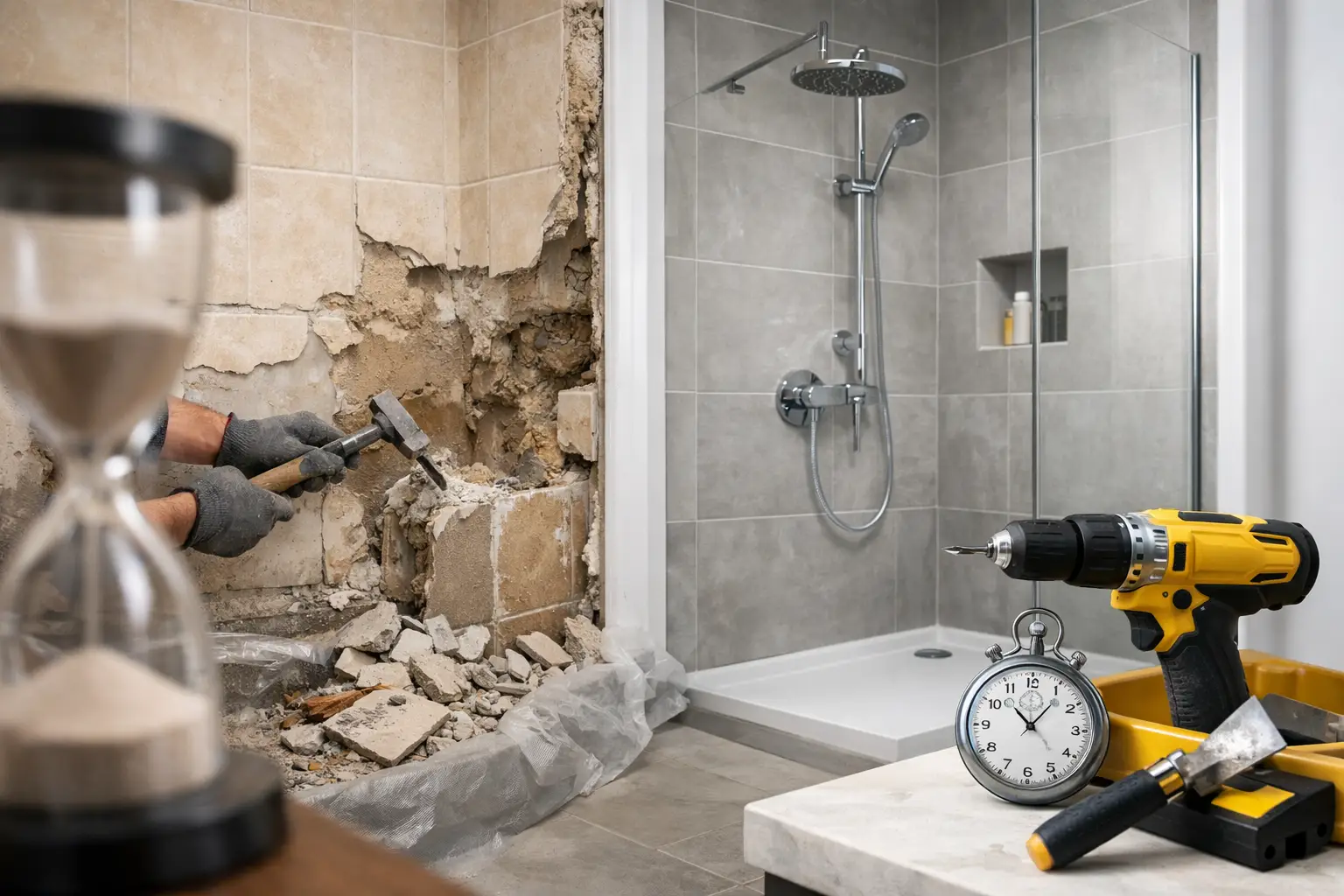
You can spot the moment most homeowners start asking how long does a shower remodel take. It usually happens right after the excitement wears off and the practical questions show up. Where will everyone shower? How long will the bathroom be out of service? And what happens if the walls open up and reveal a surprise?
The honest answer is that a shower remodel can take anywhere from a few days to a few weeks, depending on the scope. A straightforward shower replacement with no layout changes moves much faster than a custom tile shower with waterproofing, glass, plumbing updates, inspections, and finish work. If you want the job done right, the timeline has to account for more than demolition and installation. It also has to include prep, drying time, inspections, and the kind of detail work that gives you a durable finished result.
How long does a shower remodel take in real life?
For a basic shower remodel, many projects land in the 3 to 7 working day range once construction begins. That usually applies when the footprint stays the same, plumbing remains close to where it is, materials are already on site, and there are no hidden issues behind the walls.
A more custom shower remodel often takes 1 to 3 weeks. That is common for tiled showers, niche installation, bench seating, upgraded waterproofing systems, or projects that involve replacing old plumbing valves and drain assemblies. If the work includes moving plumbing lines, changing the shower size, or coordinating permits and inspections, the schedule can stretch beyond that.
The main thing homeowners should know is this: the visible part of the project is only part of the timeline. A shower that looks simple on paper can still require careful sequencing to make sure tile is set properly, waterproofing cures fully, and every finish lines up the way it should.
What affects how long a shower remodel takes?
The biggest factor is scope. Swapping out a prefab unit is very different from building a custom tiled shower from the studs out. The more custom the work, the more time is needed for precision.
Material choice matters too. Large-format tile, stone, mosaic accents, custom niches, and frameless glass all add time because they require tighter layout work and cleaner finish details. A contractor focused on craftsmanship is not going to rush through cuts, slopes, or waterproofing just to shave off a day.
Then there is the condition of the existing bathroom. If demolition uncovers water damage, mold, bad framing, or outdated plumbing, the schedule changes. Those issues need to be corrected before the new shower goes in. Skipping that step is how homeowners end up paying twice.
Permits and inspections can also affect the pace, especially when plumbing or electrical work is involved. In many cases, permit handling is worth it because it protects the homeowner and helps ensure the remodel meets code. It does, however, introduce another moving part to the schedule.
A typical shower remodel timeline
Every project is different, but most shower remodels follow the same general flow.
Day 1: Protection and demolition
The work usually starts with protecting the home, setting up dust control, and removing the old shower. That can include tile, backer board, shower pans, doors, fixtures, and sometimes sections of drywall. On a well-planned project, demolition moves quickly. The bigger question is what the crew finds once the shower is open.
Day 2: Structural and plumbing corrections
If framing repairs or plumbing updates are needed, they happen next. This is also when layout adjustments are made for features like niches, benches, or a relocated valve. In older homes, this stage can take longer if the plumbing is outdated or not up to current standards.
Day 3: Prep and waterproofing
Once the shower structure is ready, the substrate and waterproofing system go in. This is one of the most important phases of the entire remodel. It is also one of the worst places to rush. A shower can look beautiful on the outside and still fail early if the waterproofing behind the tile was done carelessly.
Depending on the system used, this stage may require drying or cure time before tile installation begins.
Days 4-6: Tile installation
Tile work often takes the most time, especially in a custom shower. Layout has to be planned carefully so cuts are balanced, corners are clean, and the slope to the drain is correct. Accent bands, niches, and specialty tile patterns add labor because they demand more precision.
For homeowners, this is often the stage where the project starts to feel real. For the installer, it is where patience matters most.
Day 7 and beyond: Grout, fixtures, glass, and finish work
After tile is set, grout is installed and allowed to cure. Then come trim pieces, plumbing fixtures, caulking, cleanup, and final detail work. If the project includes custom glass, that may be measured after tile is complete and installed later, depending on lead time.
This is why some shower remodels are technically finished in one week, while others feel complete only after a final glass install or inspection wraps up.
Why custom tile showers usually take longer
If you are choosing a custom tile shower, expect a longer timeline than a standard insert or direct replacement. That extra time is not wasted time. It is where the value lives.
Custom work involves surface prep, slope creation, waterproofing, tile layout, edge finishing, grout cure time, and often a higher level of coordination between trades. Even a small shower has dozens of decisions built into it, from where the tile starts to how the niche lines up with grout joints.
Homeowners in Meridian, Boise, and Nampa often want bathrooms that feel cleaner, brighter, and more durable than what they started with. A custom tile shower can absolutely deliver that. It just needs a schedule that respects the craftsmanship involved.
What can delay a shower remodel?
The most common delays are hidden damage, special-order materials, and mid-project design changes. Once demolition starts, it is not unusual to find soft subflooring, damaged studs, or plumbing that needs replacement. Those repairs are necessary, but they can add days to the job.
Material delays are another big one. If tile, valves, drains, or glass panels are backordered, the timeline shifts. This is why material selection and ordering should happen well before the first day of construction.
Design changes during the project can slow things down too. Changing tile direction, adding a niche after framing, or switching fixture finishes may sound minor, but each change can ripple through the schedule. The smoothest projects are usually the ones with clear decisions made upfront.
How to keep your shower remodel on schedule
Good planning does more for timeline control than rushed labor ever will. Finalize your material selections early, confirm who is handling permits if they are needed, and ask for a clear project sequence before work begins.
It also helps to work with a contractor who manages the project from start to finish instead of leaving homeowners to coordinate multiple moving parts. When one team is responsible for scheduling, craftsmanship, and code compliance, there is less room for confusion and fewer handoff delays.
If your home only has one full bathroom, bring that up early. A good contractor can often help you plan around downtime and set realistic expectations for when the shower will be usable again.
Should you expect the bathroom to be unusable the whole time?
Usually, yes – at least the shower area will be out of service for the duration of construction. If the remodel affects flooring, vanities, or shared plumbing lines, more of the bathroom may be temporarily unusable too.
That does not always mean the entire room is off limits from start to finish, but homeowners should plan as if the shower itself will not be available until the work is fully complete and cured. Using it too early can damage grout, compromise sealants, or create avoidable finish issues.
The best timeline is a realistic one
When homeowners ask how long does a shower remodel take, they are usually asking two things at once: how soon can this be done, and how do I avoid a project that drags on forever? Both are fair questions.
A reliable answer is not the shortest one. It is the one that accounts for demolition, repairs, waterproofing, tile work, curing time, inspections, and final details without cutting corners. That is how you end up with a shower that not only looks right on day one, but still performs years later.
If you are planning a shower remodel, the smartest next step is to build the schedule around quality from the start. A few extra days in the timeline is a small trade for a shower finished with precision, handled professionally, and built to last.