

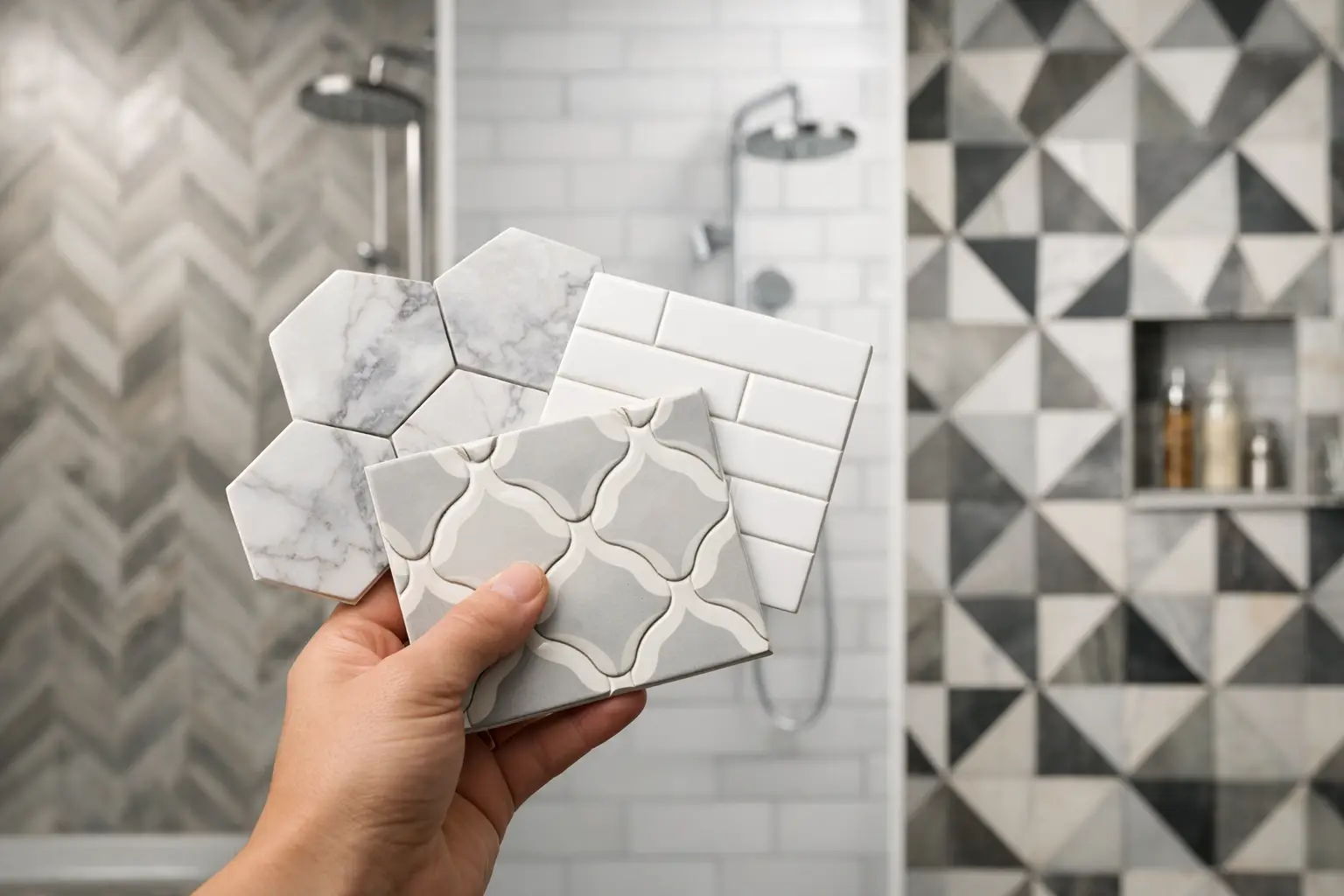
A shower can look expensive with the wrong pattern for the room, or balanced and polished with a fairly simple tile installed the right way. That is why homeowners asking how to choose shower tile patterns are usually making a bigger decision than they think. Pattern affects how large the shower feels, how clean the lines look, how busy the room reads, and how forgiving the finished surface will be over time.
In bathroom remodeling, this is one of those details that separates a good result from a finished space that feels custom. The best pattern is not always the boldest one. It is the one that fits the size of the shower, the tile itself, the amount of natural light, and the overall look you want to live with every day.
Start with the size and shape of the shower
Before looking at pattern boards or inspiration photos, look at the actual shower. A narrow hall bath shower, a standard tub surround, and a large walk-in all handle pattern differently. Scale matters more than most people expect.
In a smaller shower, a pattern that changes direction constantly can make the walls feel crowded. Simple stacked layouts, clean horizontal brick patterns, or large-format tile with minimal grout lines often feel calmer. In a larger walk-in shower, you have more room to use contrast, feature walls, or stronger movement without making the space feel compressed.
Ceiling height also matters. Vertical layouts can draw the eye upward and make a shower feel taller. Horizontal layouts tend to widen the visual field. If your bathroom feels tight but has decent height, a vertical pattern may do more for the room than a more decorative tile choice.
How to choose shower tile patterns based on tile size
Pattern and tile size should work together, not compete. A large-format tile usually looks best in layouts that let the tile itself do the work. A simple stacked or offset pattern keeps the installation clean and shows off the scale. If you use an intricate pattern with very large tile, it can start to feel forced.
Smaller tile opens up more pattern options, but it also adds more grout joints. That can be a design advantage when you want texture or movement. It can also make the shower look busier and increase maintenance if grout color and joint width are not chosen carefully.
Rectangular tile is the most flexible. It can be stacked vertically, stacked horizontally, offset like subway tile, or arranged in herringbone. Square tile tends to feel more stable and symmetrical. Mosaic tile is usually best saved for shower floors, niches, or accent areas unless the goal is a very textured look throughout.
The practical side matters too. Some patterns create more cuts, more waste, and more labor. That does not make them wrong. It just means the design should justify the added complexity.
Match the pattern to the style of the bathroom
A shower pattern should support the rest of the bathroom, not feel like it was borrowed from a different project. If the vanity, lighting, and fixtures are modern, a clean stacked layout often fits better than a traditional offset pattern. If the bathroom leans classic, a brick pattern or timeless marble-look layout usually feels more natural.
This is where many remodels go off track. Homeowners fall in love with a dramatic pattern in a photo, but that pattern only works because the rest of the room is restrained. In a real home, especially one with existing finishes nearby, balance matters more than trend appeal.
If you want a luxury look, restraint usually wins. That might mean one beautiful tile, one intentional layout, and grout lines that support the design instead of calling attention to themselves. A pattern does not need to be complicated to look high-end. It needs to be precise.
Think about grout before you commit
Grout has a major effect on how a tile pattern reads. With a matching grout color, the pattern looks softer and more unified. With a contrasting grout color, every tile edge stands out, which can make the pattern sharper and more graphic.
Neither approach is automatically better. It depends on whether you want the layout to be a quiet backdrop or a visible design feature. In family bathrooms, many homeowners prefer a look that feels clean without highlighting every grout joint. In a guest bath or statement shower, a little more contrast can add character.
Joint width matters too. Thin, even grout lines often create a more refined appearance, especially with rectified tile. Wider joints can suit rustic or handmade tile, but they change the visual rhythm of the whole wall. This is one reason pattern decisions should never be made separately from tile selection.
Popular shower tile patterns and when they work best
Stacked pattern is one of the cleanest choices. It works especially well with modern bathrooms, large-format tile, and spaces where you want the lines to look intentional and orderly. It is less forgiving of uneven walls or inconsistent installation, so craftsmanship matters.
Offset or brick pattern is a reliable classic. It softens the strict grid of stacked tile and works well in many homes. A half-offset can look familiar and timeless, but with some large-format tile, manufacturers recommend a smaller offset to reduce lippage. That technical detail matters as much as appearance.
Vertical stack is a strong option when you want the shower to feel taller or more current. It gives standard rectangular tile a more architectural look. This pattern is especially effective in smaller bathrooms where visual height helps the room breathe.
Herringbone adds movement and craftsmanship, but it should be used with intention. On a full shower wall, it becomes the focal point. In a niche or feature strip, it can add detail without overwhelming the room. It also takes more planning and more precise installation than simpler layouts.
Diagonal patterns can make a basic tile feel more custom, but they create more cuts and can read as more traditional. They are not the first choice for every bathroom, but they can work well in the right setting.
Use accent patterns carefully
An accent wall or niche can be a smart place to introduce pattern, but only if it feels connected to the main tile. Too many materials or competing shapes can make the shower look busy fast.
A good rule is to let one area lead. If the main shower walls have a strong pattern, keep the niche simple. If the field tile is quiet, then a niche or back wall can carry more detail. This kind of balance is what makes a remodel feel considered instead of pieced together.
For homeowners planning a full bathroom update, it often helps to choose the main wall tile first, then decide whether the room still needs an accent. Sometimes it does. Sometimes the cleanest result is also the strongest one.
Consider maintenance and long-term wear
Pattern is not only about looks on day one. It affects how the shower lives over time. More grout joints usually mean more visual interruption and more areas where buildup can show. Textured tile can add grip and character, but it can also be harder to clean on vertical surfaces.
Busy patterns may hide small imperfections better, while very clean stacked layouts tend to show alignment issues immediately. That is not a reason to avoid them. It is a reason to make sure the installation is done with precision.
This is where working with an experienced tile contractor matters. The pattern on paper is only half the job. Layout planning, waterproofing, substrate prep, edge treatment, and clean execution all affect whether the finished shower feels high-end and holds up the way it should.
A practical way to narrow your options
If you feel stuck between several patterns, start by removing the ones that do not fit the room. A dramatic herringbone may be beautiful, but if your bathroom is already visually busy, it may not be the right call. A simple stacked layout may sound plain, but with the right tile and grout, it can look sharp, current, and expensive.
It helps to compare your choices against four questions. Does the pattern fit the size of the shower? Does it support the style of the bathroom? Will it still look good when the trends shift a little? And does it make sense for your budget and maintenance expectations?
That last question matters. Some homeowners are happy to invest more for a detailed layout that becomes the centerpiece of the bathroom. Others want a clean, durable result with less visual noise and easier upkeep. Both are valid. The right answer depends on how you use the space and what kind of finish you want to see every morning.
At My Contractor LLC, we see this firsthand in bathroom remodels across the Meridian, Boise, and Nampa area. The best shower tile patterns are rarely chosen in isolation. They come from looking at the room as a whole and making design decisions that respect both style and construction reality.
A well-chosen shower tile pattern should feel right long after the remodel dust is gone. If it fits the room, the tile, and the way you live, it will not need to shout to make an impression.