

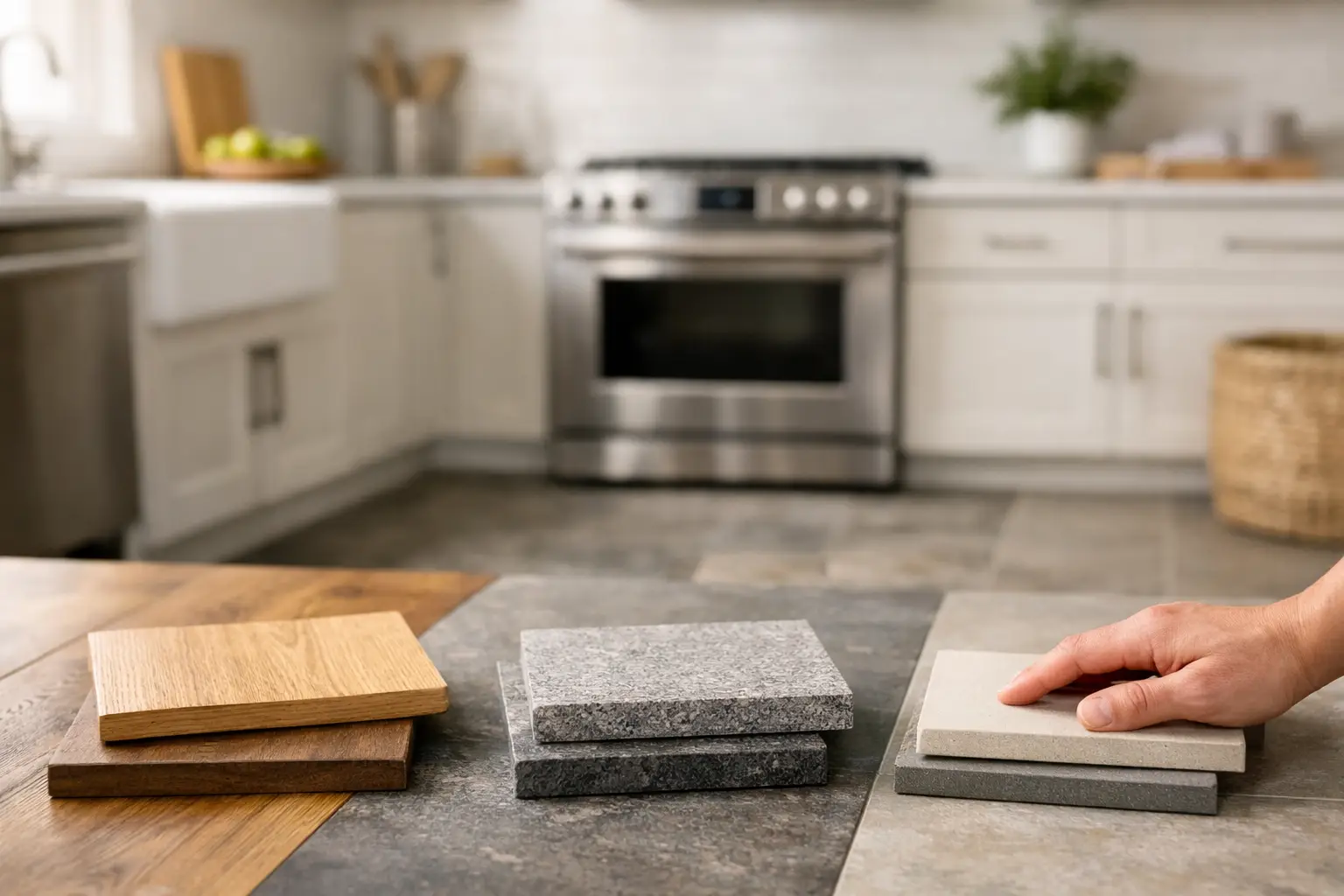
A kitchen floor usually tells the truth about a house. It shows where the coffee spills happen, where chairs scrape every day, where pets cut tight corners, and where kids forget to wipe their shoes. That is why choosing the best durable kitchen flooring is less about trends and more about how your home actually works.
In Idaho homes, that decision also needs to account for tracked-in grit, winter moisture, temperature swings, and the reality of busy family life. A floor can look great in a showroom and still be the wrong fit for your kitchen. The right choice balances durability, water resistance, comfort underfoot, and the level of upkeep you are willing to live with.
What makes the best durable kitchen flooring?
Durability in a kitchen is not just about resisting scratches. A truly hard-working floor also needs to handle moisture, dropped utensils, chair movement, stains, and daily cleaning without showing wear too quickly.
That is why the best durable kitchen flooring usually comes down to five practical factors: water resistance, impact resistance, surface hardness, maintenance needs, and installation quality. Material matters, but so does what is underneath it and how well it is installed. Even a strong flooring product can fail early if the subfloor is uneven or the edges are not properly finished.
For most homeowners, the right question is not simply, “What is the toughest floor?” It is, “What floor will still look good in five to ten years in my kitchen?”
Porcelain tile remains the benchmark
If your top priority is long-term performance, porcelain tile is hard to beat. It handles water extremely well, stands up to heavy traffic, and resists scratches better than most other kitchen flooring materials. It also gives you a wide design range, from clean modern finishes to stone-look surfaces and warm wood-look planks.
Porcelain works especially well in kitchens where durability comes first. If you cook often, have kids or pets, or want a floor that can take regular wear without much concern, tile is one of the safest choices.
The trade-off is comfort. Tile is harder and colder underfoot than vinyl or engineered materials. In winter, that can be noticeable. Grout lines also need attention over time, especially with lighter colors. Good installation makes a major difference here. Proper layout, leveling, spacing, and grout selection are what separate a floor that looks sharp for years from one that starts to feel dated or uneven.
Best fit for porcelain tile
Porcelain tile is ideal for homeowners who want a premium, lasting floor and are comfortable prioritizing durability over softness. It is also a strong choice if you already value tile in bathrooms, showers, or entryways and want a consistent finish quality across the home.
Luxury vinyl plank is practical and popular for a reason
Luxury vinyl plank, often called LVP, has become one of the most requested kitchen flooring options because it solves a lot of real-life problems. It is more forgiving underfoot than tile, highly water resistant, and generally easier on the budget. It also handles everyday wear well when you choose a quality product with a strong wear layer.
For many households, LVP hits the sweet spot between appearance, performance, and comfort. It can mimic wood convincingly, which appeals to homeowners who want warmth in the kitchen without the moisture concerns that come with traditional hardwood.
Still, not all LVP is equal. Lower-grade products can dent, shift, or wear faster than expected, especially in active kitchens with rolling chairs, pets, or heavy appliances. Subfloor prep matters here too. If the floor underneath is uneven, the finished surface can telegraph those imperfections.
Where LVP makes the most sense
LVP is often the best durable kitchen flooring choice for families who want a softer step, easier maintenance, and a cleaner budget without giving up style. It is especially useful in open-concept homes where you want continuous flooring through the kitchen and living areas.
Natural stone offers strength with more upkeep
Stone flooring brings a high-end look that few materials can match. Slate, travertine, and other natural stone options can perform well in kitchens, especially when properly sealed and maintained. They are durable, visually rich, and often increase the perceived value of the space.
But stone is not the low-maintenance winner some homeowners expect. It is porous to varying degrees, can require periodic sealing, and may show wear differently than manufactured materials. Some stones are also more likely to chip at edges or stain if spills sit too long.
Stone is less forgiving from both a maintenance and installation standpoint. It also tends to cost more in materials and labor. For homeowners who want a refined, custom finish and understand the care involved, it can be an excellent choice. For those who want simple upkeep, tile or vinyl is often the better fit.
Engineered hardwood can work, but it depends
Many homeowners love the look of real wood in a kitchen, and engineered hardwood can offer more stability than solid hardwood in spaces with changing humidity. It is made with a real wood surface over a layered core, which helps reduce expansion and contraction.
That said, wood-based flooring in a kitchen always comes with some caution. Spills need to be cleaned quickly, standing water is a problem, and scratches are part of the package over time. Some homeowners are completely fine with that because they like the lived-in character wood develops. Others regret choosing a material that requires more vigilance.
If your kitchen is part of a larger main-floor remodel and matching adjacent hardwood matters, engineered wood can be justified. It is just not usually the first answer when someone asks for the best durable kitchen flooring with the fewest worries.
Sheet vinyl and laminate each have a place
Sheet vinyl has improved visually over the years and remains one of the more budget-conscious options for kitchens. It handles moisture well, feels softer than tile, and can be practical in utility-focused remodels or rental properties.
Laminate has also improved, especially in newer water-resistant lines, but it is still more vulnerable to moisture damage than porcelain tile or quality LVP. For that reason, laminate tends to sit lower on the list for kitchens where durability is the main goal.
These options can make sense in the right project, but if you are investing for long-term performance and resale confidence, they are usually not the top tier.
Best durable kitchen flooring by lifestyle
The best choice changes depending on how your kitchen gets used.
If you have a busy family kitchen with frequent cooking, pets, and constant traffic, porcelain tile or high-quality LVP usually makes the most sense. If you want the most premium, long-lasting surface and do not mind a firmer feel underfoot, porcelain is the stronger performer. If comfort, speed of installation, and budget are bigger priorities, LVP is often the better value.
If your kitchen is part of a custom remodel where visual impact matters just as much as wear resistance, porcelain tile and natural stone stand out. If your goal is continuity with nearby wood floors and your household is disciplined about spills and maintenance, engineered hardwood can still be a reasonable option.
Installation quality matters as much as material
Homeowners often spend weeks comparing products and only a few minutes thinking about installation. That is backwards.
The best durable kitchen flooring can still fail if the subfloor is not flat, the transitions are rushed, or the layout is poorly planned. Cracked grout, lifting edges, hollow spots, and premature wear often trace back to prep work, not just product quality.
This is where craftsmanship matters. Precise tile cuts, correct underlayment, moisture awareness, and a clean finish around cabinets, islands, and doorways are what give a kitchen floor that done-right look. In a space you use every day, those details are not cosmetic. They are the difference between a floor that feels solid and one that slowly becomes a problem.
How to choose with confidence
If you are narrowing it down, start with honest answers about your household. Do you want the toughest surface possible, or the most comfortable one that still holds up well? Are you okay with grout maintenance? Do you want a floor that hides dirt and wear, or one that makes a stronger design statement?
A good flooring decision is rarely about chasing the single “best” material. It is about matching the material to the way you live, the look you want, and the standard of installation you expect. For many kitchens, the answer will be porcelain tile or quality LVP. Both can perform well. The better one depends on whether you value maximum hardness and longevity or a softer, more budget-flexible solution.
At My Contractor LLC, we see this often in kitchen and whole-home remodel planning. Homeowners usually know what they dislike about their current floor long before they know what they want next. That is a useful place to start.
A kitchen floor should not make your life more delicate. It should handle the mess, the movement, and the everyday wear without asking for constant attention. Choose the one that fits your home honestly, and you will feel good about it long after the samples are gone.