

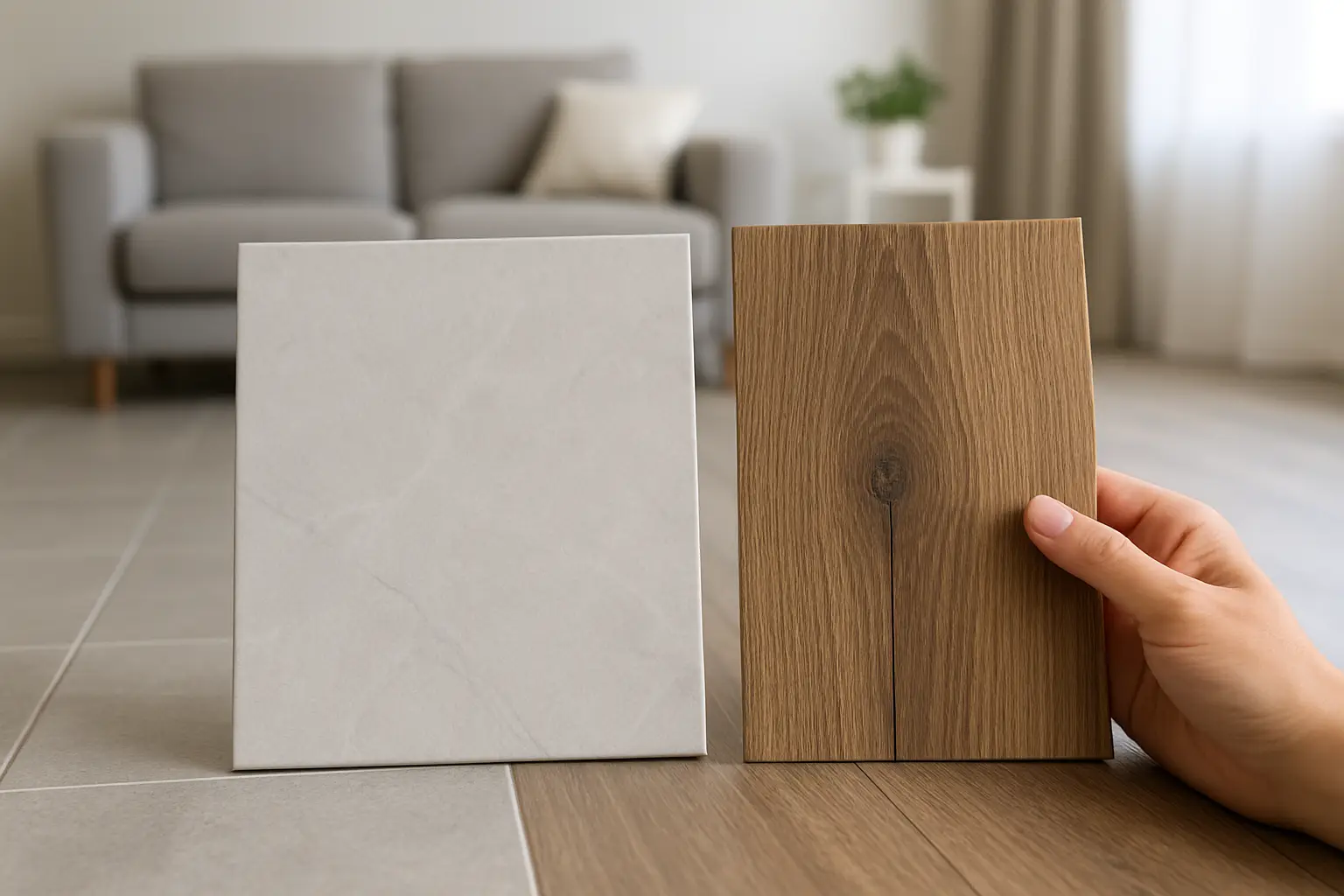
You can usually tell what a home needs by where the wear shows up first. In the Meridian-Boise-Nampa area, that is often the entry, the kitchen path to the back door, and the bathroom floor that sees wet towels, kids, and daily traffic. When clients ask us to help choose a new floor, the real question is rarely “Which is better?” It is “Which one will still look right and perform right for how we live?”
That is exactly what this tile vs lvp flooring decision comes down to: performance under real use, the feel you want underfoot, and how much maintenance you are willing to own long term.
Tile vs LVP flooring: the quick reality check
Tile and luxury vinyl plank (LVP) can both look great. They can both increase the sense of a finished, updated home. But they behave differently.
Tile is a hard, mineral-based finish system installed over a properly prepared subfloor with mortar, grout, and movement joints. Done right, it is extremely durable and handles water and heat well.
LVP is a resilient floating (or sometimes glue-down) floor with a wear layer and a printed design layer. It is forgiving underfoot, quick to install, and typically friendlier to budgets and schedules.
If you want the shortest version: tile is the long-game surface that rewards careful prep and precise installation; LVP is the high-comfort, high-value option that shines when you want speed, warmth, and a great look with less disruption.
Where each one wins in an Idaho home
Bathrooms and laundry rooms
Bathrooms are where homeowners most often think “tile,” and that instinct is usually right. Tile itself does not care about water. The details do: waterproofing in showers, proper underlayment, and grout choices.
LVP can be a smart choice in half baths and powder rooms, and many modern products are marketed as waterproof. The practical difference is that LVP resists water from the top, but the system still relies on tight edges and correct installation. If water repeatedly gets underneath, it can create issues you do not see until a seam starts to telegraph or the floor feels soft.
For laundry rooms, tile is the safer bet when you want maximum tolerance for a leak. If you are choosing LVP, plan for leak prevention and be picky about the product and installation details.
Kitchens and main living areas
In kitchens, both can work, and the decision often comes down to comfort and style.
Tile handles dropped pans and chair traffic without wearing through, but it is unforgiving when something hits it the wrong way. A heavy drop can chip a tile or crack grout, especially if there are voids under the tile from poor setting.
LVP is easier on feet and joints when you are standing at the stove, and it tends to be quieter. It also plays nicely with open-concept layouts because you can run it through living areas for a continuous look.
Basements and slab-on-grade areas
Concrete slabs are common in parts of Idaho homes and light commercial spaces. Tile can be an excellent finish over slab, but movement and moisture need to be handled correctly. Cracks in a slab do not automatically mean “no tile,” but they do mean we plan for them with the right prep and uncoupling or crack-isolation strategy.
LVP is often chosen over slab because it is warmer underfoot and more forgiving if the slab is not perfectly flat. That said, slabs can have moisture vapor issues, and LVP manufacturers can be strict about testing and underlayment requirements. This is one of those “it depends” areas where doing it by the book prevents expensive surprises.
Durability: what actually fails first
Tile’s reputation for durability is earned, but it is only as strong as the base under it and the installer’s attention to detail. Common failures are not “tile wore out.” They are cracked grout from movement, hollow spots from poor mortar coverage, or tenting from missing movement joints.
LVP rarely “cracks,” but it can scratch, dent, or separate at seams if the floor is not flat enough or if heavy furniture is dragged. The wear layer matters a lot. If you are comparing products, the cheapest LVP often looks good on day one and tells on itself after a couple of years in high-traffic zones.
If you have large dogs, active kids, and constant foot traffic, both can work. Tile resists scratches better; LVP is less likely to chip but may show scuffs. Your lifestyle and product quality make the call.
Water resistance: marketing terms vs real life
Tile is inherently water-resistant, and with correct grout and sealing choices, it is a strong option for wet areas. Still, grout is not waterproof on its own, and wet rooms and showers require true waterproofing behind and beneath the tile.
LVP being “waterproof” usually refers to the plank material itself. The system is not automatically a waterproof room. If you expect frequent standing water or repeated overflows, tile is the more forgiving finish. If you expect normal splashes and quick cleanups, LVP can perform very well.
Comfort, warmth, and sound
This is where LVP often wins hearts.
Tile is cooler, harder, and louder. In bathrooms, that clean, crisp feel is a plus for many homeowners. In main living spaces, it can feel harsh unless you use rugs and consider underfloor heating.
LVP is warmer underfoot, softer, and quieter. It is also more forgiving if you spend long stretches cooking or working at home. If you have a multi-story home, LVP can reduce footfall noise compared to hard tile.
Radiant heat is another separator. Tile pairs beautifully with radiant heat systems and holds warmth well. Some LVP products are approved for radiant heat, but the temperature limits and installation rules are tighter, so you have to plan carefully.
Design and resale value: what looks “right”
Tile reads as premium in bathrooms and showers, especially with well-chosen grout lines, clean layout, and tight cuts. Large-format tile, classic patterns, and properly finished transitions make a space feel intentional and high-end.
LVP has come a long way. The better products have realistic textures and visuals, and they can be a strong value-add when they replace worn carpet or dated sheet vinyl. In many homes, LVP creates the updated, cohesive look buyers want without the colder feel of hard surfaces everywhere.
Resale value is not just the material. It is whether the floor looks professionally installed and suits the room. A beautifully executed tile bathroom can be a selling point. A well-installed LVP throughout a main level can make a house feel newer and easier to maintain.
Installation realities: what affects your timeline and budget
Tile installation is slower and more dependent on prep. Subfloors must meet deflection requirements, surfaces must be flat, and waterproofing or underlayment needs to be done correctly. Layout, cuts, and cure times are part of the schedule.
LVP is typically faster, especially in occupied homes where you want less downtime. But speed should not skip the most important step: floor flatness. Many LVP issues come from installing over a subfloor that is not within the manufacturer’s tolerance. The planks may click together, but the floor will not stay quiet and tight if the base is wavy.
Budget-wise, tile can be more expensive because it is labor-intensive and uses more installation materials. LVP can be very cost-effective, but the gap between entry-level and premium product is real. We encourage homeowners to choose the best product that fits the space, not just the best price per square foot.
Maintenance: what you will actually do
Tile is easy to clean day to day, but grout lines are the long-term factor. Choosing the right grout and keeping up with periodic cleaning makes a big difference. In high-use bathrooms, grout color selection is not just style, it is maintenance.
LVP is simple to maintain with regular sweeping and damp mopping with a manufacturer-approved cleaner. The main caution is avoiding overly wet mopping and harsh chemicals. If you want a floor you can live on without thinking about it much, LVP is hard to beat.
How to decide without second-guessing
A good decision starts with two questions: where will the water go, and how do you want the room to feel?
If it is a primary bathroom, a shower surround, or a space where water events are likely, tile is usually the safer long-term choice, assuming the structure and prep support it. If it is a living area where comfort and quiet matter, LVP often delivers the best daily experience.
Then we look at the home as a whole. Continuity matters. Sometimes the best answer is both: tile where water is part of life, and LVP where you want warmth, speed, and a cohesive main-level look.
If you want a second set of eyes on your specific layout, subfloor, and schedule, My Contractor LLC can walk you through options and the install details that protect your investment in Meridian, Boise, Nampa, and nearby communities. The goal is not just a new floor – it is a floor that performs like it was built for your home.
Choose the material that matches your real routines, then insist on the prep and craftsmanship that make it last.