

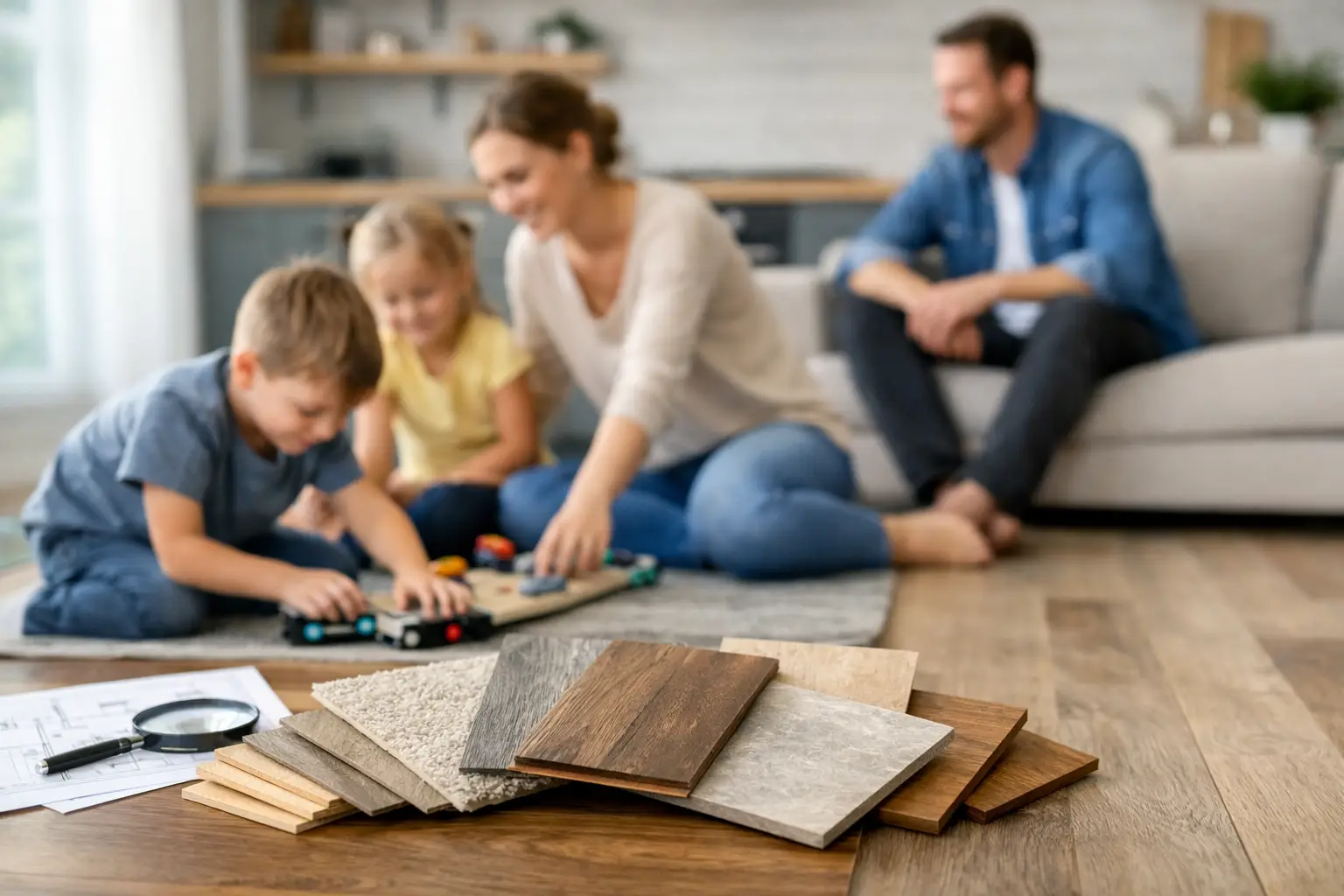
Saturday morning traffic tells the truth about a floor. Kids are in and out, the dog hits the hallway at full speed, someone spills juice in the kitchen, and muddy shoes make it three steps past the door before anyone notices. If you are figuring out how to choose flooring for busy families, start there – with real life, not just a showroom sample.
The right floor has to do more than look good on install day. It needs to handle daily wear, clean up without a fight, and still feel like it belongs in a home you take pride in. For families across Meridian, Boise, and Nampa, that usually means balancing durability, comfort, maintenance, and budget without sacrificing the finished look.
How to choose flooring for busy families starts with traffic
Every room asks something different from your flooring. A kitchen sees spills, dropped utensils, chair movement, and constant foot traffic. Entry areas deal with grit, water, and seasonal mess. Living rooms need comfort, but they also take on toys, pets, and furniture movement. Bathrooms add moisture and cleaning demands that rule out some materials quickly.
That is why one-floor-through-the-whole-house decisions need a closer look. A product that performs well in a bedroom may not hold up the same way in a main hallway or family kitchen. Busy households usually get the best long-term result by matching the flooring to the room instead of choosing only by color or price.
It also helps to think about your family five years from now, not just today. Toddlers become active grade-schoolers. Pets age. Parents may want easier maintenance and better traction. Flooring is not a short-term cosmetic choice. It is a daily-use surface that affects how your home functions.
The four questions that narrow the field fast
Before comparing products, ask four practical questions. How much wear will this room get? How often do you want to clean and maintain it? How much moisture will it see? And how important is softness underfoot?
Those questions tend to separate wish-list flooring from flooring that actually works. For example, a beautiful hardwood look may be the right aesthetic, but a natural hardwood floor in a wet bathroom or a mud-heavy entry can create more upkeep than most families want. On the other hand, a waterproof luxury vinyl plank may solve the maintenance issue while still giving you the look of wood.
There are trade-offs in every category. Harder surfaces usually clean easier, but they can feel louder and less forgiving. Softer surfaces feel comfortable, but they may trap dirt or show wear sooner in high-traffic spaces. The goal is not finding a perfect material. It is choosing the right compromise for the way your household actually lives.
Luxury vinyl plank is popular for a reason
For many busy families, luxury vinyl plank, often called LVP, checks the most boxes. It offers strong resistance to scratches, moisture, and everyday wear. It is easier on the budget than many premium materials, and it comes in a wide range of wood-look styles that fit both newer homes and remodels.
It is especially useful in kitchens, hallways, living areas, and homes where pets and kids create constant motion. Many products are waterproof or highly water resistant, which gives families more breathing room when spills happen. Cleanup is simple, and the surface usually handles routine sweeping and mopping well.
That said, not all LVP is built the same. Thickness, wear layer, installation method, and subfloor prep all matter. A lower-grade product may look similar at first but wear faster, sound hollower, or fail sooner if the installation is rushed. Craftsmanship matters here. Even a durable material can disappoint if transitions, seams, and underlayment are not handled precisely.
Tile is hard to beat in wet areas
If your priority is durability around moisture, tile remains one of the strongest choices. It performs exceptionally well in bathrooms, laundry rooms, mudrooms, and some kitchens. Properly installed tile gives you long-term water resistance, easy cleaning, and a finish that feels solid and high-end.
Porcelain tile is often the best fit for busy homes because it is dense, durable, and available in styles that range from classic stone looks to modern wood-look planks. It also handles heavy traffic well. For families who want a floor that can take daily abuse and still hold its appearance for years, tile deserves serious consideration.
The trade-off is comfort. Tile is harder and colder underfoot than vinyl or wood-based materials. It can also be slippery if you choose the wrong finish. In family homes, slip resistance matters, especially in bathrooms and entries. That is why product selection and layout planning should be done carefully, not treated like an afterthought.
What about hardwood and laminate?
Hardwood still has a place in family homes, especially when homeowners want warmth, character, and long-term value. It can be refinished, and when maintained well, it ages beautifully. In lower-moisture areas like dining rooms, bedrooms, or certain living spaces, it may be exactly the right choice.
But hardwood asks more from the homeowner. It is more vulnerable to scratches, standing water, and shifting humidity. In a house with active kids, large dogs, or frequent spills, that extra maintenance should be part of the decision, not a surprise later.
Laminate has improved over the years and can offer a durable wear surface at a competitive price point. Some products resist scratches well and give a convincing wood look. The main caution is moisture. Certain laminate options are far better than older versions, but many still do not perform as reliably as waterproof vinyl in spill-prone areas. If your family life includes water bottles tipped over, wet boots by the door, and bathroom traffic that never seems to stop, that difference matters.
How to choose flooring for busy families with pets and kids
Families with children and pets should pay attention to three things first: scratch resistance, traction, and ease of cleaning. Those factors affect your day-to-day satisfaction more than a trendy color ever will.
A glossy floor may look sharp in photos, but it can show dust, paw prints, and scratches faster. A matte or low-sheen finish is often more forgiving. Texture helps too. Slightly textured surfaces can improve traction for both kids running through the house and older pets who need more stability.
It is also wise to think about noise. Hard surfaces can amplify the sound of nails, footsteps, and toys. If you have an open floor plan, underlayment and product density play a bigger role than many homeowners expect. The floor should not just survive family life. It should support a home that feels comfortable to live in.
Installation quality matters as much as material choice
Homeowners often spend weeks choosing color and product, then underestimate the importance of installation. But subfloor leveling, moisture testing, layout planning, transitions, grout lines, expansion gaps, and finishing details have a direct effect on how the floor looks and how long it lasts.
This is where working with an experienced, detail-focused contractor changes the outcome. A good installer sees the issues before they become visible problems. They know where moisture may affect performance, where a transition should be adjusted, and when a product is not the right fit for the space. In a busy family home, those details are not cosmetic. They are the difference between a floor that holds up and one that starts showing problems early.
At My Contractor LLC, that hands-on approach is part of the value. Flooring should be done right the first time, with the same care you would expect from any major improvement in your home.
Budget smart, not cheap
Busy families usually do better with a good-value product professionally installed than a bargain material that needs early replacement. The cheapest option can cost more if it scratches easily, fails around moisture, or looks tired in a short time.
A smarter budget looks at total value: product lifespan, maintenance, comfort, appearance, and installation quality. Sometimes that means using tile in bathrooms, LVP in main living areas, and a different material in lower-traffic rooms. A mixed-material plan can give you better performance across the house without forcing one product into every space.
That approach also lets you prioritize where durability matters most. If the entry, kitchen, and hallway take the hardest wear, invest there first. Those are the areas where families feel the difference every day.
The best flooring choice is usually the one that makes your home easier to live in on an ordinary Tuesday, not the one that sounds best in a sales pitch. If you choose with traffic, moisture, maintenance, and craftsmanship in mind, your floor can look sharp and work hard at the same time. That is what busy families really need.