

Steam on the mirror. Wet towels on the floor. A bath mat that never dries as fast as you think it will. Bathrooms are the one room where your flooring has to look great while quietly handling daily moisture, temperature swings, and constant foot traffic. If you pick the wrong material – or install the right material the wrong way – you will usually find out the hard way.
When homeowners ask us about the best flooring for bathrooms, they are usually trying to balance four things at once: water resistance, slip resistance, long-term durability, and the level of maintenance they are willing to live with. Budget matters too, but the bigger cost is often the redo when the floor fails.
What “best flooring for bathrooms” really means
There is no single perfect bathroom floor for every home in Meridian, Boise, or Nampa. The “best” choice depends on how the bathroom is used and what’s underneath it.
A guest bath that gets light use can tolerate more design-forward options. A busy family bathroom with kids, hair tools, splashes, and constant cleaning needs a tougher, more forgiving surface. A basement bathroom introduces extra concerns like slab moisture and colder subfloors. And if your bathroom is on an upper floor, waterproofing and proper transitions matter even more because the risk is not just a damaged floor – it’s a stained ceiling below.
The safest way to think about bathroom flooring is this: the material is only half the decision. The other half is the system – the subfloor prep, waterproofing strategy, underlayment, grout, sealers, and edge details that keep moisture from getting where it shouldn’t.
Porcelain tile: the gold standard for wet rooms
If you want the most proven bathroom floor, porcelain tile is hard to beat. It is dense, water-resistant, and holds up to heavy use without denting or wearing through. It also gives you the broadest design range – marble looks, concrete looks, warm wood looks, modern large-format, classic mosaics.
The trade-off is that tile is not forgiving. If the subfloor has movement, if the underlayment is wrong, or if the layout isn’t planned with care, tile will show it. Cracked grout, lippage (uneven tile edges), and hollow spots don’t come from “bad tile.” They come from bad prep or rushed installation.
Tile also feels colder underfoot unless you pair it with radiant heat or choose a texture and color that reads warmer. In Idaho winters, that comfort factor is real.
Slip resistance matters more than most people think
Bathrooms are where “pretty” can become “dangerous” if you choose a polished surface. Many homeowners love the look of glossy tile, then realize it becomes slick when wet – especially with soap residue.
If safety is a priority, ask for tile rated for wet areas and consider a matte finish or a smaller tile format where grout lines add traction. The goal is not a floor that looks industrial. It’s a floor that stays confident under bare feet.
Ceramic tile: good, but know its limits
Ceramic tile can be a solid bathroom option, especially for walls, and sometimes for floors in low-traffic bathrooms. It is typically less dense than porcelain, which can make it more prone to chipping and water absorption depending on the specific product.
If you love a ceramic tile style, it can absolutely work in a bathroom floor with the right product selection and installation. The key is verifying it’s rated for floor use in wet spaces and not assuming all tile performs the same.
Luxury vinyl plank or tile (LVP/LVT): warm, quiet, and forgiving
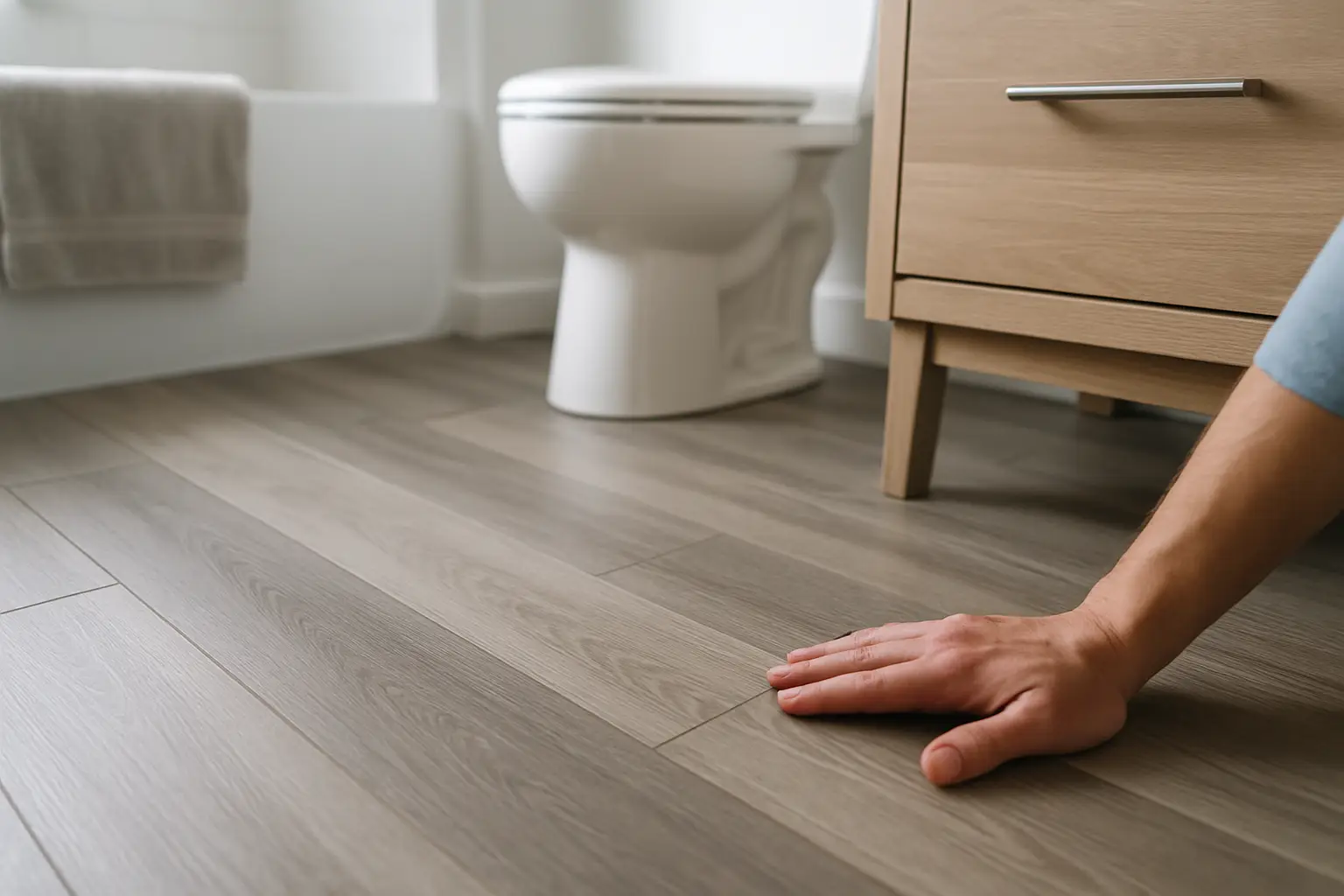
Luxury vinyl is popular for a reason. It is comfortable underfoot, quieter than tile, and highly water-resistant – particularly the waterproof-core products designed for wet areas. It also makes sense when you want a modern look fast without the cost of tile labor.
For many households, LVP is the most practical “daily life” bathroom floor. It handles kids, pets, and frequent cleaning well. It is also less slippery than many polished surfaces.
The trade-off is that “waterproof” does not mean “flood-proof forever.” Water can still find its way around edges, into seams, or under transitions if details are skipped. Subfloor flatness matters too. If the floor isn’t properly leveled, you can end up with movement, gaps, or premature wear at the joints.
Another real-world consideration is heat. Vinyl can be sensitive to high temperatures and direct sunlight, which is less of an issue in most bathrooms, but it matters around heat registers and in bathrooms with strong sun exposure.
Sheet vinyl: not trendy, but extremely water-tolerant
Sheet vinyl is one of the most water-tolerant bathroom flooring options because it has fewer seams. In a small bathroom, a single-piece install can dramatically reduce water intrusion risk.
If you’re remodeling a rental, updating a laundry-bath combo, or prioritizing easy maintenance over a high-end look, sheet vinyl deserves consideration. Today’s patterns are better than what many people remember from older homes.
The trade-off is that it can be harder to repair invisibly if it gets cut or gouged. And if the subfloor has imperfections, sheet goods can telegraph them over time.
Natural stone: high-end look, higher responsibility
Natural stone floors can be stunning. Marble, travertine, slate, and limestone bring real depth that manufactured surfaces can’t fully replicate. In a primary suite bathroom, stone can feel like a true upgrade.
But stone is not a set-it-and-forget-it choice. Many stones are porous and require sealing, and they can stain or etch depending on the type and the cleaners used. They also tend to be more expensive in both material and installation.
If you love the look of stone, go in with clear expectations: you are choosing a premium finish that needs the right care plan. In return, you get a bathroom that feels genuinely custom.
Engineered wood and laminate: usually a “maybe,” not a default
Homeowners often ask for a continuous floor from the bedroom into the bathroom for a clean, open feel. That’s where engineered wood or laminate enters the conversation.
Standard laminate is typically a poor bathroom choice because moisture can cause edge swelling and failure. Some newer “water-resistant” laminates perform better, but bathrooms are still an unforgiving test.
Engineered wood can work in certain bathrooms with disciplined moisture control, excellent ventilation, and careful installation details, but it is not the safest bet for a busy family bath. If you have kids who leave puddles or a shower that gets used back-to-back, there are better options.
If you want the wood look without the worry, porcelain wood-look tile or a quality LVP can deliver the style with far fewer risks.
Concrete and epoxy: best for specific homes, not most
Concrete floors and epoxy coatings can be a great fit in modern homes, basements, or spaces where you want a clean, minimal aesthetic. They can be water-resistant and easy to clean when done correctly.
The trade-off is that these systems are all about prep and product selection. Moisture vapor transmission, cracks, and surface profile all matter. If the slab isn’t evaluated and prepped, coatings can fail and repairs can be obvious.
The hidden factor: what’s under the floor
Two bathrooms can use the same tile and have completely different outcomes based on what’s underneath. Subfloor stiffness, flatness, and moisture control determine whether the finish lasts.
In many remodels, the best money you can spend is on the parts you will never see: correcting a sag, replacing damaged subfloor, installing the right underlayment, and waterproofing around the shower or tub. That is what keeps grout lines clean, corners tight, and transitions from swelling or separating.
Grout, sealers, and transitions are not “small details”
Grout choice affects both the look and maintenance. Cement-based grout can be beautiful, but it can also stain if it isn’t sealed and cleaned correctly. Epoxy grout costs more but resists staining and moisture far better, which is why many homeowners choose it for bathrooms where cleaning needs to be quick and predictable.
Transitions at the doorway, around the tub, and where flooring meets base or vanity edges should be planned, not improvised. Most bathroom floor problems start at an edge.
How to choose the right bathroom floor for your home
Start with how the bathroom is used. If it’s the main family bathroom, lean toward porcelain tile or a high-quality waterproof LVP, then prioritize slip resistance and easy-clean decisions. If it’s a guest bath, you can take more design swings, including stone or decorative patterns.
Next, consider comfort. If cold floors bother you, tile with radiant heat is a luxury that actually changes daily life. If you want warmth without a heating system, LVP or sheet vinyl can feel noticeably softer.
Then match the floor to the rest of the remodel. A new shower, vanity, and lighting can make almost any flooring look better, but the reverse is also true: premium tile won’t feel premium if the edges, grout lines, and transitions look rushed.
If you want a bathroom floor that looks high-end and stays that way, the best next step is a site-specific plan that accounts for your subfloor, your layout, and your long-term maintenance preferences. That’s the kind of guidance we provide on bathroom remodels at My Contractor LLC – along with licensed, detail-driven installation that keeps the “hidden” parts of the project as solid as the visible ones.
A few real trade-offs to keep in mind
If you choose tile, you’re buying longevity and design flexibility, but you’re also committing to proper prep and a more involved install. If you choose vinyl, you’re buying comfort and speed, but you still need edge protection and good subfloor prep to avoid movement and water migration.
If you choose stone, you’re choosing a premium look with premium maintenance. If you choose sheet vinyl, you’re choosing practicality over trend. None of those are wrong decisions. They’re just different priorities.
A bathroom is too expensive to remodel twice because of a flooring decision made in a showroom. Choose the floor that matches your household, then insist on the kind of installation details that make it last – the result is a room you can use every day without thinking about what’s happening under your feet.