

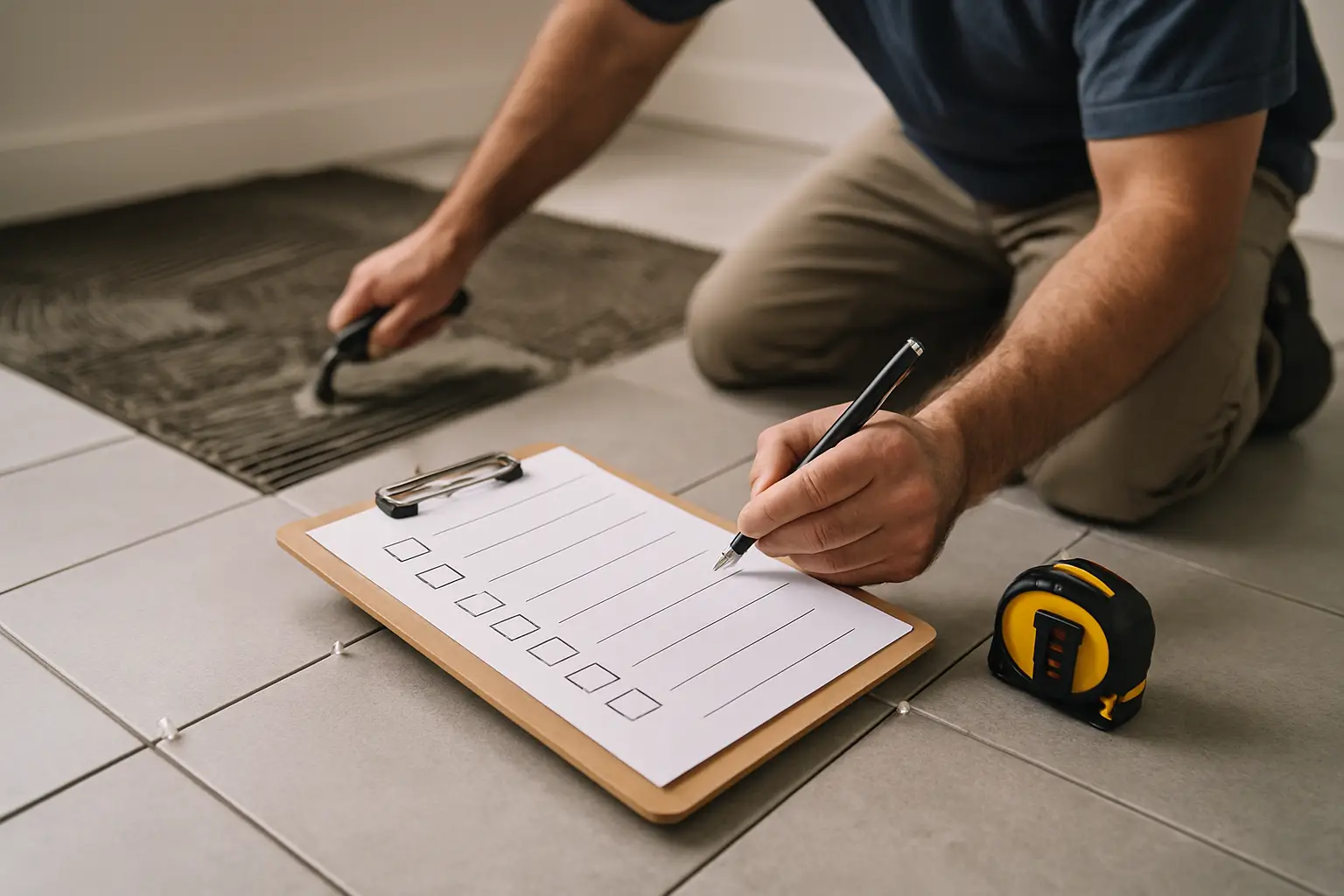
A tile job rarely fails because someone picked the “wrong” tile. It fails because the room moved, the surface wasn’t ready, the layout wasn’t planned, or the details got rushed when the thinset started to skin over. If you want tile that looks sharp on day one and still looks sharp years later, you need a process you can trust.
This tile installation checklist is written for homeowners around Meridian, Boise, and Nampa who care about clean lines, lasting durability, and a professional finish. Use it to plan a DIY project with clear guardrails or to vet a contractor’s approach before you sign off.
Tile installation checklist: decisions before you buy
Start with the two choices that drive everything else: where the tile is going and what kind of tile it is.
Wet areas (showers, tub surrounds, mudrooms) demand waterproofing strategy, movement joints, and materials that tolerate constant moisture. Dry areas (backsplashes, fireplace surrounds) are more forgiving, but a sloppy layout still shows forever.
Tile type matters because it affects cuts, grout joints, and lippage risk. Large-format tile can look high-end and modern, but it is less forgiving of a wavy floor or wall. Smaller mosaics conform better to slopes and curves, but they increase grout lines and require more time to set cleanly. Natural stone can be beautiful, but it may need sealing and a compatible mortar.
Before anything lands in your cart, confirm the exact tile size (actual dimensions can vary), the recommended grout joint, and the manufacturer’s requirements for mortar and substrate. If the box says “use a leveling system” or calls out a specific trowel size, treat that as a requirement, not a suggestion.
Substrate prep: the part nobody sees but everyone feels
If you step on tile and it sounds hollow, cracks, or shifts, the surface under it is usually the culprit. Prep is where craftsmanship shows up later.
Floors: stiffness and flatness first
Tile and grout don’t like movement. Your floor system needs to be stiff enough for tile, and your surface needs to be flat enough for the tile size.
Flatness is not the same as “level.” A floor can be out of level and still be a good tile surface if it is flat. Large-format tile typically requires a flatter surface than smaller tile because any dip or hump creates lippage. If you can rock a long straightedge over the floor, the tile will telegraph it.
If the subfloor is plywood, you may need an additional layer or an underlayment system. Cement backer board and uncoupling membranes both have their place. Backer board adds a stable tile-friendly surface but does not fix a bouncy floor. Uncoupling membranes can help manage minor movement but still require proper subfloor stiffness and good prep.
Walls and showers: waterproofing is not optional
In a shower, the tile is not the waterproof layer. The waterproof layer is behind the tile, and it has to be continuous and properly detailed.
That means the right backer (not drywall unless it’s part of an approved system), correct fastener placement, sealed seams, and careful transitions at corners and niches. It also means understanding the difference between a surface-applied waterproofing membrane and a traditional pan liner approach. Either can work when executed correctly. The trade-off is complexity and risk – surface waterproofing can be cleaner and faster, but only if it’s applied at the right thickness and properly tied into the drain and penetrations.
If you’re not sure how your shower will be waterproofed, pause the project until you are. It’s far cheaper to correct a plan than to rebuild a leaking shower.
Layout and dry fit: where “pro” starts to look like “pro”
Layout is how you avoid awkward slivers, crooked lines, and outlets that land dead-center on a grout joint.
Start by finding the focal point. In a shower, it might be the back wall. In a kitchen, it might be the range wall or the longest uninterrupted run. Snap reference lines so your first row doesn’t “drift.”
Then dry lay or at least measure out a few rows with spacers to see where cuts will land. Aim to keep cuts balanced on both ends and avoid tiny pieces where your eye naturally goes. Sometimes the best layout is not centered on the room – it’s centered on what you see first.
For floors, plan your transitions to other materials and doorways. For walls, plan where tile will start and stop at corners, cabinets, and trim. For backsplashes, decide if you’re tiling to the underside of cabinets or full height.
Materials and tools: matching the job to the room
A good-looking tile job uses the right products for the situation. In Idaho homes, seasonal movement, dry winters, and moisture swings make compatibility matter.
You will typically need the correct thinset (modified or unmodified depending on your system), the right trowel notch for your tile size, spacers, and a grout that fits your joint width and use case. Epoxy grout resists stains and is excellent for certain areas, but it can be more demanding to install. Cementitious grout is common and workable, but it may need sealing depending on the product.
Don’t forget edge profiles, movement joint sealant, and any waterproofing components if you are in a wet area. If your plan includes heated floors, confirm the full assembly is compatible – mat, sensor placement, mortar, and underlayment.
Setting tile: technique checkpoints that prevent failure
This is where the checklist becomes a discipline. Thinset has a working time, and every shortcut shows up as lippage, weak bond, or inconsistent lines.
Mix and spread thinset correctly
Mix thinset to the manufacturer’s ratio and let it slake if required. If it’s too loose, tiles can sink and create lippage. If it’s too stiff, coverage suffers.
Key in mortar to the substrate with the flat side of the trowel first, then comb in one direction. Set the tile and press it perpendicular to the trowel lines to collapse ridges and improve coverage.
Check coverage, especially in wet areas
Pull up a tile occasionally to verify coverage. In showers and on floors, you need strong, consistent contact. Back-buttering large-format tile often isn’t optional – it helps achieve the coverage that keeps corners from sounding hollow and reduces the risk of cracks.
Manage lippage and spacing
Use the right spacers and consider a leveling system for large-format tile. A leveling system won’t fix a bad substrate, but it can help keep edges aligned when the surface is properly prepped.
Watch your lines as you go. It is easy to “walk” off the layout if you only trust the previous tile. Reference your snapped lines regularly.
Plan and execute cuts cleanly
Cuts are where craftsmanship becomes obvious. Plan your cut locations so they’re less visible when possible, and keep factory edges where the eye lands first. Use a wet saw for clean cuts and a quality blade suited to the tile type. For holes and notches, go slow – chipped edges around valves and outlets draw attention fast.
Movement joints and transitions: the details that stop cracks
Homes move. Tile assemblies need planned places to move without cracking.
Perimeter gaps along walls should not be packed with grout. Changes of plane (wall to wall, wall to floor) are typically treated with a flexible sealant or movement joint approach appropriate for the system. In large areas, you may need additional movement joints depending on room size, sunlight exposure, and substrate.
Transitions to wood, carpet, or LVP need a plan too. The goal is a clean edge that protects the tile and avoids trip hazards. This can involve metal profiles, threshold pieces, or carefully planned height buildup. It depends on the surrounding finishes and the tile thickness.
Grout and finishing: timing is everything
Grout is not just a color choice. It is the final surface that locks the look together, and it is easy to ruin if rushed.
Before grouting, make sure thinset is cured enough and joints are clean and consistent in depth. Grout over thinset squeeze-out leads to blotchy color and weak joints.
Mix grout consistently, work in manageable sections, and clean with the right amount of water. Too much water during cleanup can weaken grout and cause shading. Too little cleanup leaves haze that can be stubborn, especially on textured tile.
If your project includes caulk at changes of plane, do it cleanly and deliberately. Crisp caulk lines can make an average tile job look premium.
Curing and protection: don’t ruin the finish on day two
Tile doesn’t reach its full strength the moment it looks dry. Respect cure times for thinset, grout, and sealers.
Keep foot traffic off floors as recommended, avoid heavy loads early, and protect the surface if other work is happening in the space. Cardboard or protective floor coverings can save you from scratched tile and stained grout.
In showers, wait the recommended time before use. This is one of the most common homeowner mistakes, especially when the bathroom is the only one in the house.
Quality control: a homeowner-friendly walk-through
Whether you installed the tile yourself or hired it out, do a slow walk-through in good light.
Look for consistent grout joints, straight lines, and clean cuts at corners and penetrations. Check for lippage by sliding a credit card over edges in a few areas. Tap a handful of tiles lightly and listen for obvious hollow spots. Confirm transitions are clean and safe, and that movement joints were handled correctly.
If something feels off, address it early. Small corrections are far easier before the entire area is grouted and sealed.
When it’s smarter to bring in a pro
Some tile jobs are great DIY candidates. Others are high-risk because water damage or structural movement can get expensive.
If you’re building or rebuilding a shower, dealing with an out-of-flat floor, installing large-format tile across an open area, or you need permits and inspections coordinated as part of a bigger remodel, professional oversight can save time and protect the investment. That is exactly the kind of end-to-end work we handle at My Contractor LLC – licensed, detail-driven, and managed so you’re not juggling trades, schedules, and compliance on your own.
A final thought to keep you on track: tile is a finish material, but the results are decided long before the first piece is set. Slow down at the planning and prep stages, and the install stage becomes straightforward – and the finished room feels like it was built to last.