

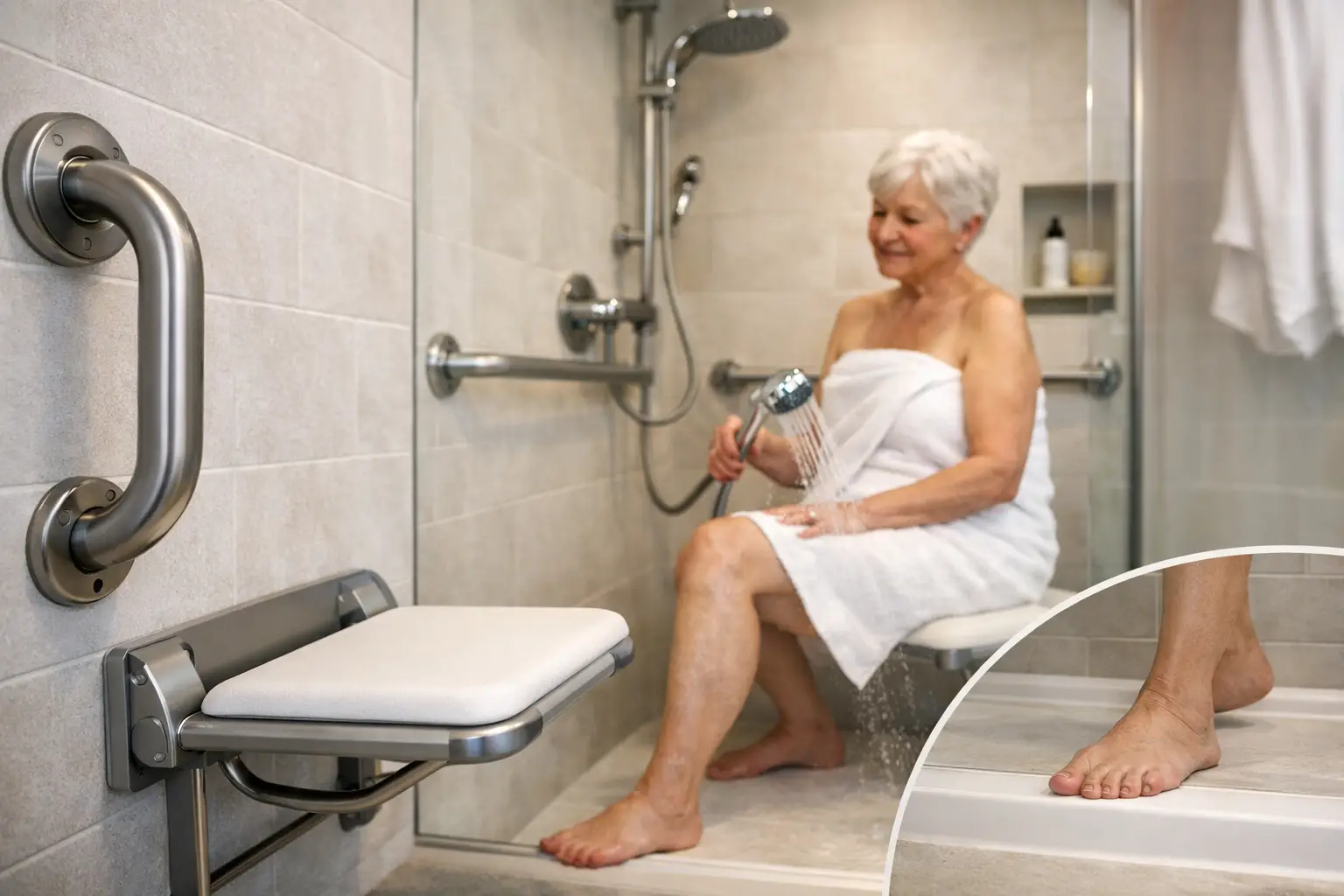
A shower that worked fine at 45 can start feeling risky at 65. The high step over the tub edge, the slick tile, the awkward reach for shampoo, the cold pause before the water warms up – those small frustrations add up fast. The best shower upgrades for aging in place solve those daily problems before they turn into injuries, and they do it without making the bathroom feel clinical.
For most homeowners, the goal is not to build a medical-looking space. It is to create a shower that feels comfortable, looks finished, and works well for the long term. That means balancing safety, ease of use, code requirements, and design. Some upgrades are smart in almost every remodel. Others depend on mobility needs, budget, and how long you plan to stay in the home.
What makes a shower work for aging in place
A good aging-in-place shower reduces fall risk, improves access, and makes everyday use easier without sacrificing the look of the room. That usually means a low-threshold or curbless entry, better traction underfoot, sturdy support in the right places, and controls that are easy to reach and use.
It also means thinking beyond today. Many homeowners remodel when they are still active and independent. That is the best time to make thoughtful changes, because you can integrate them cleanly into the design instead of retrofitting later under pressure.
1. Curbless or low-threshold entry
If there is one upgrade that changes the shower experience the most, it is the entry. A traditional shower curb can become a tripping hazard, especially when vision, balance, or joint mobility changes. A curbless shower removes that obstacle entirely. A low-threshold shower does not eliminate it, but it reduces the step enough to make entry and exit much safer.
This upgrade takes planning. The floor has to be sloped correctly for drainage, and waterproofing needs to be done with precision. In some homes, especially slab-on-grade construction, a true curbless design may require more structural work than expected. In those cases, a low-profile threshold can still be a major improvement.
2. Slip-resistant shower flooring
Beautiful tile is not always safe tile. Polished stone and glossy finishes can look high-end, but they are not always the right choice for a shower built for long-term use. The better option is a slip-resistant surface with enough texture to improve footing without becoming difficult to clean.
Smaller floor tile often works well because the extra grout joints add traction. Textured porcelain is another strong choice because it offers durability and lower maintenance than some natural materials. The trade-off is that heavily textured surfaces can trap soap residue more easily, so product selection should balance safety with practical upkeep.
3. Grab bars that are built into the plan
Grab bars should not feel like an afterthought. When they are installed as part of the remodel, they can be placed where support is actually needed and selected in finishes that match the rest of the bathroom. That makes a real difference in both function and appearance.
The key is proper backing behind the wall. Decorative bars mean very little if they are not anchored securely. Placement matters just as much. Most showers benefit from support near the entry, near the controls, and where standing transitions happen. Depending on the layout, a vertical bar at the entrance and a horizontal bar along the main wall can be more useful than a single bar placed wherever framing happened to allow it.
4. Built-in shower seating
A built-in bench or fold-down seat adds comfort, but more importantly, it adds flexibility. Someone recovering from surgery may need it now. Someone aging in place may need it later. Even homeowners with no current mobility issues often end up using the seat more than expected for shaving, bathing children, or simply showering more comfortably.
Built-in benches usually provide the cleanest finished look, especially in tiled showers. Fold-down seats can save space in tighter enclosures. The right choice depends on room size, user needs, and whether preserving standing area is a priority. Either way, the seat should be planned with water flow, waterproofing, and wall reinforcement in mind.
5. Handheld showerheads and better control placement
One fixed showerhead is limiting. A handheld showerhead on a slide bar gives much more control and makes the shower easier to use whether standing, seated, or helping a spouse. It also makes cleaning the shower simpler, which is a practical benefit many homeowners appreciate right away.
Control placement is just as important. If the valve is set deep inside the spray zone, the user has to step into cold water to turn it on. A better layout places controls within easy reach from the entrance or bench area. Thermostatic valves are worth considering too, because they maintain a more consistent temperature and reduce the chance of sudden hot or cold swings.
6. Wider openings and door-free layouts
A cramped shower opening can become a daily frustration. A wider entry improves access now and allows more flexibility later if a walker or assisted mobility becomes part of the picture. In many bathroom remodels, this is the point where function and comfort overlap.
A door-free or walk-in shower can work very well for aging in place, but only if the space is designed correctly. Water containment, draft control, and drainage all have to be considered. In smaller bathrooms, a glass panel and open entry may be the better compromise than removing all barriers without adjusting the layout.
7. Better lighting inside and around the shower
Shower safety is not only about footing and support. Visibility matters. Dim bathrooms hide water on the floor, make edges harder to judge, and create unnecessary strain. Good lighting around the shower and vanity improves daily use more than many homeowners expect.
Inside the shower, a wet-rated recessed light can brighten the enclosure without clutter. Outside the shower, layered lighting around mirrors and pathways reduces shadows. This upgrade is especially useful in bathrooms with older layouts, darker finishes, or limited natural light.
8. Easy-reach storage
Reaching overhead or bending low in a wet shower is not ideal. Recessed niches, corner shelves, and built-in ledges can keep soap and shampoo within comfortable reach. This sounds minor until you consider how often people twist, stretch, or step awkwardly to grab a bottle.
Storage should be tailored to the user, not copied from a showroom photo. A niche placed too high looks clean but creates the same problem all over again. A better plan sets storage at accessible heights and locates it where it does not interfere with grab bars, controls, or seating.
9. Anti-scald protection and thoughtful details
Some of the best shower upgrades for aging in place are the least visible. Anti-scald valves, easy-turn lever handles, and stable pressure control all improve safety without changing the overall style of the room. These are the kinds of decisions that separate a basic remodel from one built with real long-term planning.
Other details matter too. A comfort-height handheld dock, a non-slip bathroom floor just outside the shower, and enough space to dry off safely can all improve the room. Aging in place is rarely about one feature. It is about how the whole bathroom works together.
How to choose the best shower upgrades for aging in place
The right mix of upgrades depends on who will use the shower and what the bathroom can support. If the remodel is preventive, focus first on entry, flooring, support, and controls. Those changes offer the strongest safety value and blend naturally into a well-designed bathroom.
If there are current mobility concerns, seating, wider access, and exact grab bar placement become more urgent. Budget matters too. Not every project needs a full layout change, but cutting corners on waterproofing, structural backing, or tile installation usually costs more later.
This is where experienced planning matters. A shower built for aging in place has to do more than look good on day one. It needs to perform year after year, with the right slope, the right materials, and the right installation details behind the finished tile. For homeowners in the Meridian, Boise, and Nampa area, working with a contractor who understands both the finish work and the full remodeling process can make the difference between a quick update and a shower that truly supports long-term living.
A well-built shower should give you confidence every morning. If a remodel can make the room safer, easier to use, and better looking at the same time, that is an upgrade worth doing right.