

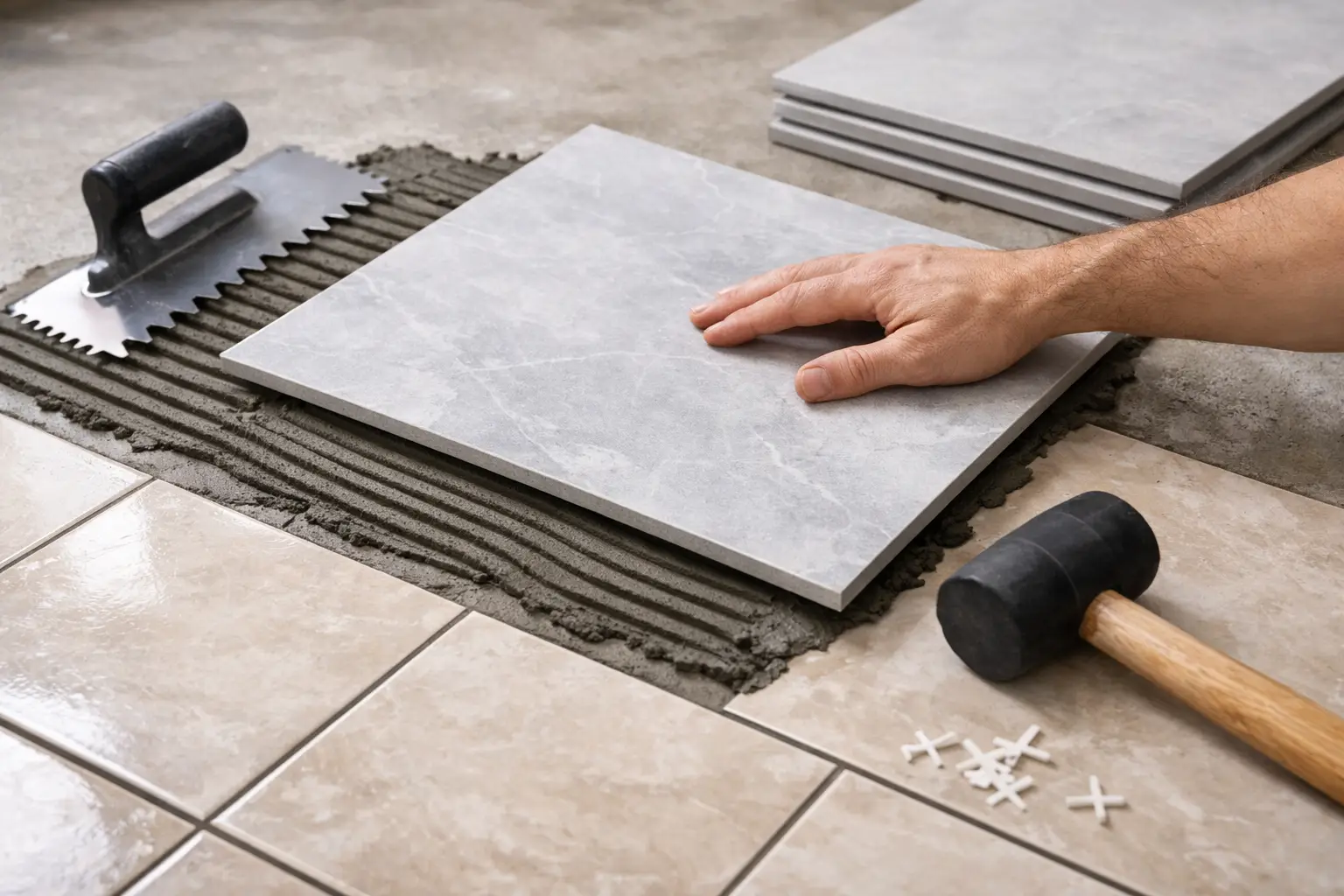
Pulling out old tile is loud, dusty, and expensive. So it makes sense that homeowners ask, can you tile over existing tile instead of tearing everything out? The honest answer is yes – sometimes. But whether it is the right move depends on the condition of the old tile, the surface beneath it, and how much room you have for the added height.
This is one of those remodeling decisions where shortcuts only work if the prep is exact. When the existing tile is sound, flat, and properly bonded, tiling over it can save time and reduce demolition. When the old tile is loose, cracked, uneven, or hiding moisture damage, covering it up usually creates a bigger problem later.
Can you tile over existing tile on floors or walls?
In the right conditions, yes. You can tile over existing tile on a floor, backsplash, fireplace surround, or some bathroom walls. What matters most is not the location by itself, but whether the existing surface is stable enough to act as a base for new tile.
That distinction matters because tile is only as good as the layer under it. If the original installation has movement, poor adhesion, or water damage, the new tile will inherit those weaknesses. It may look great at first and then start cracking, sounding hollow, or loosening months later.
On walls, the question is often about weight and bond. On floors, the bigger concerns are deflection, height transitions, and long-term durability under foot traffic. In shower areas, moisture makes the decision more sensitive. If there is any concern about a failing waterproof system, demolition is usually the smarter and safer path.
When tiling over old tile is a good option
Tiling over old tile can work well when the existing installation is firmly attached, relatively level, and free of widespread cracks. The surface should not have soft spots, hollow sounds, or sections that move under pressure. If you tap across the tile and hear multiple hollow areas, that is often a warning that bond failure has already started.
It also helps when the old tile is not heavily textured. A smooth, well-cleaned surface can often be prepared for new thinset with the right abrasion and primer system. Deeply glossy, uneven, or damaged tile takes more work, and sometimes that prep effort cancels out the time you thought you were saving by skipping demo.
This approach is especially attractive in smaller bathroom updates where homeowners want a cleaner remodel process and where preserving surrounding finishes matters. In some cases, avoiding demolition can reduce disruption and keep the project moving faster. That said, speed should never outrank substrate quality.
When you should not tile over existing tile
There are clear cases where the answer to can you tile over existing tile should be no.
If the original tile is loose, cracked in multiple areas, or installed over a failing subfloor, adding another layer will not fix the problem. It will just bury it. The same goes for tile that has signs of water intrusion, mold, or movement at seams and corners.
Shower walls and shower pans deserve extra caution. Tile and grout are not the waterproofing. If the waterproof layer behind the tile has failed, installing new tile over the old surface does nothing to address the actual issue. In those situations, proper demolition and rebuild is the professional choice.
You also need to think about finished height. On floors, adding new tile over old tile can raise the surface enough to create problems at doorways, transitions to adjacent rooms, appliances, toilets, vanities, and baseboards. A floor that is technically tile-ready may still be the wrong candidate if the new height creates awkward or unsafe transitions.
The checks that matter before you decide
A proper evaluation starts with bond, flatness, and moisture risk. The old tile should be inspected for cracks, drummy or hollow areas, missing grout, and evidence of shifting. It should also be checked for plane. New tile does not hide an uneven base well, especially with larger tile formats.
The next issue is structure. Tile assemblies are heavy. Adding another layer increases dead load, which may or may not be a problem depending on the framing and what is already installed underneath. In many homes, it is manageable. In some older or poorly built areas, it deserves a closer look.
Then there is surface prep. Existing tile needs to be thoroughly cleaned to remove soap film, grease, waxes, and residue. In many cases, it also needs mechanical abrasion or a bonding primer designed for nonporous surfaces. This is where detail-oriented installation makes the difference. Thinset is not magic. It still needs the right surface to grab.
What the installation process usually involves
When tiling over existing tile is appropriate, the process is more than just spreading mortar on top of the old finish.
First, the surface is inspected and any isolated damaged tiles are addressed. Then the entire area is cleaned and prepared so the bonding material can perform as intended. Depending on the condition of the old tile, that may include scarifying the glaze, applying a specialty primer, or flattening low spots with the right patching product.
After prep, layout matters just as much as it would in a full tear-out. Height changes need to be planned. So do edge details, trim transitions, fixture clearances, and movement joints. In bathrooms, this is where experience shows. A beautiful tile pattern can still feel like a poor remodel if the toilet flange sits wrong, the door rubs, or the transition into the hall looks like an afterthought.
Then the new tile is installed with materials appropriate for the substrate and setting conditions. Not every mortar is rated for every application, and not every tile type behaves the same way. Porcelain, natural stone, and large-format tile all bring different installation demands.
Why bathroom projects need more caution
Bathrooms are where homeowners most often ask this question, and they are also where the answer gets more nuanced.
On a dry bathroom floor outside the shower, tiling over existing tile may be completely reasonable if the base is solid and the added height is manageable. On a shower wall, it depends on what is happening behind the surface. If there is any sign the shower system is compromised, covering the old tile is not craftsmanship – it is postponing a failure.
The same logic applies around tubs, niches, curbs, and plumbing penetrations. Tile is a finish layer. If the substrate or waterproofing is questionable, the correct repair is behind the tile, not on top of it. That is one reason experienced remodelers do not answer this question with a blanket yes.
Cost savings are real, but so are the trade-offs
Homeowners usually ask about tiling over tile for one reason: cost. And yes, avoiding demolition can lower labor, disposal, and repair costs. It can also reduce mess and shorten part of the schedule.
But those savings are only real if the existing installation passes inspection. If you spend money tiling over a weak base and the new assembly fails early, the job gets more expensive, not less. Now you are paying for two tile layers to come out instead of one, plus the reinstall.
There is also a finish-quality trade-off in some projects. Extra thickness can affect trim profiles and make certain details look bulkier than they would in a full rebuild. For homeowners investing in a high-end bathroom, the best-looking result is not always the one that avoids demolition.
That is why this decision should be based on conditions, not convenience alone. A good contractor will tell you when tile-over-tile is a smart efficiency and when it is the wrong move for your home.
The better question to ask
Instead of only asking, can you tile over existing tile, ask whether you should.
That shifts the focus from possibility to performance. A tile-over-tile installation can absolutely be done well, but it only makes sense when the original tile is sound, the substrate is stable, moisture risk is low, and the finished height works with the room. If any of those pieces are off, removal is usually the more responsible investment.
At My Contractor LLC, that kind of decision starts with an honest assessment, not a one-size-fits-all answer. The goal is the same on every remodel – precise work, durable results, and a finished space that feels done right the first time.
If you are staring at dated tile and wondering whether it needs to come out, the smartest next step is to have the surface evaluated before you plan the finish you want.