
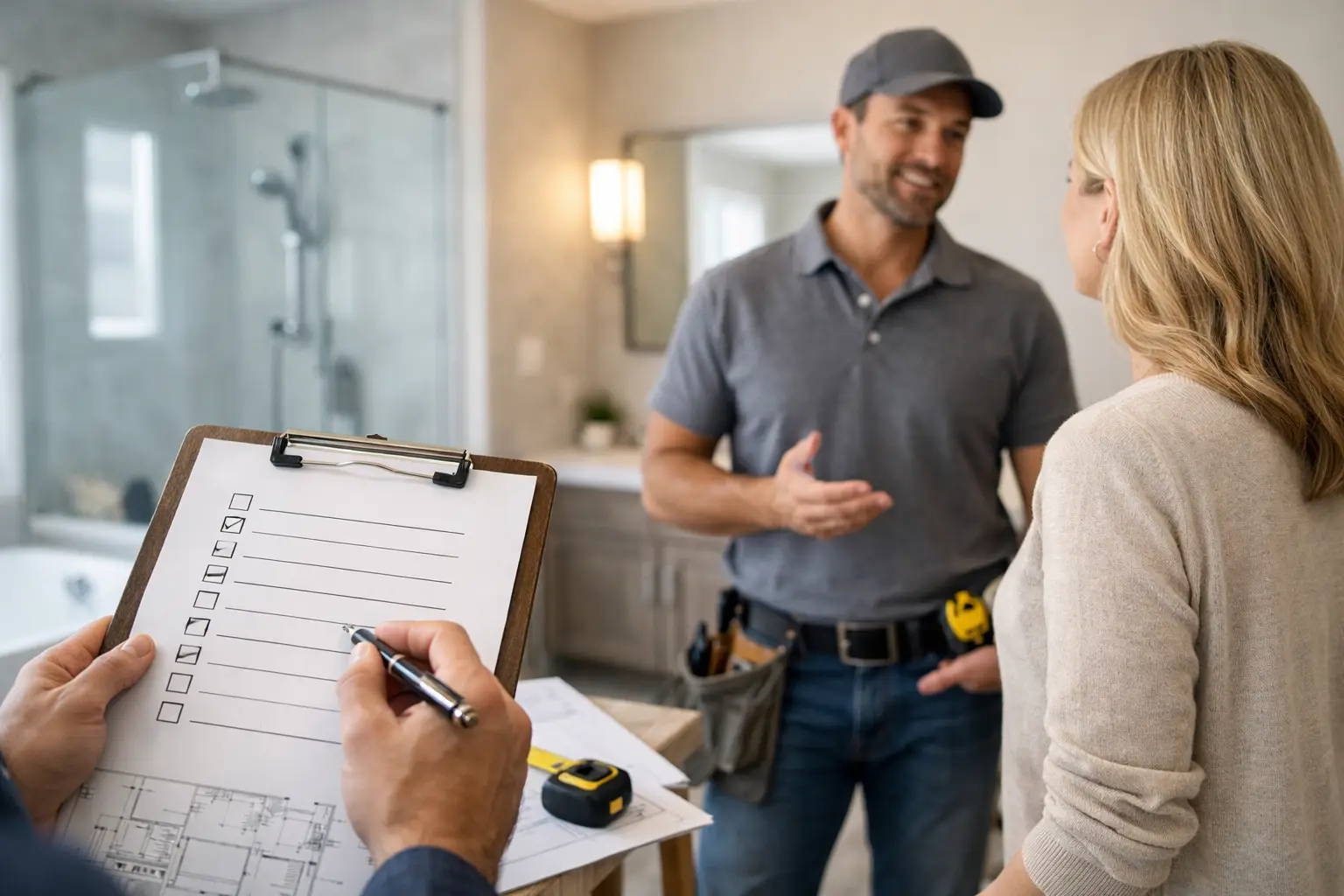
A bathroom remodel can look straightforward on paper until the first wall opens up, the tile lead time slips, or nobody is quite sure who is pulling permits. That is why smart homeowners do not just collect estimates. They walk into each meeting with bathroom remodel contractor checklist questions that reveal how a contractor plans, communicates, and handles the details that make or break the finished space.
The right contractor should be able to answer clearly, without dodging the practical parts of the job. A beautiful shower matters, but so do waterproofing methods, schedule control, dust protection, inspection handling, and what happens if the subfloor is damaged once demolition starts. If you know what to ask before signing, you are far more likely to end up with a bathroom that looks right, performs well, and stays on budget as much as the scope allows.
Why bathroom remodel contractor checklist questions matter
Bathrooms are compact rooms with a lot going on in a small footprint. Plumbing, electrical, ventilation, tile work, waterproofing, cabinetry, glass, paint, and trim all need to line up. A contractor who is excellent at one piece but weak on sequencing or oversight can still leave you with delays, rework, or a finish that never quite feels polished.
That is why the interview matters as much as the bid. Good bathroom remodel contractor checklist questions help you compare more than price. They show you whether a contractor has a repeatable process, respects your home, understands code requirements, and takes responsibility from demo through final punch list.
A low number can be tempting, especially if the bathroom feels urgent. But cheaper can mean vague scope, weak supervision, or allowances that are unrealistically low. Asking better questions gives you a truer picture of value.
Start with licensing, insurance, and who is actually managing the job
Before discussing tile patterns or vanity styles, ask who will be accountable on your project. Is the company licensed for the work it performs? Is it insured? Will the person giving the estimate also be involved once construction begins, or will the project be handed off to someone else?
You also want to know whether subcontractors will be used and, if so, how they are selected and supervised. There is nothing wrong with using trade specialists. The real question is whether the contractor has a system for quality control. Bathrooms reward precision, and small misses become visible fast.
Ask how often the jobsite will be checked, who will update you, and how communication is handled if you are at work during the day. A dependable contractor should make this feel routine, not improvised.
Questions that reveal planning quality
A contractor can sound confident in a first meeting and still be weak in planning. That is where specifics help. Ask what is included in the scope and what is not. If demolition is included, ask whether hauling debris is included too. If tile installation is included, ask whether surface prep, waterproofing, grout, sealant, and trim pieces are written into the proposal.
You should also ask how material selections affect scheduling. Custom vanities, specialty tile, and frameless glass can all change the timeline. A seasoned remodeler will tell you that the schedule depends partly on your finish choices and product availability, not just labor.
This is also the right time to ask how change orders are handled. Bathroom remodels often uncover hidden conditions like water damage, outdated plumbing, or uneven framing. You are not looking for a guarantee that nothing unexpected will happen. You are looking for a clear process when it does.
Ask about waterproofing, ventilation, and the parts you cannot see
Homeowners naturally focus on finishes because those are visible. Contractors who care about long-term results will spend just as much time talking about what sits behind the tile and under the floor.
Ask how the shower or tub surround will be waterproofed. Ask what underlayment is used beneath tile. Ask how transitions are handled where wet and dry areas meet. There are multiple acceptable methods, but there should be a method, not guesswork.
Ventilation deserves the same attention. If your existing bathroom has poor airflow, replacing finishes alone will not solve moisture problems. Ask whether the exhaust fan is properly sized and vented. Ask if the remodel includes evaluating mold-prone areas, especially around showers and windows.
These are not flashy questions, but they often separate a finish installer from a contractor who understands the room as a system.
The checklist questions to ask every contractor
Some questions deserve a place in every interview because they expose how a contractor thinks under real job conditions. Use these as your baseline:
- Are you licensed and insured for bathroom remodeling work?
- Who will supervise my project day to day?
- Will you handle permits and inspections if they are required?
- What exactly is included in this estimate, and what is excluded?
- How do you handle hidden damage or changes after demolition begins?
- What waterproofing system do you use in showers and wet areas?
- What is the expected timeline, and what could change it?
- How will you protect the rest of my home from dust and debris?
- How often will I receive updates, and who is my main point of contact?
- What does your final walkthrough and punch list process look like?
You do not need a contractor to answer these with polished sales language. You do need direct, confident answers. If someone becomes vague when asked about permits, schedule management, or waterproofing, treat that as useful information.
How to compare estimates without making price the only factor
Once bids come in, line-item clarity matters more than many homeowners realize. Two bathroom remodel quotes can be thousands apart because they include very different assumptions. One may include demo, disposal, waterproofing, plumbing fixture installation, trim work, and paint. Another may only cover the basics and leave several necessary items to be added later.
Allowances also deserve close attention. If a proposal includes an allowance for tile, vanity, lighting, or plumbing fixtures, ask whether that number reflects the products you actually want. A low allowance can make a bid look competitive while setting you up for a higher final cost.
It also helps to ask about schedule realism. A contractor promising an unusually fast turnaround may be highly efficient, or may be underestimating coordination, inspections, and lead times. Bathrooms can move quickly, but only when planning is tight and materials are ready.
Ask what living through the project will actually feel like
A well-run remodel is not just about the finished bathroom. It is also about how your home is treated while the work is underway. Ask when crews typically arrive, how cleanup is handled, and whether there will be protection on flooring and nearby traffic paths.
If this is your only full bathroom, ask how that affects phasing and duration. Some homeowners can tolerate a short, intensive schedule. Others need more certainty because of kids, work routines, or mobility needs. A good contractor will talk through the practical side instead of assuming every household can absorb disruption the same way.
This is also where professionalism shows up. Punctuality, cleanliness, and communication do not sound glamorous, but they are often what clients remember most during a remodel.
Watch how the contractor answers, not just what they say
The best responses are usually clear, specific, and calm. Contractors who do quality work every day do not need to oversell basic process. They can explain how they approach prep, waterproofing, scheduling, inspections, and finish quality because they have done it enough times to know where problems usually start.
Pay attention if someone avoids detail, rushes you through the discussion, or pushes hard for a signature before scope is fully defined. Remodeling requires trust, but trust should be earned through competence and transparency.
For homeowners in the Meridian, Boise, and Nampa area, that often means choosing a contractor who can manage the full job, from planning and permits to tile installation and final detail work. Companies like My Contractor LLC build trust by taking responsibility for the complete process, not just the visible finish.
A better contractor interview leads to a better bathroom
The goal is not to interrogate every contractor until the meeting feels tense. It is to ask the kind of questions that protect your home, your budget, and the quality of the result. The right remodel partner will welcome that conversation because careful homeowners usually make for smoother projects.
If a contractor can explain the work clearly, define the scope honestly, and show respect for craftsmanship from the hidden layers to the final grout line, you are on the right track. A beautiful bathroom starts long before installation day. It starts with the questions you ask when no tile has been set yet.