

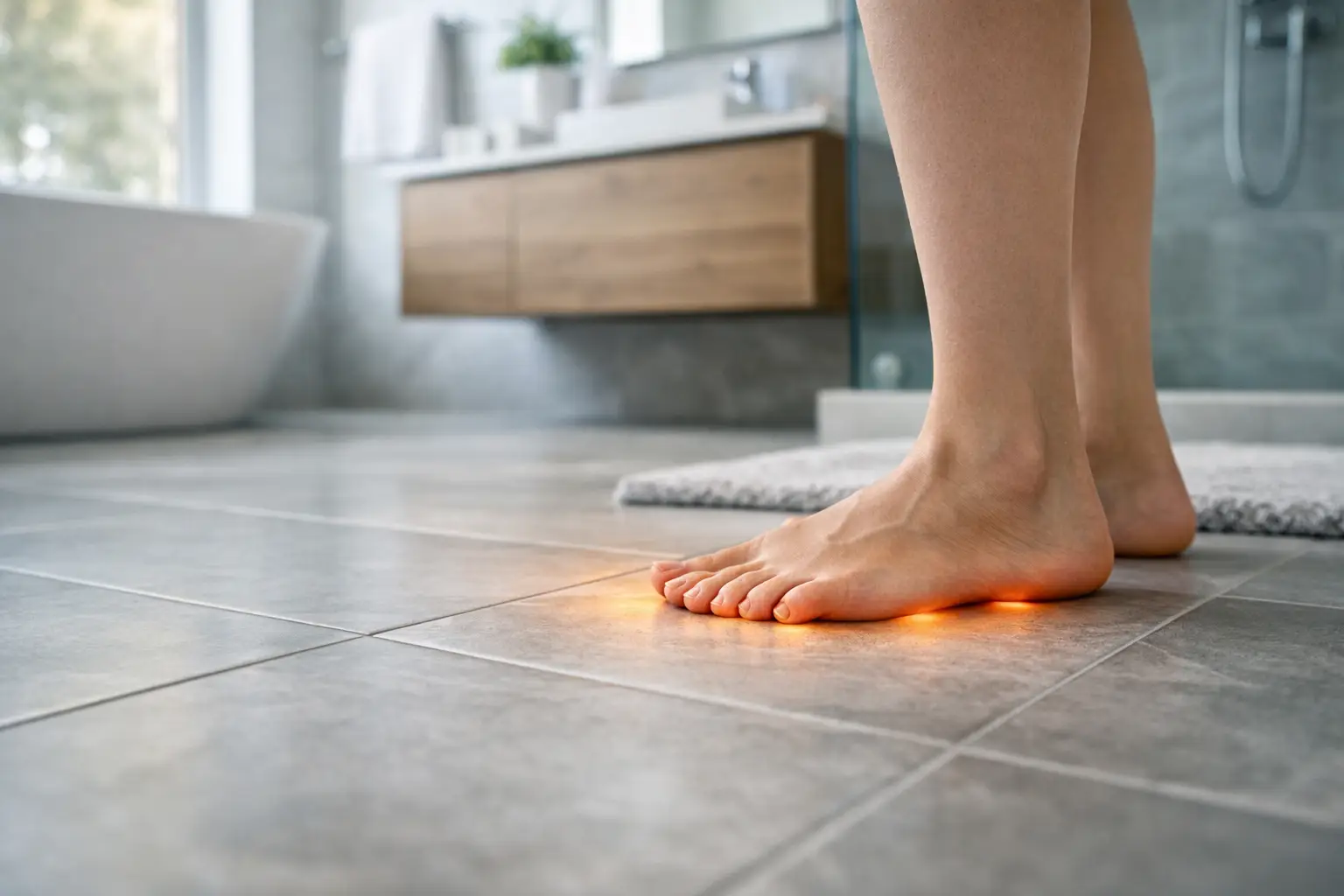
Step onto cold tile at 6 a.m. in January and a heated bathroom floor stops feeling like a luxury add-on. It feels like the upgrade you wish you had planned from the start. In this heated bathroom floor review, we’re looking at what actually matters for homeowners in Meridian, Boise, Nampa, and nearby Idaho communities: comfort, install complexity, long-term value, and whether radiant heat belongs in your bathroom remodel.
Heated bathroom floor review: what you’re really buying
A heated bathroom floor does one job exceptionally well – it makes tile feel comfortable the moment your feet hit it. That sounds simple, but the effect is bigger than most people expect. Bathrooms are small, hard-surface spaces. They hold less warmth than carpeted rooms, and in colder months they can feel uninviting fast.
Radiant floor heat changes that experience. Instead of blasting warm air from a vent and hoping the room catches up, the floor itself becomes the heat source. In most bathroom projects, that means electric heating mats or cables installed beneath tile. Once the system is on, warmth rises evenly from the floor surface and takes the edge off the entire room.
What you’re paying for, then, is not just heat. You’re paying for comfort where you notice it most, a more finished feel in the space, and a bathroom that feels intentionally designed rather than merely updated.
Where heated floors perform best
Bathrooms are one of the best places for radiant floor heat because the square footage is manageable and the flooring is usually tile or stone. Those materials conduct heat well, and smaller spaces make the investment easier to justify than trying to heat a large kitchen or open living area.
The best results usually show up in primary bathrooms, guest baths with tile flooring, and remodels where the old floor is already being removed. If you are already replacing tile, adjusting layout, or upgrading a shower, adding heat is far more straightforward than trying to retrofit it later.
This is also one of those upgrades that feels more valuable in daily use than it may look on paper. Homeowners often spend heavily on features they only notice visually. Heated floors are different. You feel them every day.
The biggest advantages
Comfort is the obvious win, but it is not the only one. Heated bathroom floors can help the room feel evenly warmed, especially in bathrooms where the HVAC vent is poorly placed or where exterior walls make the space run colder than the rest of the house.
They also support cleaner bathroom design. Because the heat comes from below, you are less dependent on visible supplemental heaters. That matters in bathrooms where every inch counts and where a clean layout contributes to the overall finish.
There is also a quality perception factor. Heated floors tend to make a bathroom feel custom. They pair naturally with tile work, curbless showers, and higher-end remodel details because they signal that the project was thought through beyond surface selections.
For resale, this upgrade usually falls into the category of quiet value. It may not add a line-item return in the way homeowners sometimes hope, but it can elevate the overall impression of the space. In a strong bathroom remodel, details like this help buyers feel the difference.
The trade-offs homeowners should know
A fair heated bathroom floor review has to include the parts that do not show up in showroom conversations.
First, radiant floor heat is easiest to install during a remodel, not after. If your bathroom floor is staying in place, adding heat becomes much more disruptive and much less appealing from a cost standpoint. This is why timing matters. If the bathroom is already down to subfloor, the conversation makes sense. If not, it may be smarter to wait.
Second, the heat is comfortable, but it is not instant in every system. Some floors warm up quickly, while others take longer depending on tile thickness, mortar layers, insulation, and thermostat programming. Homeowners expecting immediate heat like a space heater may need to adjust expectations.
Third, this is not always a whole-room heating replacement. In some bathrooms, heated floors provide enough warmth to significantly improve the space. In others, especially larger bathrooms or rooms with high ceilings and draft points, you may still want a separate heat source. It depends on the layout and how warm you expect the room to feel.
Fourth, installation quality matters a lot. Poor planning can create cold spots, floor height issues, or conflicts around vanities, toilets, and shower transitions. This is not a place to improvise. The tile work, electrical coordination, subfloor prep, and thermostat placement all need to work together.
Cost versus value
Most homeowners ask the same practical question: is it worth the added cost?
If you are remodeling a bathroom on a tight budget and choosing between radiant heat and essential improvements like waterproofing, proper tile installation, or ventilation, the essentials come first every time. A heated floor should never crowd out the parts of the remodel that protect the home and ensure durability.
But if the bathroom is already getting quality tile, updated finishes, and proper construction work, radiant heat often lands in the sweet spot of worthwhile upgrades. It improves day-to-day comfort in a way that is immediate and easy to appreciate. Unlike some upgrades that read well in a product brochure but disappear into the background, this one tends to deliver exactly what it promises.
The value is strongest for homeowners planning to stay in the home and use the bathroom for years. If this is your primary bath and you want the remodel to feel complete, heated floors are easier to justify. If you are making minimal updates before selling, the return may be less compelling.
Installation quality makes or breaks the result
The floor heat system itself is only part of the picture. The success of the upgrade depends just as much on how the bathroom is built around it.
Subfloor condition matters. Tile underlayment matters. Layout matters. So does careful coordination around cabinets, toilets, shower footprints, and transition heights into adjacent rooms. A good installer plans the heated area around how the bathroom will actually function, not just around where a mat can be rolled out.
This is especially important in custom remodels. Every bathroom has constraints – joist spacing, existing floor elevations, fixture locations, and electrical access. A well-managed project accounts for those details early so you do not end up with a beautiful tile floor that has awkward heights or warmth in the wrong places.
That is one reason many homeowners prefer working with a contractor who already handles tile, flooring, remodel sequencing, and code-compliant project management. When the installation is coordinated from demolition through finish work, the heated floor feels integrated instead of added on.
Is it right for every bathroom?
Not always, and that is worth saying clearly.
A small powder room with limited use may not benefit enough to justify the expense. A bathroom with vinyl flooring instead of tile may point you toward different priorities. And in some remodels, budget is better spent on a larger shower, improved lighting, better storage, or a more durable tile assembly.
On the other hand, if you dislike cold tile, use the bathroom daily, and want the remodel to feel noticeably better when the project is done, radiant floor heat is one of the few upgrades that changes the experience every single morning. For many homeowners, that pushes it from optional to worth it.
The best candidates are people already investing in a bathroom renovation and looking for durable comfort, not just cosmetic change. In that setting, heated floors fit naturally with the larger goal of building a bathroom that feels finished, functional, and built right.
Our verdict in this heated bathroom floor review
If the bathroom is already being remodeled and tile is part of the plan, heated floors are usually a smart upgrade. They perform best in well-designed bathrooms where the installation is planned carefully and the expectation is comfort, not miracle heating. They are not the first dollar you should spend, but they are often one of the most satisfying.
For Idaho homeowners, the appeal is easy to understand. Winters are cold, tile is popular, and bathrooms should feel comfortable without relying on shortcuts. A heated bathroom floor is not necessary for a good remodel. But in the right project, it is one of those details that makes the entire room feel more thoughtful, more custom, and more enjoyable to live with.
If you are already opening up the floor, this is the moment to decide. The best bathroom upgrades are the ones you appreciate long after the dust is gone.