

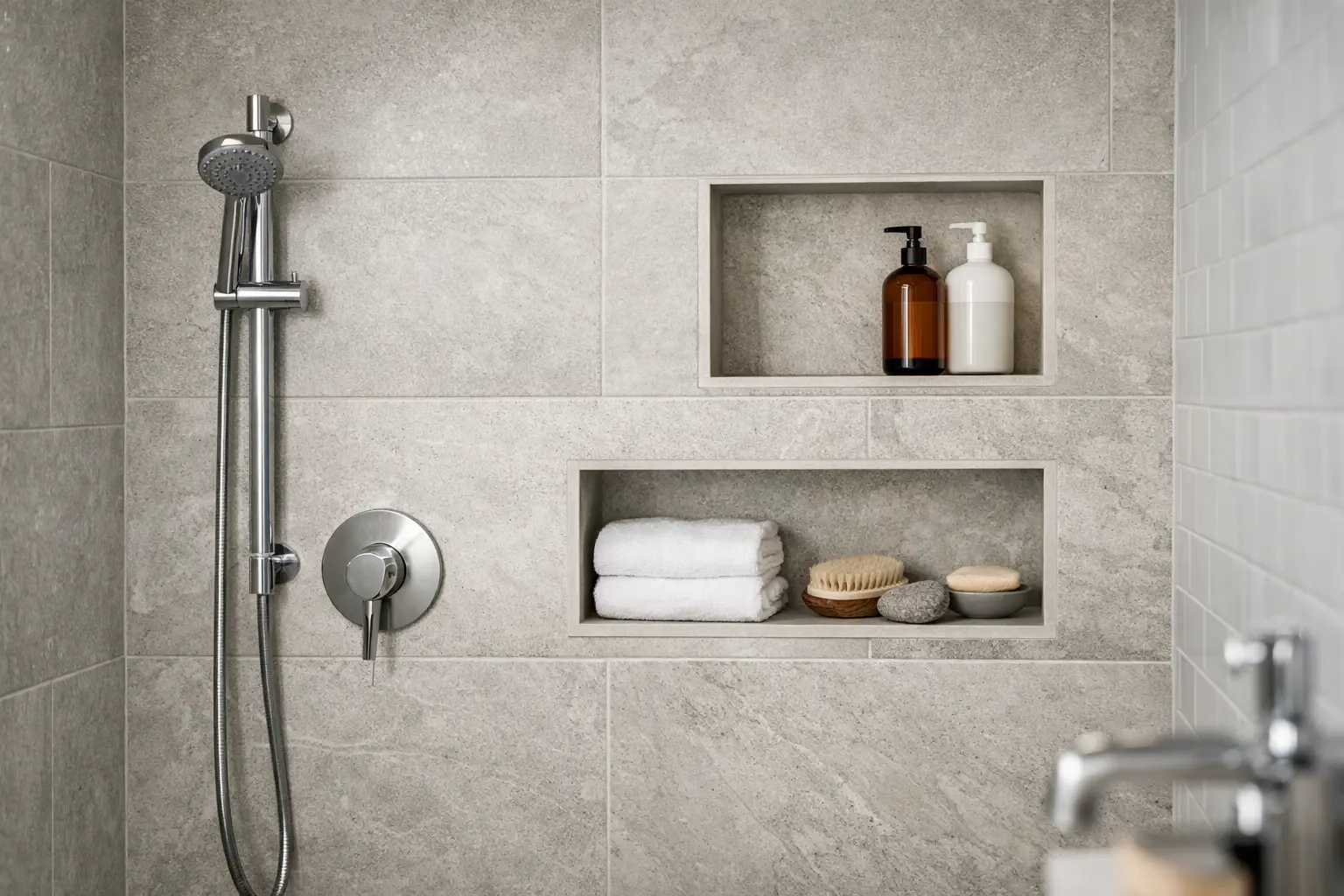
A shower niche looks simple on paper until the tile is set and the bottles do not fit, the shelf lands at an awkward reach, or the grout lines fight the whole wall. That is why shower niche placement height and size should be decided early, not treated like a last-minute add-on. The best niche is not just centered and pretty. It works for the people using the shower every day, fits the products they actually buy, and lines up cleanly with the tile plan.
Why shower niche placement height and size matter
A well-built niche solves two jobs at once. It creates practical storage and becomes part of the finished design. When those two goals are balanced, the shower feels intentional. When they are not, even expensive tile can look off.
Height affects comfort. If the niche sits too low, adults have to bend every time they reach for shampoo. If it sits too high, kids or shorter users cannot use it easily. Size affects both function and appearance. A niche that is too small becomes frustrating fast. One that is too large can dominate the wall or force awkward cuts in the tile layout.
There is also a construction side to it. Niches need to work within wall framing, waterproofing, and the overall tile pattern. In a quality bathroom remodel, these details are coordinated before installation starts, not corrected after the fact.
The best height for a shower niche
For most showers, the sweet spot is placing the bottom of the niche around 38 to 48 inches above the shower floor. That range works well for average adult reach and keeps bottles accessible without feeling too low. A common target is about 42 inches from the finished shower floor to the bottom of the niche.
That said, there is no single perfect number for every home. A primary bathroom used mainly by adults may benefit from a slightly higher placement, especially if taller bottles are used. A hall bath shared by adults and children may need a more moderate height. If the shower includes a bench, measurements should account for where someone is standing or sitting during use.
The valve and plumbing layout also matter. Many showers feel best when the niche is placed on a side wall rather than directly under the shower head. This keeps products out of the main water stream and makes them easier to grab without stepping back. It also helps avoid bottles collecting extra soap film from constant spray.
A practical rule for placement
If you want a simple starting point, aim to place the niche where the center lands near chest height for the main user. Then confirm it works with the tile pattern and framing. This is where experience matters. The right spot on paper can still look wrong if it cuts through a decorative band, forces thin tile slivers, or crowds other fixtures.
Choosing the right shower niche size
A niche should hold real products, not just look good in listing photos. Many standard shampoo and conditioner bottles are taller than people expect, especially pump bottles or salon-sized containers. A niche that is only designed around a sketch can end up too shallow, too short, or too narrow.
A common single niche size is around 12 inches wide by 24 inches high, or 14 inches wide by 22 inches high, depending on the tile module and stud spacing. Depth is often around 3.5 inches to 4 inches, based on the wall cavity and waterproofing system. In many homes, width is influenced by the standard spacing between studs, unless framing is adjusted.
For homeowners who use several products, a horizontal niche can be a better fit. Something like 24 to 36 inches wide and 12 to 14 inches high offers a cleaner, more modern look and spreads storage across the wall. It can also align beautifully with larger format tile if planned well.
The trade-off is visual balance. A long horizontal niche can look sharp in a spacious shower, but in a compact shower it may feel oversized. A tall narrow niche uses space efficiently, but it can read more traditional and may not hold as many larger bottles side by side. Neither is wrong. The right answer depends on the shower size, tile layout, and how the space is used.
Tile layout should lead the decision
One of the biggest mistakes in shower design is choosing the niche size first and asking the tile installer to make it work later. That usually leads to extra cuts, uneven grout lines, or a niche that looks slightly off even when you cannot immediately tell why.
The cleanest results happen when the niche is sized and placed around the tile layout. If the wall tile is 12 by 24, 24 by 48, or a handmade tile with noticeable variation, the niche dimensions should respect those proportions. This can mean adjusting the height by an inch or two or changing the width so the niche lands cleanly within the pattern.
This is not just a visual preference. Precision in layout is what gives a shower that finished, high-end look. Homeowners may not use the word layout when they describe what they like, but they notice when everything feels aligned and intentional.
Trim, edging, and shelf details
Niche size is also affected by how the opening will be finished. Some niches use bullnose tile, some use stone trim, and some use metal edging. If a shelf is added in the middle, that changes the practical storage height of each section. A niche that looks tall enough overall may still be too short for taller bottles once the shelf and trim are installed.
For that reason, it helps to think in usable interior dimensions, not just rough opening dimensions.
One niche or two?
In many remodels, one well-placed niche is enough. But larger primary showers often benefit from two niches or one niche with two compartments. This works especially well when a couple shares the space or when the design calls for cleaner organization.
Two niches can also solve height issues. One can sit at a comfortable adult reach, while a second lower niche serves kids or holds leg-shaving products near a bench. The key is making both look purposeful within the wall design rather than stacked in a way that feels random.
There is a point where more storage stops helping. If the shower wall becomes too busy, the niche starts competing with the tile instead of complementing it. Good design is not about adding every possible feature. It is about putting the right features in the right place.
Common mistakes to avoid
The most common niche mistake is ignoring the products that will go inside. Tall bottles, razors, bar soap, and pump dispensers all take different kinds of space. Another frequent issue is placing the niche on the back wall solely for symmetry, even though a side wall would function better.
Poor waterproofing is the biggest technical concern. A niche is a built-in recess in a wet area, so it has to be detailed correctly. Sloped sills, proper membrane integration, and careful corner treatment are not optional. A niche that looks good on day one but leaks behind the tile is not a finished job.
Another mistake is chasing a trendy size without considering maintenance. Very deep niches can collect water if they are not sloped correctly. Very large niches can make cleaning harder. Mosaic tile inside a niche can add grip and visual interest, but it also introduces more grout lines. That may be worth it, or it may not, depending on your priorities.
How to choose the right fit for your bathroom
If you are planning a shower remodel, start with three questions. Who uses this shower most often? What products need to live there every day? What tile are you installing? Those answers usually narrow the right height and size quickly.
From there, the best next step is to mock it up before waterproofing and tile begin. Mark the proposed niche on the wall. Hold actual bottles inside the rough area. Check the reach from standing position. Then review it against the tile layout. This is where a detail-focused contractor earns trust – by catching problems before they become expensive fixes.
At My Contractor LLC, this is the kind of planning that protects both appearance and performance. A niche should feel like part of the shower, not an afterthought squeezed between framing decisions.
The right shower niche is rarely the one copied from a photo without adjustment. It is the one that fits your wall, your tile, and your routine so well that after the remodel is done, you stop noticing it and simply enjoy using the shower every day.